
Owens Corning Vapor Barrier Installation: The Chicago Owner’s Guide
We install Owens Corning vapor barrier systems in Chicago homes every week, and the installed price typically runs between $1,800 and $4,200 depending on crawl space square footage, access height, and whether the existing barrier needs full removal first. Most jobs are completed in one day, and we carry Owens Corning-compatible 6-mil, 10-mil, and 12-mil reinforced poly on the truck, so there’s no ordering delay. The way most Chicago owners discover their vapor barrier failed is simple: a musty smell that won’t quit, insulation that’s sagging wet, or a crawl space floor that stays damp days after rain.
We’re an independent Chicago insulation contractor, not a division of Owens Corning. But we install their vapor barrier products because they hold up in our climate, and we know the failure points cold. If you’re reading this, you probably already know something’s wrong under the house. Here’s what to do about it.
Key Takeaways
- Owens Corning vapor barrier installation in Chicago runs $1,800 to $4,200 installed, same-day in most cases
- The barrier itself is affordable; the labor to access a tight Chicago crawl space is what drives cost
- 6-mil is the minimum we’ll install; 10-mil and 12-mil reinforced hold up far better against punctures
- We publish before-and-after numbers on every applicable job, including crawl space humidity readings
- Written price before any work starts, every time
Which Owens Corning Models This Applies To
Owens Corning’s vapor barrier line for residential use centers on their poly sheeting products, most commonly the 6-mil clear and black poly, and the reinforced 10-mil and 12-mil versions used in conditioned crawl spaces. The compatibility gotcha most Chicago owners miss is that the barrier’s performance depends less on the brand stamp and more on the thickness relative to your crawl space condition. A vented crawl space with a dirt floor needs a minimum of 6-mil, but we almost never recommend it here. Chicago’s freeze-thaw cycles push ground moisture up through the soil in spring, and a 6-mil barrier punctured by one sharp stone will let vapor through within a season.
For most Chicago homes we specify the 10-mil reinforced Owens Corning product, and for crawl spaces that will see occasional foot traffic from HVAC or plumbing work, we go 12-mil. If your existing barrier has an Owens Corning label, check the corner for the mil thickness stamp. If the label’s already gone, cut a small corner and measure it with calipers, or just show us a photo and we’ll tell you what you’re working with. We stock Owens Corning 6, 10, and 12-mil on the truck, plus compatible seam tape and termite-resistant variants. Aftermarket equivalents exist and are lighter on the wallet, but they’re typically thinner in practice than their stamped rating, and we’ve measured enough of them to prefer the Owens Corning spec when the crawl space is unconditioned.
Signs Your Owens Corning Vapor Barrier Installation Is Failing
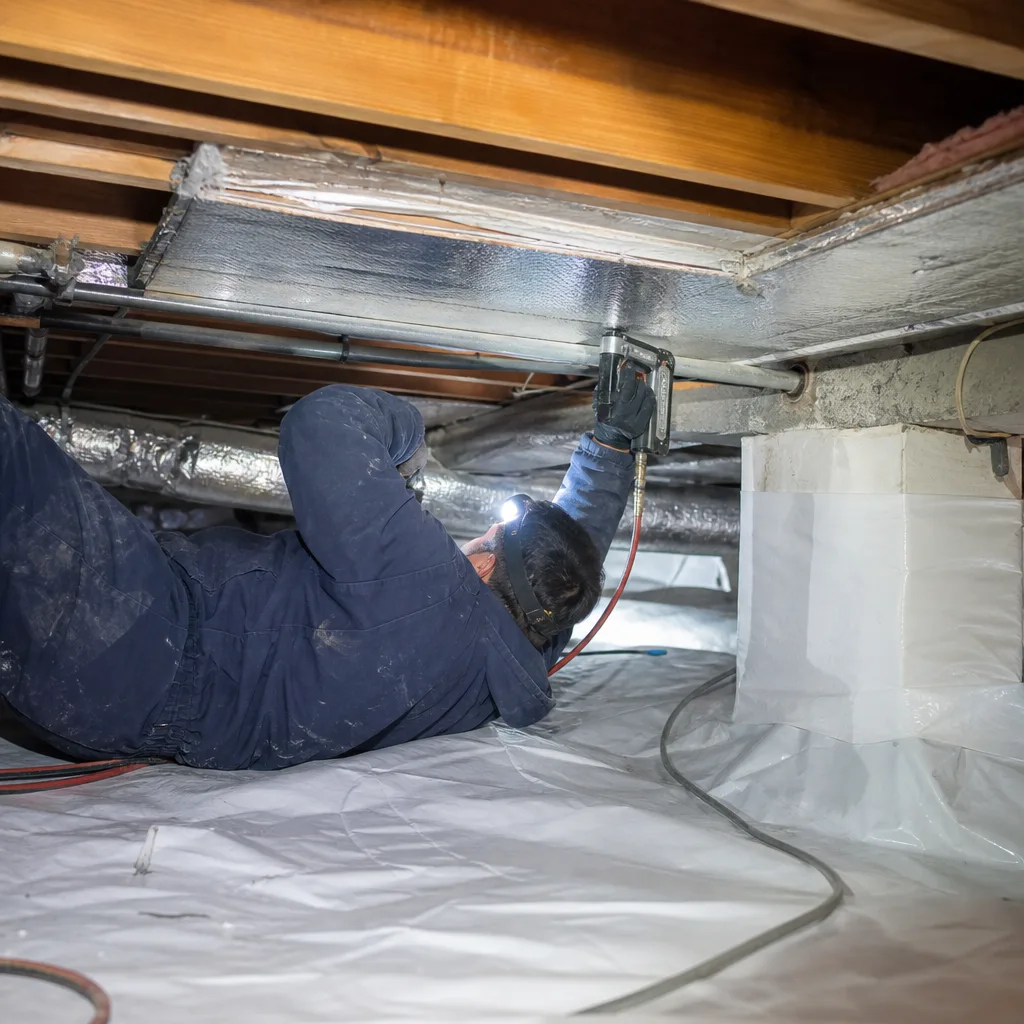
- Musty odor coming up through the floorboards. This is the one we hear most often in Chicago bungalows and two-flats. A torn or improperly lapped barrier lets soil moisture evaporate into the crawl space air, which then rises through the subfloor. The smell is the moisture carrying soil organics with it.
- Wet or damp fiberglass insulation hanging below the floor joists. Fiberglass loses most of its R-value when it gets wet, but the bigger issue is that it’s now holding moisture against the wood. In Chicago crawl spaces we regularly pull down R-19 batts that weigh twice their original weight.
- Condensation on ducts, pipes, or the underside of floor joists in summer. If the barrier is doing its job, the crawl space air stays dry enough that condensation can’t form. When you see sweating pipes in July, the vapor barrier has failed somewhere.
- Standing water or persistent mud on the crawl space floor after rain. A vapor barrier isn’t a waterproofing membrane, but it should keep the ground moisture from rising. If you’re seeing pooled water, the barrier may be intact but undersized, or the grading outside the foundation is pushing water under the walls.
- Efflorescence or white mineral staining on foundation walls. That white powder is salt left behind when groundwater evaporates through the concrete. It tells you moisture is moving through the foundation, and the vapor barrier isn’t stopping what rises through the floor.
Replacement Cost & What’s Included
Here’s the honest price structure for Owens Corning vapor barrier installation in Chicago. The barrier material itself is the smallest line item. A 10-mil reinforced roll covering a typical 1,000-square-foot crawl space runs a few hundred dollars. The real cost is labor: getting into a Chicago crawl space with 24 to 36 inches of clearance, removing the old torn barrier, leveling or clearing the floor surface, cutting and lapping the new barrier 12 inches at every seam, sealing the seams with the right tape, and running the barrier up the foundation walls 6 to 12 inches.
- Basic 6-mil replacement, clean access, 800-1,200 sq ft: $1,800 to $2,400
- 10-mil reinforced installation, typical Chicago crawl space, 1,000-1,500 sq ft: $2,400 to $3,300
- 12-mil reinforced with full seam taping and wall attachment, 1,500+ sq ft or difficult access: $3,300 to $4,200
Every quote includes removal and disposal of the old barrier, floor prep, materials, full seam taping, wall attachment, and a Documented Photo Record of the finished job. If the crawl space also needs air sealing at the rim joists, we’ll scope that separately and show you the blower-door numbers if applicable. Under The Haven Standard, you get a written price before any work starts, and the 365-Day Done Right Promise applies to the completed installation.
DIY or Call Us?
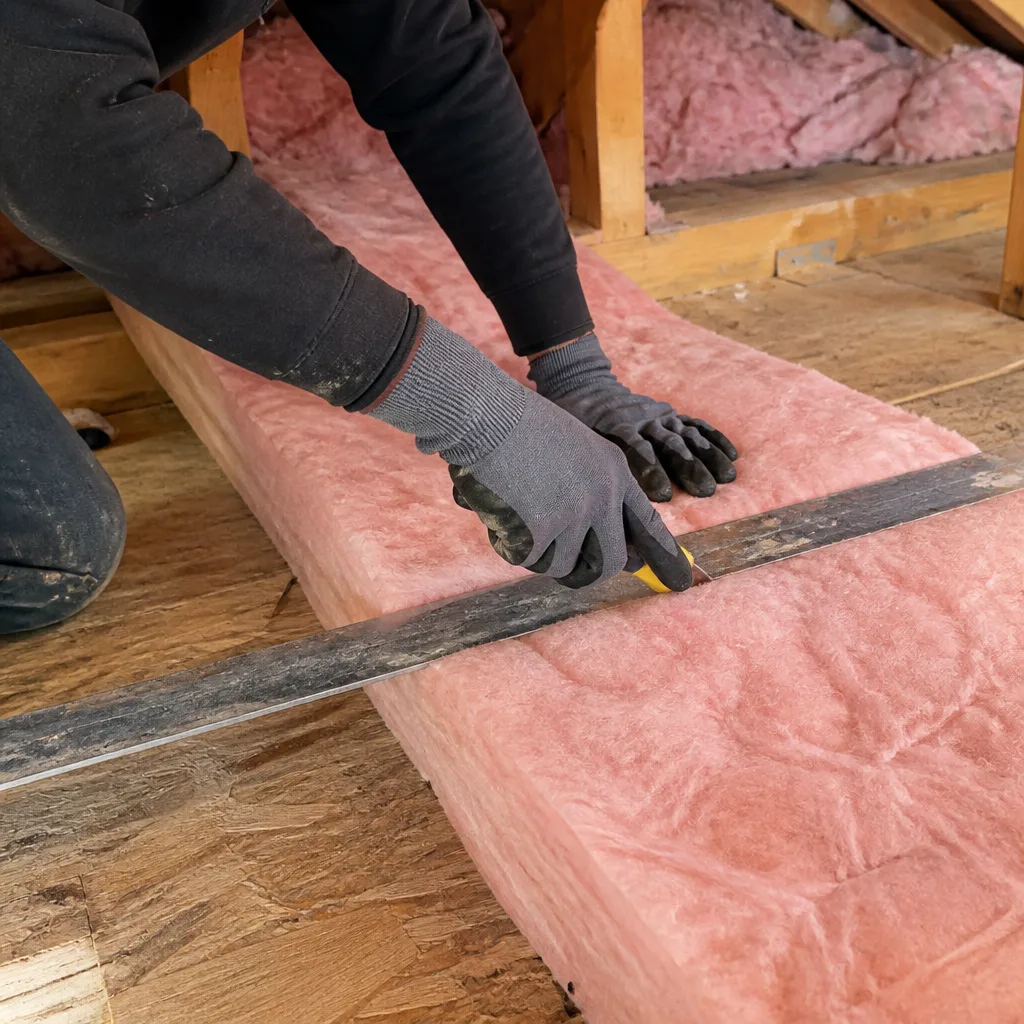
A vapor barrier replacement is not a dangerous job the way garage door springs or electrical panels are. You’re working with polyethylene sheeting, tape, and a utility knife. The honest DIY candidate is someone with a crawl space that has at least 3 feet of clearance, a clean dirt floor, and no history of standing water. If that’s you, you can buy the Owens Corning roll, cut it to size, lap the seams 12 inches, and tape them. It’s tedious work on your back, but it’s not technically complex.
Where Chicago owners get into trouble is the same place every time: they don’t address the moisture source before laying the new barrier. If your crawl space gets water after every spring thaw or heavy summer storm, a new barrier will be floating within a year. We see this constantly in neighborhoods from Portage Park to Beverly. The fix involves grading, downspout extensions, or a perimeter drain, and that’s where a trained eye saves you from buying the same barrier twice. If you’d rather have it measured, scoped, and installed with a written warranty, call us at (218) 261-7714. We’ll tell you what’s actually going on under the house, not just sell you a roll of plastic.
FAQs
A properly installed 10-mil or 12-mil reinforced Owens Corning barrier will last 15 to 20 years in a Chicago crawl space, while 6-mil typically fails within 5 to 7 years due to punctures from foot traffic, rocks, and pest activity. The lifespan depends more on the crawl space conditions and installation quality than on the material itself. If you want the barrier to last two decades, we recommend 10-mil minimum, full seam taping, and addressing any water intrusion before installation. Call (218) 261-7714 and we’ll inspect your crawl space and give you a straight answer on what you need.
A single small tear or puncture can be repaired with seam tape and a patch of matching poly, and that’s a fix we’ll do when the rest of the barrier is in good shape. If the barrier is 6-mil and more than 5 years old, or if you’re seeing multiple tears, seam separation, or moisture getting through in several places, replacement is the better call because repair costs on a degrading barrier add up fast. We’ll tell you which situation you have when we see it.
A typical Chicago crawl space vapor barrier installation takes 4 to 8 hours, and most jobs are completed in a single day. Larger crawl spaces, low-clearance access, or the need to remove and dispose of old insulation will add time, and we’ll scope that in the written price before we start. If you need it done on a specific day, call (218) 261-7714 and we’ll schedule it.
Yes, we carry Owens Corning 6-mil, 10-mil, and 12-mil reinforced vapor barrier plus compatible seam tape on our service vehicles, along with Reflectix for rim joist and duct applications. That means for most Chicago homes we can complete the job same-day without a supply house run. Call (218) 261-7714 and we’ll confirm what’s needed for your specific crawl space.
Contact Us
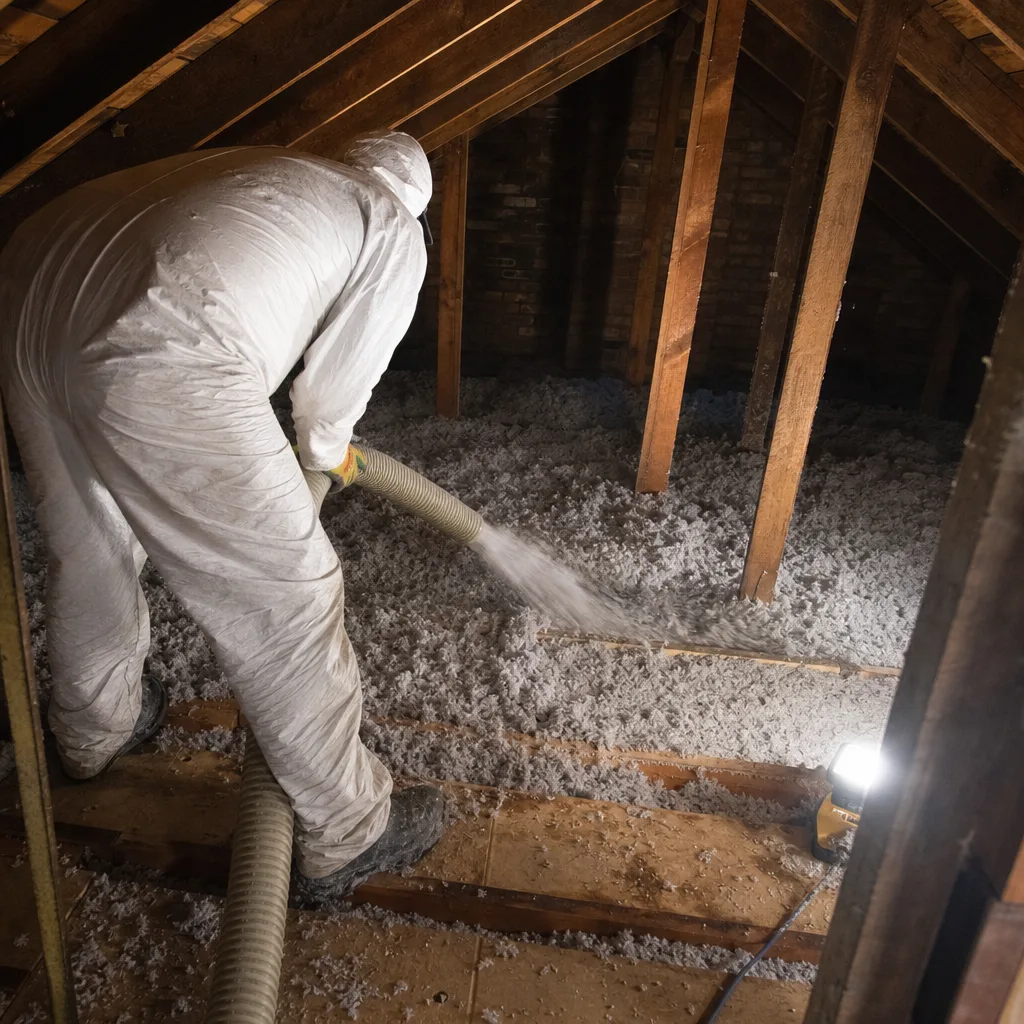
If your Owens Corning vapor barrier has failed, or you suspect it’s on the way out, call Topside Attic Insulation at (218) 261-7714. We’ll schedule an inspection, give you a written price before any work starts, and if the job makes sense, install the right barrier the right way. Every job closes with a Documented Photo Record so you can see exactly what was done under the house. Wes Okafor has been doing insulation work in Chicago for over twenty years, and he’ll tell you the same thing he tells every homeowner: seal the holes first, then add the R-value. The numbers will tell you whether it worked.
Written by Wes Okafor, Owner & Lead Building Envelope Technician, Topside Attic Insulation at Topside Attic Insulation, serving Chicago and nearby areas.