
Rockwool Home Energy Audit in Chicago: What to Know First
We provide independent Rockwool home energy audits across Chicago, typically scheduled within 3 to 5 business days, with a complete written report in your hands the same day we test. A full envelope audit on a Chicago single-family home or two-flat runs between $450 and $750, depending on square footage and whether you want thermal imaging plus a duct leakage test. If you own a Rockwool-insulated home and suspect it isn’t performing the way the label promised, call (218) 261-7714 and we’ll walk through what an audit actually measures before you spend a dollar.
This page is for Chicago homeowners who already have Rockwool in their walls, attic, or rim joists and want to know whether it’s doing its job. As an independent Rockwool service provider, we don’t sell the product and we don’t get paid to recommend it. We test it. Here’s what we find.
How Rockwool Products Fail - and How We Fix Them
Rockwool stone wool is a good material. But in Chicago housing stock, the product doesn’t usually fail on its own. It fails because of how it was installed, where it was installed, or what was never sealed before it went in. Here are the five failure patterns we see most often in Chicago homes with Rockwool insulation.
- Rockwool Comfortbatt in rim joists with no air sealing behind it. Stone wool is vapor-open and air-permeable. That means air moves through it. In Chicago basements and crawl spaces, we regularly pull back Comfortbatt batts from rim joists and find blackened fiberglass and rim boards from years of warm, moist interior air condensing against cold wood. The batts looked fine. They were filtering air, not stopping it. Our fix: remove the batts, seal the rim joist bays with two-part spray foam or rigid board and can foam, then reinstall the Rockwool. The blower-door number drops immediately.
- Rockwool Safe’n’Sound used as thermal insulation. This is the one that makes us stop and explain to the homeowner what they actually bought. Safe’n’Sound is an acoustic product. It has an R-value around R-4 per inch, which is better than nothing but well under what Chicago walls need. We see it in interior partition walls where it belongs, but we also find it shoved into exterior wall cavities by DIYers or handymen who didn’t know the difference. Our audit documents it, measures it with thermal imaging, and we quote a proper replacement with Comfortbatt in the correct density and thickness for the cavity.
- Rockwool Comfortboard 80 on the exterior with gaps at the sheathing. Continuous exterior insulation only works if the boards are tight to the sheathing and the seams are staggered. In Chicago’s freeze-thaw cycles, we find Comfortboard installations where boards have shifted or were cut sloppy around windows, leaving thermal bridges the infrared camera picks up as cold stripes framing every opening. We document the gaps, and in many cases the fix is as simple as pulling the board edge tight and sealing the perimeters with compatible tape and flashing. No full replacement needed.
- Rockwool batts in attics compressed under plywood or storage decks. Compression kills R-value. A 6-inch Comfortbatt stuffed under a plywood sheet might only perform at R-19 or R-20 instead of R-23. Chicago homeowners love attic storage, and we find this constantly. Our audit measures the actual depth and density in multiple locations, not just at the hatch, and we report the real installed R-value, not the label value. If it’s compressed, we say so and we quote re-lofting the storage or adding a raised deck system with proper depths.
- Rockwool installed over leaky top plates and can lights. This is the one that ties back to our core rule: seal first, then insulate. If someone blew or laid Rockwool over an attic floor without air sealing the top plates, electrical penetrations, and recessed can lights first, the batts become an air filter. In Chicago winters, warm moist air from the house moves right through those holes and condenses inside the stone wool, reducing its thermal performance and creating conditions for mold on the drywall below. Our fix is the same on every job: remove the Rockwool in the affected zones, seal every penetration with can foam and polyurethane sealant, then put the Rockwool back. The post-test blower-door reading is in your report.
Our Rockwool Home Energy Audit Process
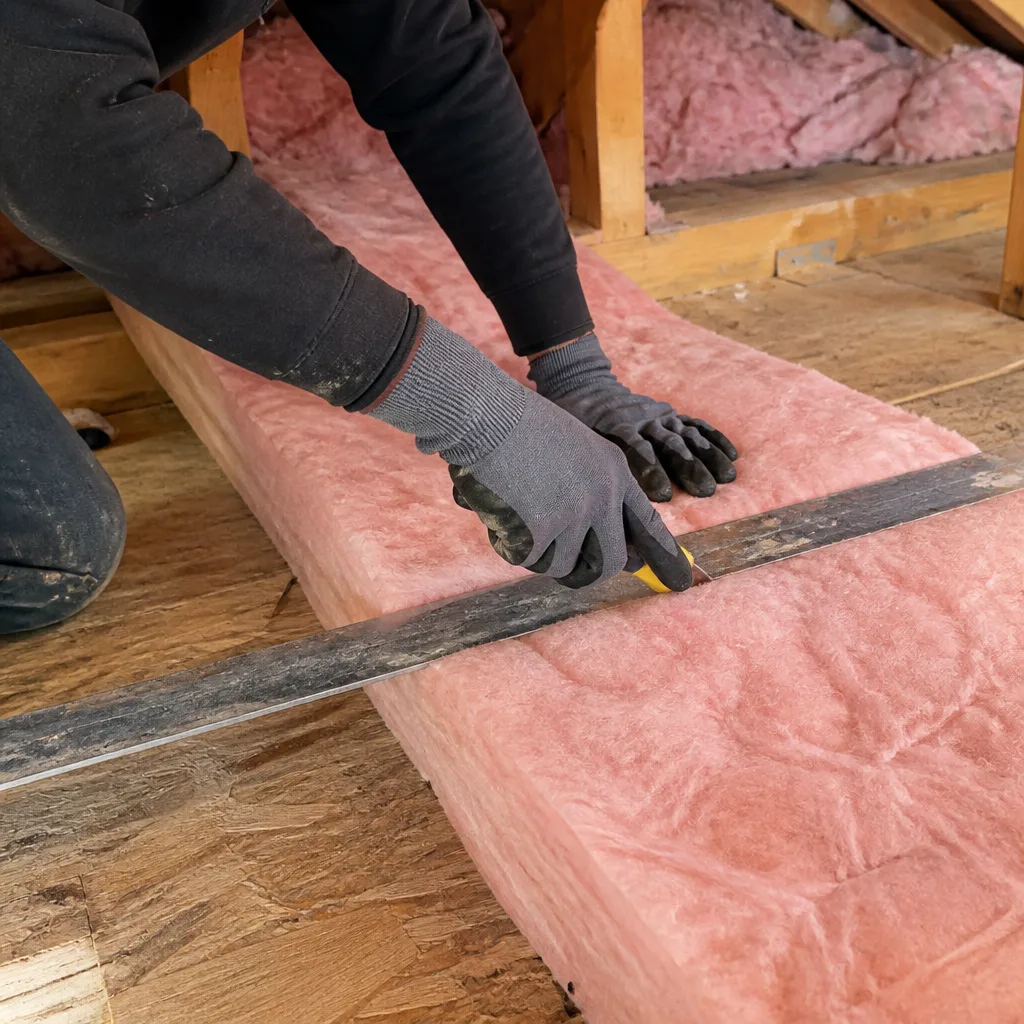
Every audit we run in Chicago follows the same sequence, and you’ll know the order before we arrive. No surprises, no scope changes without a written price.
- 1
Call and schedule. A live person answers (218) 261-7714, takes the address, and books a two to three hour window. You’ll get a text when your technician is on the way, and that technician’s name before they arrive.
- 2
Walkthrough and visual inspection. We look at every accessible insulation surface: attic, rim joists, basement band, crawl space, wall cavities if there’s access. We document what’s there, what line of Rockwool it is, and how it’s performing.
- 3
Blower-door test. A calibrated fan mounts in an exterior door and depressurizes your house to 50 pascals. We record the CFM50 and convert it to ACH50, air changes per hour at test pressure. This is the number that tells you the truth about your envelope. We’ve tested Chicago bungalows that came in at 18 ACH50. Typical for an older build is 8 to 12. A tight modern house is under 4.
- 4
Thermal imaging and duct leakage testing (as ordered). The infrared camera shows us exactly where the air is moving and where the Rockwool is missing, compressed, or bridged. Duct leakage testing pressurizes your ducts and measures what’s escaping to the attic or crawl space, usually by blower door or flow hood.
- 5
Written report with photographs. You get a printed report same day: pre-test ACH50, post-test if we do air sealing work, installed R-values by zone, and a photo log of every problem area we documented. This is the Haven Standard: written documentation, every job, no exceptions.
What Rockwool Home Energy Audit Costs in Chicago
Here’s what you’ll see in Chicago, in real dollars. A blower-door test with a full written report and visual inspection runs $450 to $550 for most single-family homes and two-flats under 3,000 square feet. Add thermal imaging and you’re at $550 to $650. Add a duct leakage test and the full package is $650 to $750.
What moves the price: square footage, number of zones, whether the attic is accessible, and whether we need to pull back insulation to inspect air sealing. If you only want a blower-door number and a quick walkthrough, we can quote that as a smaller scope. If we find air sealing work during the audit, you’ll get a separate written estimate before anything else happens. Free estimate on all of it. Call (218) 261-7714 and we’ll give you a flat price before anyone gets on a ladder.
Why Chicago Homeowners Call Topside Attic Insulation for Rockwool Work
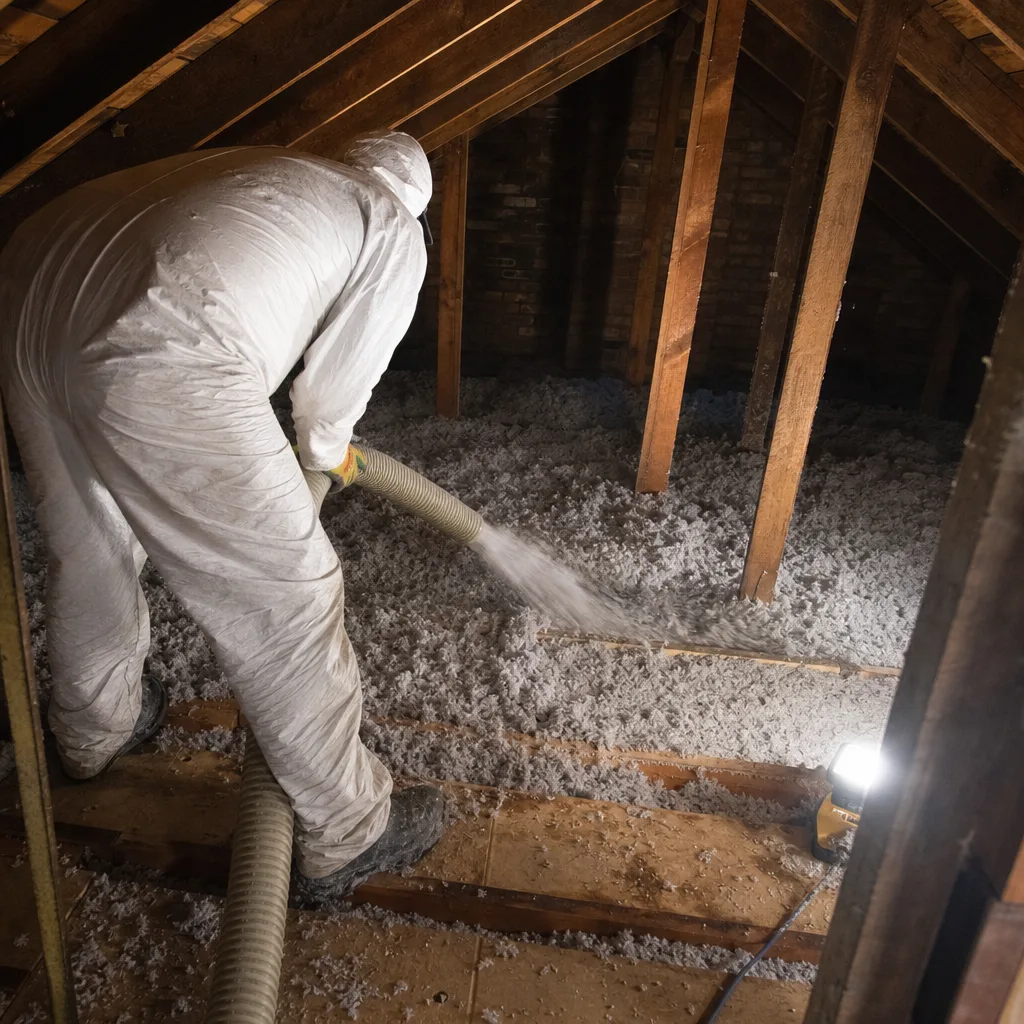
We’ve sealed and insulated over 9,000 homes since 2016, and on every job that involved air sealing, we’ve published the before-and-after blower-door numbers. That’s not a marketing line. It’s a written standard: the Haven Standard. It means you get a flat price in writing before work starts, a written scope, a written warranty, and a photo record when the crew leaves. If something isn’t right within 365 days, we make it right. No arbitration clause, no fine print.
Our technicians are background-checked and uniformed, and we answer the phone 24/7. We work on Rockwool alongside Owens Corning, Johns Manville, Knauf, CertainTeed, Icynene, Demilec, GreenFiber, and Reflectix, so we don’t have a product to push. We have a building envelope to fix. Seal the holes first. Then add the R-value. The numbers will tell you whether it worked.
FAQs
No. An energy audit is a diagnostic test, not a modification. We don’t alter your insulation during the audit itself. If we do air sealing work afterward, we remove and reinstall the Rockwool carefully so the warranty on the product stays intact. What voids a Rockwool warranty is moisture saturation, pest contamination, or improper installation, not testing. We document the condition before and after, so you have a record either way.
Yes, and most of our Chicago audits don’t require full removal. The blower-door test and infrared camera read through the assemblies. We can measure the R-value performance, find air leaks, and locate moisture problems without pulling every batt. If we do need to inspect behind the insulation, we’ll tell you why and you’ll approve it in writing before we touch anything.
Most audits are scheduled within 3 to 5 business days, and the testing itself takes 2 to 3 hours depending on home size and what you ordered. You get the full written report before we leave that day. If we schedule air sealing work from the findings, that’s a separate visit with its own written price.
Almost always cheaper to audit first. We’ve been in Chicago homes where the homeowner was quoted $8,000 to replace Rockwool that was actually performing fine. The problem was air leakage around it. A $550 audit can tell you what actually needs to be done before you spend on replacement. If replacement is the right call, you’ll know exactly why, with the numbers and photos to prove it. Call (218) 261-7714 for a flat price on the audit, estimates included.
Yes. Most Chicago homes we test have a mix: Rockwool in some areas, Owens Corning fiberglass in others, maybe closed-cell Icynene or Demilec in a rim joist that was done later. Our audit reads the whole envelope, not just one product. The blower-door number is the home’s score, regardless of which brand is in the walls.
Yes. We provide written energy audit reports for Chicago homebuyers and sellers, including the blower-door reading and thermal imaging documentation. If you’re closing on a house with Rockwool insulation and you want to know what you’re actually buying, call (218) 261-7714 and we’ll schedule the test before your inspection window closes.
Written by Wes Okafor, Owner & Lead Building Envelope Technician, Topside Attic Insulation at Topside Attic Insulation, serving Chicago and nearby areas.