
Rockwool Radiant Barrier Installation: The Chicago Owner’s Guide
Radiant barrier installation paired with Rockwool insulation in Chicago attics typically runs $1,800 to $4,200 for a standard 1,200 to 2,400 square foot attic, and we stock Rockwool-compatible radiant barrier materials on our trucks for same-week installation in most Chicago neighborhoods. Most homeowners discover a failed radiant barrier the same way: a July bedroom that won’t hold temperature below 78 degrees, or a February ceiling that’s cold to the touch while the thermostat runs constantly. A radiant barrier works by reflecting thermal radiation back toward its source – in summer, back toward the roof deck; in winter, back toward the living space – and when it has torn, sagged, or separated from the Rockwool batts beneath it, that reflective layer stops doing its job.
We install radiant barrier as a complement to Rockwool insulation, not a substitute for it. Rockwool’s stone wool handles conductive and convective heat transfer; the radiant barrier handles the third mode of heat transfer, radiation. In a Chicago attic where summer roof deck temperatures hit 140+ degrees, that combination matters. If your radiant barrier has failed, the Rockwool below it is still working, but it’s absorbing more heat than it should, and that shows up on your ComEd bill.
Which Rockwool Models This Applies To
Radiant barrier installation applies across the full Rockwool attic product line: Comfortbatt R-30 and R-38, Comfortbatt R-49, and Safe’n’Sound when used in attic knee walls or vaulted ceiling applications. The radiant barrier itself is a separate material – typically a reinforced aluminum foil laminate – installed either on the underside of the roof rafters (before insulation) or laid directly over the Rockwool batts on the attic floor, depending on your attic’s ventilation profile and whether the space is conditioned.
Here’s the compatibility gotcha we see on Chicago jobs: if you have a vented attic, the radiant barrier installs as a foil layer below the roof deck, with the Rockwool on the attic floor. If you have an unvented, conditioned attic with Rockwool in the rafter bays, the radiant barrier – often a foil-faced Rockwool product – installs with the foil facing the air gap, never the framing. Get that orientation backwards and you’ve created a condensation plane inside the roof assembly, which in a Chicago winter means water inside your insulation by March. This is the single most common mistake we correct from previous installations.
Topside Attic Insulation is an independent contractor, not affiliated with Rockwool, and we also stock Reflectix radiant barrier products when that’s the better fit for a specific attic geometry. For Rockwool applications specifically, we source the barrier material to match the R-value and installation orientation of the Rockwool product already in your attic.
Signs Your Rockwool Radiant Barrier Installation Is Failing
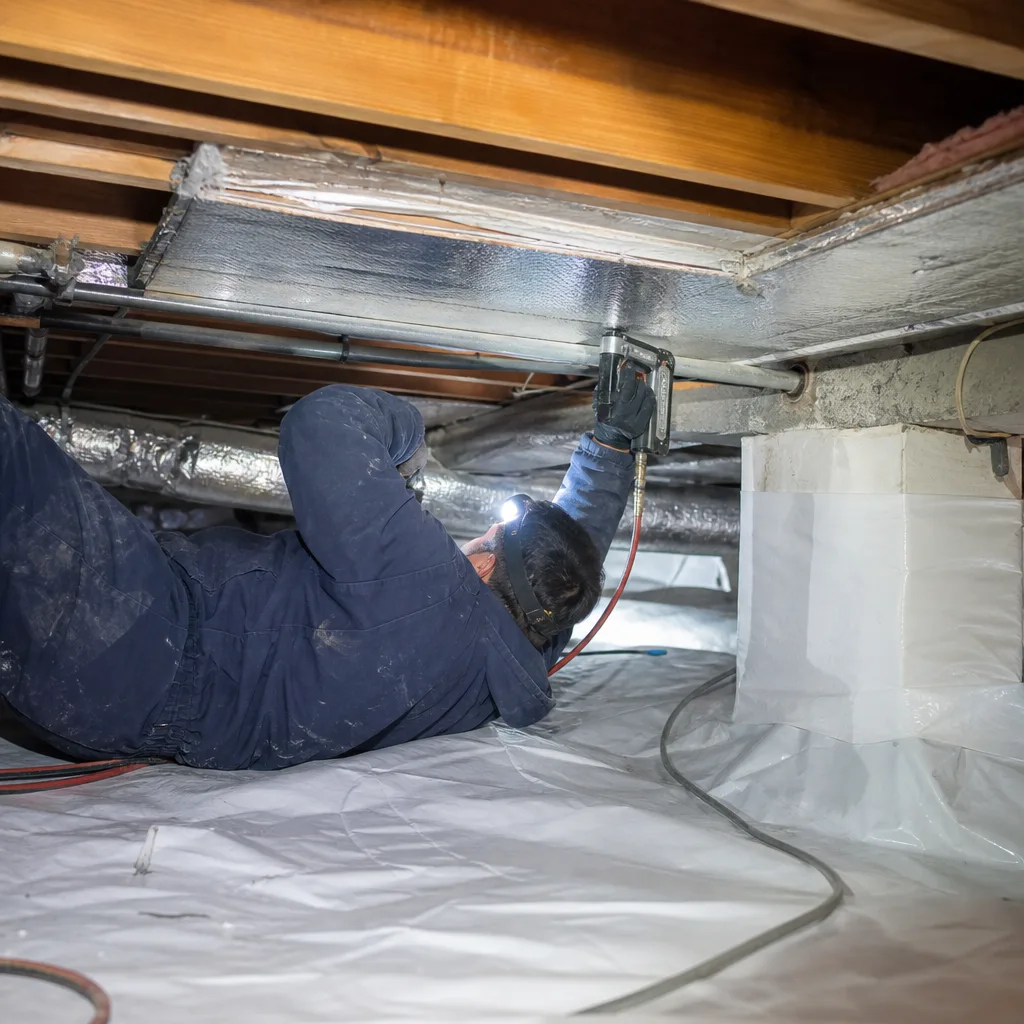
- Second-story rooms run 8 to 12 degrees hotter than the first floor in summer. The radiant barrier’s reflectivity degrades when dust accumulates on the foil surface over several Chicago summers. A layer of construction dust or blown-in debris cuts reflectivity from roughly 95% to 60% or lower.
- Visible sagging or tearing when you look up through the attic hatch. Radiant barrier stapled to rafters without enough fasteners eventually pulls loose – Chicago’s freeze-thaw cycles expand and contract the framing enough to pop staples over time.
- Condensation on the underside of the roof deck in winter. If the barrier was installed with the wrong orientation or without the required air gap, it traps moisture against cold sheathing. By January, you’ll see frost on the underside of the roof boards.
- AC runs continuously on days over 85 degrees but the house still feels humid. When the barrier fails, the attic becomes a heat reservoir that re-radiates into the living space all evening. Your AC never catches up because the load never drops.
- Rockwool batts visible with a dull, darkened foil face. Aluminum foil oxidizes slowly, but in a Chicago attic with seasonal humidity swings, unprotected foil-facing can lose its reflective sheen within five years. The Rockwool is fine; the reflective layer is not.
Replacement Cost & What’s Included
In Chicago, installing a new radiant barrier over existing Rockwool insulation runs between $1,800 and $3,400 for most attics between 1,000 and 2,000 square feet. Full rafter-bay installation with a new radiant barrier under the roof deck typically lands between $2,600 and $4,200, depending on attic accessibility, roof pitch, and whether the existing Rockwool needs repositioning before the barrier goes in. These are installed prices: materials, labor, fasteners, and our written scope included.
What drives the range is attic geometry more than house size. A low-slope attic where our technicians work on their knees, or an attic with finished knee walls and limited access hatches, takes longer and costs more than a wide-open ridge. Every quote includes a written line-item breakdown – material, labor, disposal of the old barrier if needed – under Haven Standard Clause 1: a flat price and written scope before anyone lifts a tool. The work carries our 365-Day Done Right Promise, and every job closes with a Documented Photo Record showing exactly what was installed and where.
DIY or Call Us?
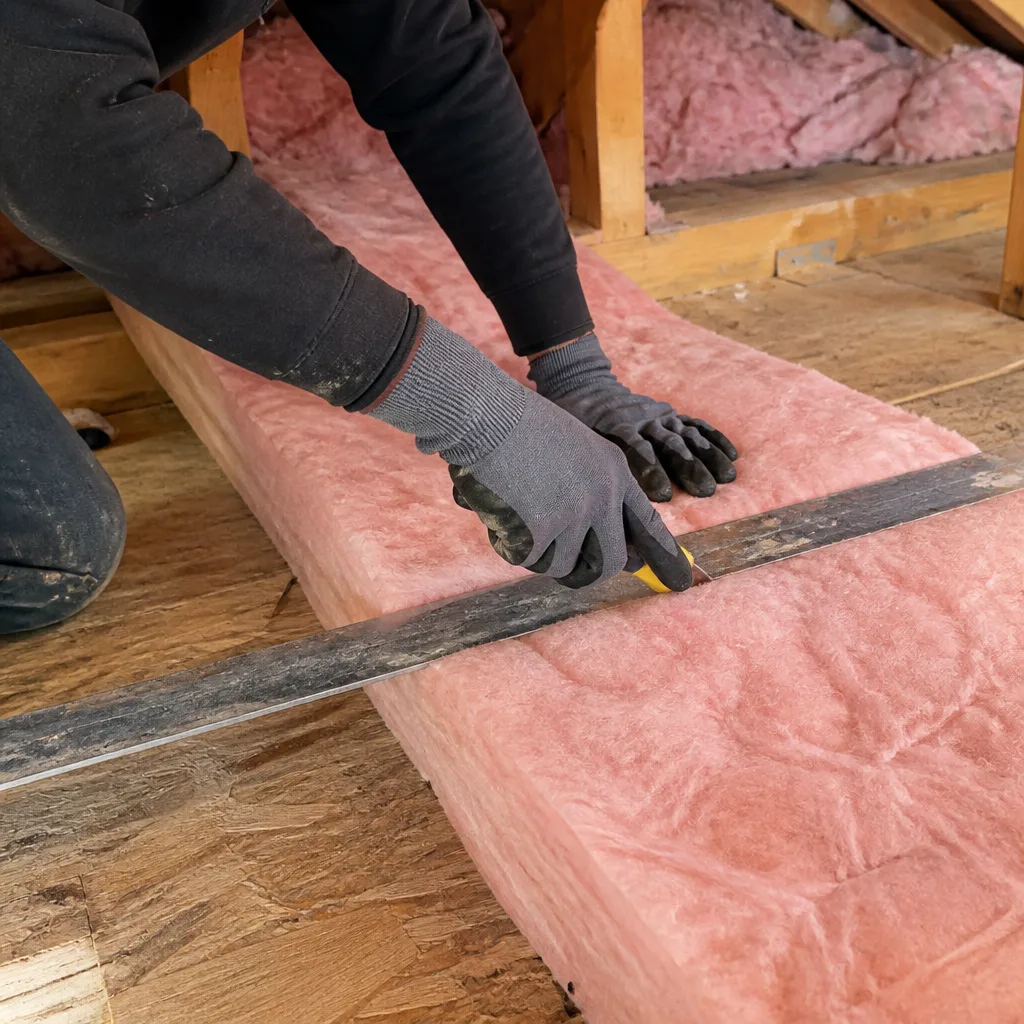
You can safely check a few things yourself before calling anyone. From the attic hatch or a ladder, look for obvious sagging, tearing, or separation between the barrier and the Rockwool below it. Look at the top side of the barrier – if you can write your initials in accumulated dust, that barrier needs replacement or at minimum a careful cleaning, and in a Chicago attic that’s usually a replacement situation. You can also note the orientation of the foil: if it’s facing the roof deck with no air gap, that’s a condensation problem waiting for January.
Where DIY goes wrong is the installation itself. Attic work in Chicago means 140-degree attic floors in July and 10-degree rafter bays in February, fiberglass and mineral wool dust, and the ever-present risk of stepping between joists through a drywall ceiling below. Radiant barrier handling produces sharp metal edges that cut faster than any utility knife. If you’re comfortable with the material and your attic has a proper floor, this is a weekend project for a careful amateur. If it does not have a raised floor or the roof pitch is steep, call us at (218) 261-7714 and we’ll give you a written price before any work starts.
FAQs
A properly installed radiant barrier paired with Rockwool lasts 15 to 20 years in Chicago’s climate before reflectivity drops enough to matter. The failure point is usually dust accumulation or mechanical damage from someone working in the attic, not the material itself. In vented attics with heavy soot or dust infiltration, that lifespan can drop to 10 years. Call (218) 261-7714 for an inspection; we’ll tell you if yours needs replacement or just a specific repair.
Yes, if the damage is limited to a torn section or a few pulled-away staples, we can repair that section without touching the rest. What we won’t do is patch a barrier that has failed across more than about a third of the attic surface, because at that point the labor cost of a repair approaches 60% of a full replacement and you’re left with a barrier of inconsistent reflectivity. The honest answer depends on what we see, and we’ll show you photos of it while we’re on site.
Most Chicago attic installations finish in one day: we arrive in the morning, remove any failing barrier material, prep the surface, install the new barrier, and finish with a photo log of the work. A full rafter-bay installation in a steep or finished attic may run into a second day. We’ll give you a specific completion window in the written scope before work begins, and a named technician texts you when they’re on the way.
Yes, we stock the radiant barrier materials on our trucks for immediate installation. For Rockwool-specific applications we carry the foil laminate in two standard widths, plus Reflectix brand when the attic geometry calls for a reinforced product with a foam core. The material is picked to match your existing Rockwool’s R-value and the barrier’s required air gap, not whatever is left in the warehouse.
Written by Wes Okafor, Owner & Lead Building Envelope Technician, Topside Attic Insulation, serving Chicago and nearby areas.