

Crawl Space Encapsulation and Vapor Barrier in Houston, TX
Crawl space encapsulation in Houston typically costs between $5,500 and $14,000 for a full system on a standard pier-and-beam home, with vapor barrier installation alone running $2,800 to $6,500 depending on crawl depth, square footage, and condition of the existing joists. We respond to Houston crawl space calls within one business day, and our crews are on site with a written price before any work starts. Call (218) 261-7714 to have one of our technicians walk your Houston crawl space and tell you exactly what it needs.
Houston’s hot-humid climate turns crawl spaces into something most contractors from drier markets don’t recognize. A crawl in The Heights behaves nothing like one in Dallas. The moisture load is constant, the soil moves, and the standard fixes found in national guidebooks fail here within a few seasons. That’s why our Crawl Space Encapsulation & Vapor Barrier team designs every Houston job around gumbo clay soil movement and a nine-month humid season.
Why Houston Crawl Spaces Fail Differently
Houston sits in IECC Climate Zone 2A, hot-humid. That means the outdoor dew point from April through October often sits above 70°F. When that air moves through open crawl vents and contacts the undersides of floor joists, rim joists, and subflooring, condensation forms. The wood never dries. Not fully, not ever. This is the underlying cause of most rotted sills, musty smells, and mold we find under Houston homes.
But the more specific problem is the soil. Houston’s pier-and-beam foundations sit on gumbo clay, a shrink-swell soil that expands when wet and contracts during drought. In neighborhoods like The Heights, Montrose, and parts of the Museum District, 1920s through 1940s bungalows sit on open crawl spaces where the ground moves under every season change. A vapor barrier staked flat in January gets pulled tight and torn at the pier attachments by July. The seams separate. Humid air re-enters at every tear. We see this pattern almost weekly.
A standard 6-mil polyethylene barrier from a home center cannot survive Houston soil movement. It’s too thin to hold a seam under tension, and the pier penetrations get yanked open as clay contracts. We specify 10-mil or 12-mil reinforced vapor barrier on Houston pier-and-beam homes for this reason. The extra tensile strength means seams hold when the ground shrinks. For a more detailed look at how we approach these projects, our full Crawl Space Encapsulation & Vapor Barrier in Houston service breakdown covers materials and methods.
What Happens in a Houston Crawl Without Encapsulation
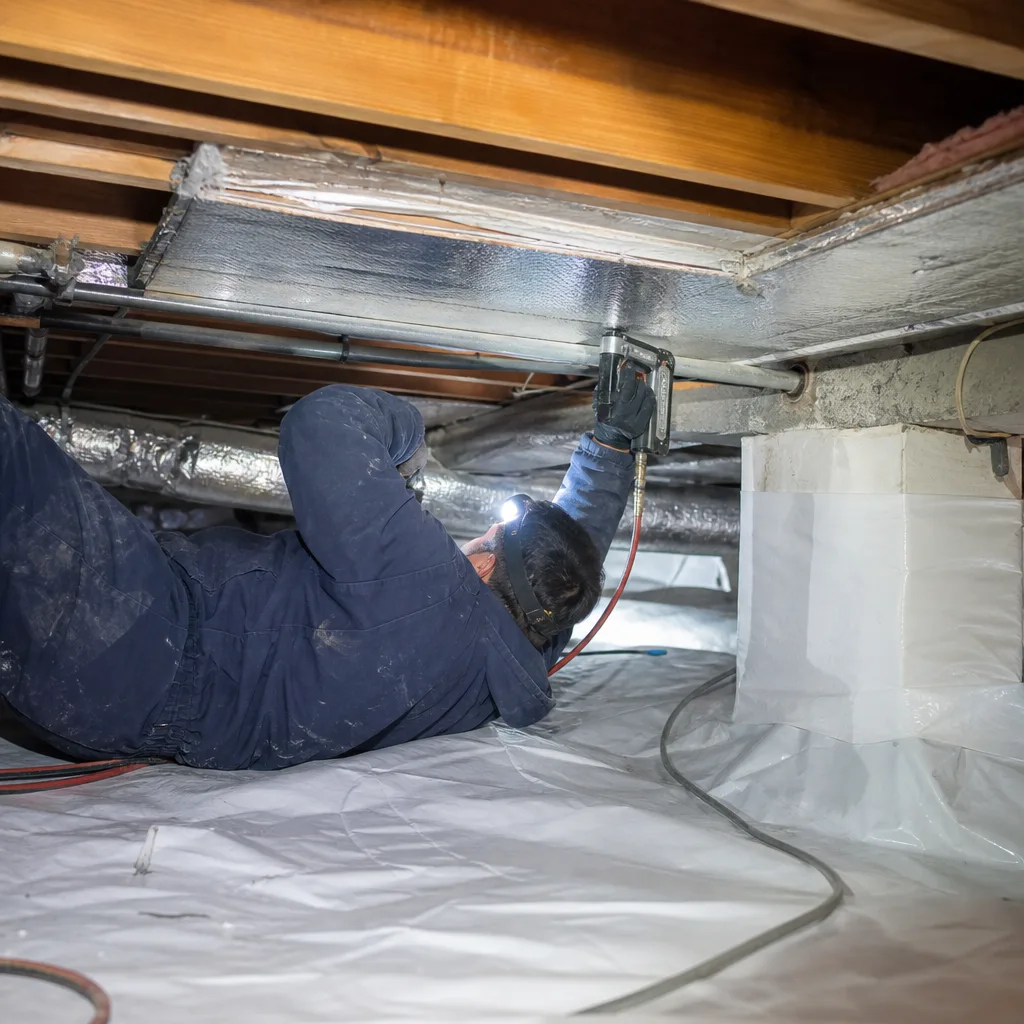
Open crawl vents in Houston don’t ventilate. They import humidity. During a typical Houston summer day at 93°F and 72°F dew point, air entering a shaded crawl space hits the cooler surfaces under the floor and condenses. Ductwork in the crawl sweats. Fiberglass insulation in the floor joists acts like a sponge, soaking up that moisture and losing R-value while holding it against the wood. We regularly pull out batts in Memorial and Montrose homes that weigh three times what they did when installed because they’ve been absorbing crawl humidity for twenty years.
In a 1930s Montrose bungalow, our crew pulled back a failed 6-mil poly that had puddled water at the piers and found R-19 fiberglass hanging from the floor joists soaked with condensation. The homeowner had redone the vapor barrier two years earlier, but the seams had torn at the pier attachments as the gumbo clay dried. We quoted a full encapsulation with 12-mil reinforced vapor barrier, taped and sealed at all piers, plus closed-cell spray foam on the rim joist and band board. The crawl held at a steady 52% relative humidity through a Houston August.
Our Crawl Space Encapsulation Services in Houston
Crawl Space Vapor Barrier
A vapor barrier in a Houston crawl space has to do two jobs: block soil moisture from rising, and survive the constant pull of gumbo clay movement. We install 10-mil and 12-mil reinforced barriers, never thin 6-mil for Houston homes. Every seam gets taped, every pier gets mechanically fastened and sealed, and the barrier runs up the foundation walls rather than stopping at the edges. Housing stock in The Heights and Montrose, with their 1920s to 1940s pier-and-beam crawls, needs the heavier material.
Crawl Space Encapsulation
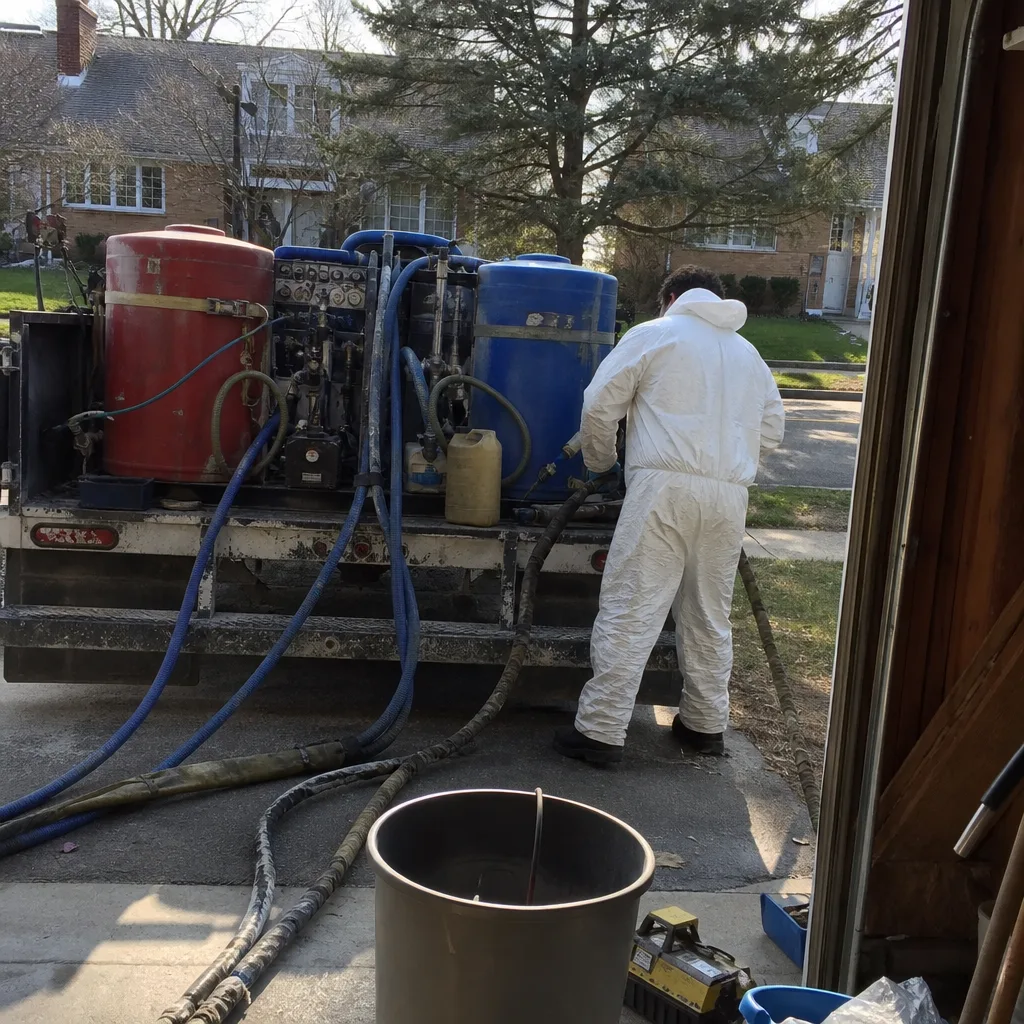
Encapsulation seals the crawl from ground to subfloor: vapor barrier on the floor and up the walls, closed-cell spray foam on the rim joist and band board, crawl vents sealed or replaced, and a dehumidifier sized for the cubic feet. In Houston, we always recommend encapsulating the rim joist with closed-cell foam rather than leaving fiberglass there. Fiberglass on a rim joist in Houston’s humidity becomes a condensation surface itself, feeding mold and rotting the sill plate over time.
Crawl Space Insulation
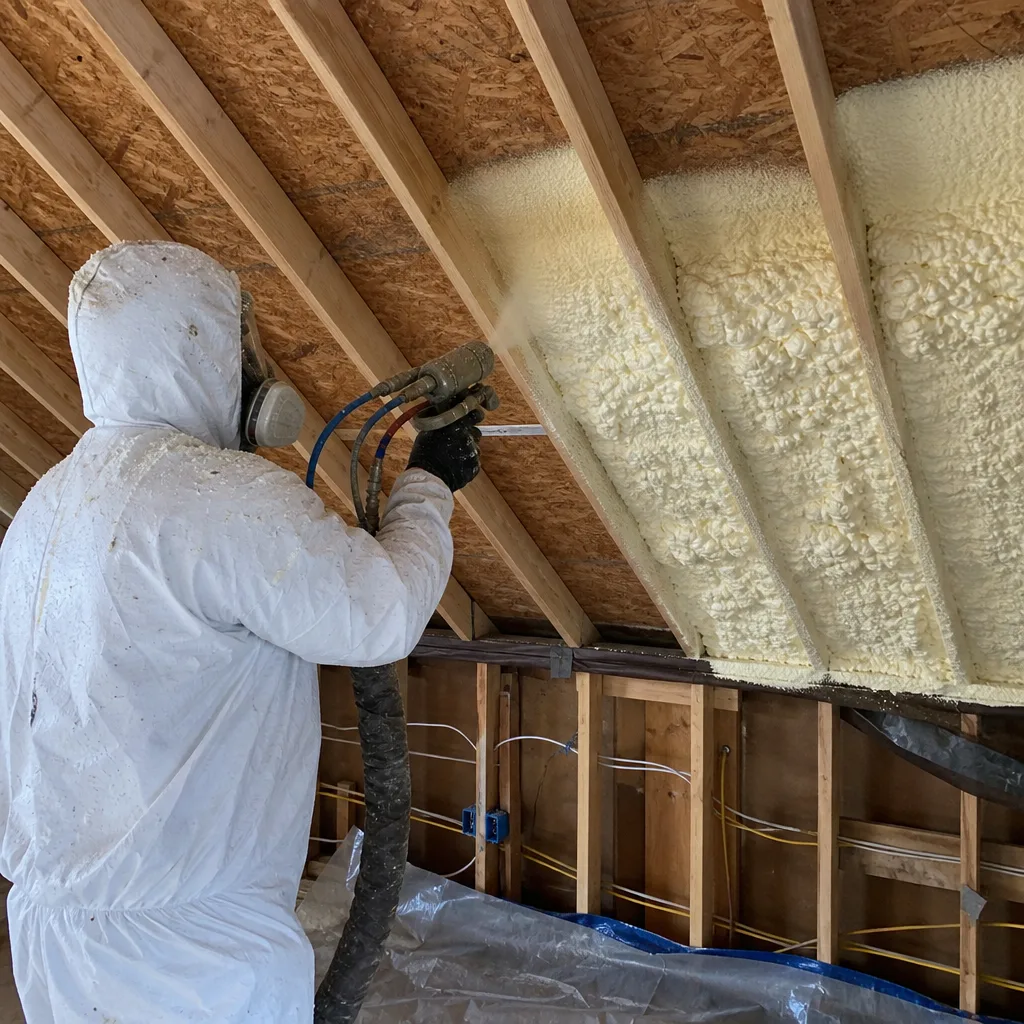
Most Houston pier-and-beam homes have either inadequate or failed insulation under the floor. Batts fall, get saturated, or were never installed correctly in the first place. After air sealing and vapor barrier work, we install insulation rated for below-floor use in a humid climate. Closed-cell spray foam on the band board and rim joist is our standard for encapsulated crawls in Houston because it air seals and insulates in one layer.
Crawl Space Moisture Control
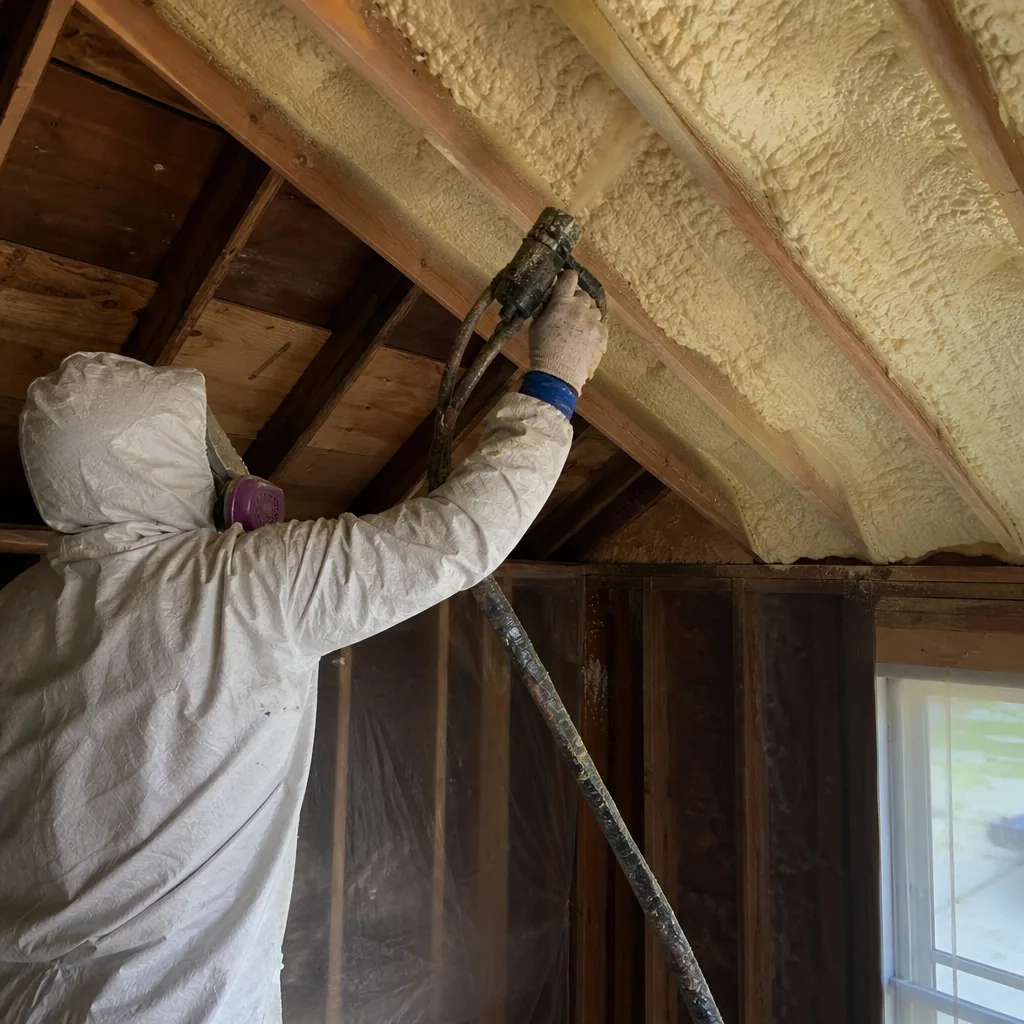
Moisture control is the core of the work, not an add-on. We measure crawl relative humidity with a hygrometer before and after, and we size dehumidifiers to hold the space at or below 55% RH. Houston’s dew point rarely drops below 60°F even at night during summer, so natural ventilation never dries a crawl here. We document the readings so you can see the before-and-after change in writing and photos.
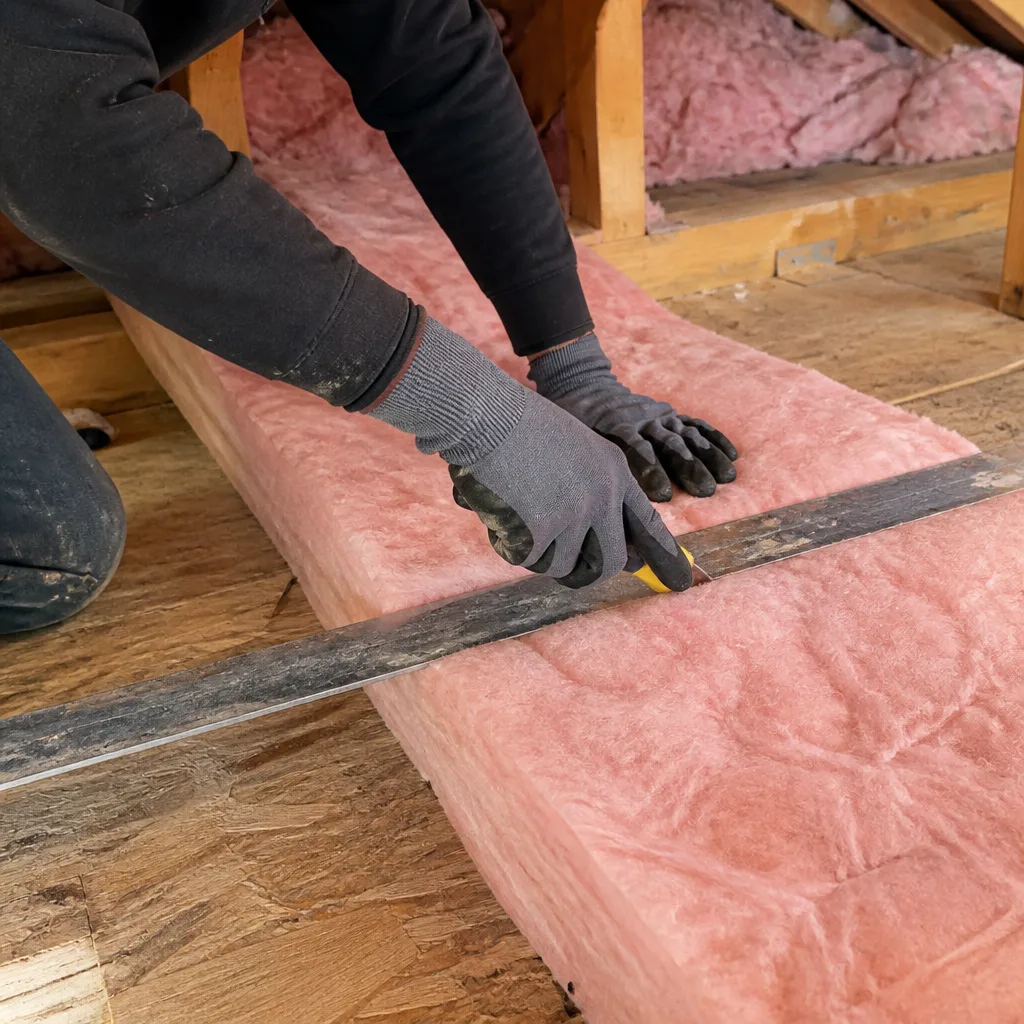
What happens when you call
- 1
A real person answersNo phone trees - you reach a local pro.
- 2
You get an upfront price rangeHonest numbers before anyone is dispatched.
- 3
A background-checked tech heads outLicensed & insured, dispatched right away.
- 4
You approve before work beginsNothing starts until you say go.
Houston-Specific Moisture Problems We See
- Torn 6-mil barriers at pier attachments. Gumbo clay contracts in summer drought, pulling the barrier tight and splitting it where it’s fastened to piers. Once open, Houston’s humid air pours back in and the barrier does nothing.
- Interior vapor retarders on crawl walls. Some older Houston homes have plastic or foil stapled to the inside of crawl walls. In this climate, that traps moisture against the rim joist and sill plate, feeding mold and rot over five to ten years.
- Duct sweating and rusted fasteners. Open crawl vents let 90°F+ dew-point air flow under the house and hit metal ductwork cooled to 60°F. The condensation rusts hangers and fasteners within a decade and saturates any insulation touching the ducts.
- Original fiberglass batts saturated with Gulf Coast humidity. Homes in neighborhoods like Memorial and Briargrove, built during the 1970s and 80s boom, often still have the original underfloor batts. After decades of Houston humidity, they’re compressed, wet, and effectively doing nothing.
How Houston’s Gumbo Clay Changes the Job
This is the thing no national encapsulation guide tells you. Houston’s open crawls in 1920s to 1940s pier-and-beam bungalows sit over gumbo clay that shrinks and swells with droughts and floods. Vapor barrier seams and pier attachments must tolerate constant soil movement. A seam that’s simply taped flat may hold for a season, but it will tear when the clay dries and the ground drops by an inch. We mechanically fasten at every pier, leave slack where the soil meets the wall, and use a reinforced barrier that stretches without splitting. You won’t see this failure mode in Houston’s slab suburbs because the slab floats over the clay. But under a pier-and-beam house, the ground is the floor of your crawl space, and it’s moving all year.
Pricing for Crawl Space Encapsulation and Vapor Barrier in Houston, TX
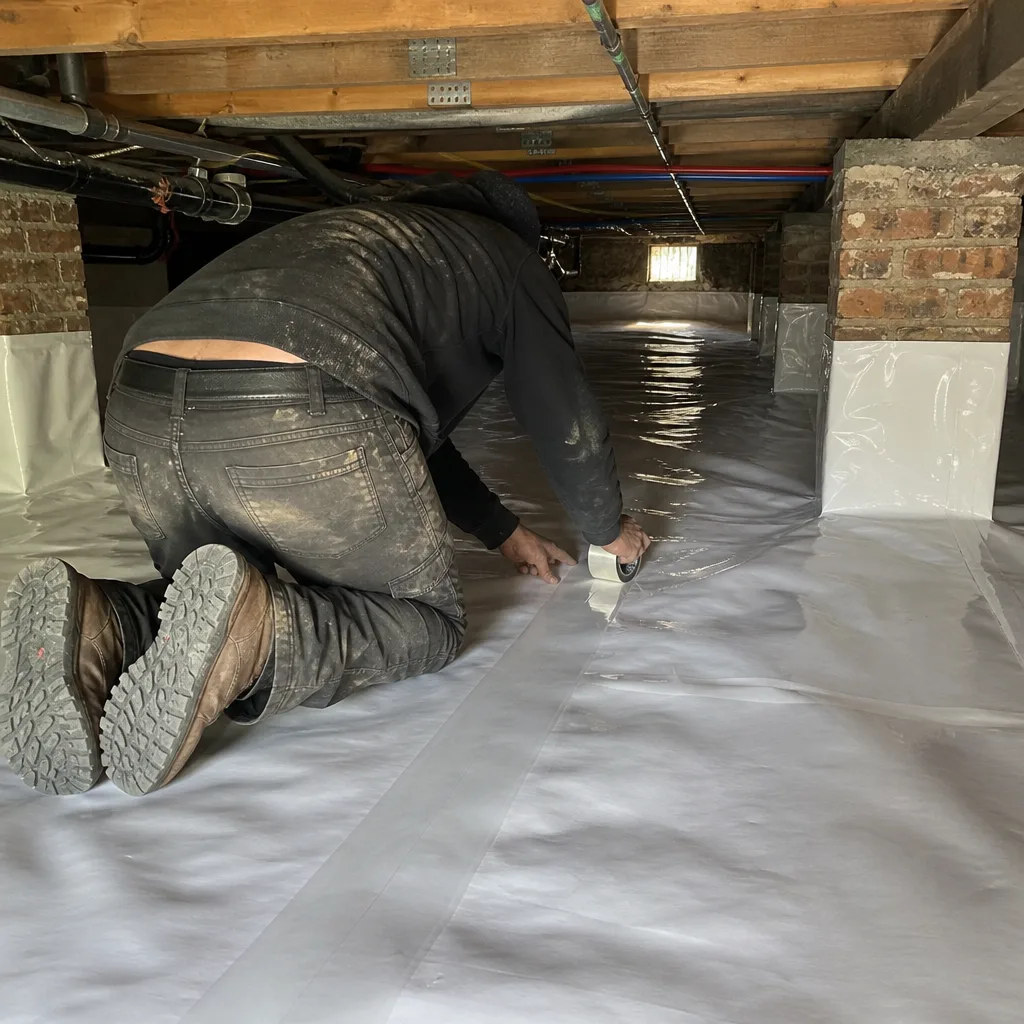
Most Houston pier-and-beam homes fall into these ranges, based on square footage, crawl depth, and existing conditions:
- Vapor barrier replacement only: $2,800 to $4,500 for a 1,200 to 1,800 square foot crawl
- Full encapsulation with 12-mil reinforced barrier, sealed vents, and rim joist foam: $8,000 to $14,000
- Encapsulation plus dehumidifier: add $1,800 to $3,200, depending on capacity needed
- Crawl space cleanout and debris removal before encapsulation: $500 to $1,200
Every Topside Attic Insulation job starts with a written price. No work begins until you’ve seen the number, the scope, and the warranty in writing. We also provide a free second opinion on any written estimate you’ve received from another contractor. Bring us the quote and we’ll read it with you. Call (218) 261-7714 to schedule a crawl space assessment in Houston.
What You Get When We Finish
Under The Haven Standard, every Houston crawl space job closes with a documented record. That means photos of the completed encapsulation, the relative humidity reading before and after, the written scope signed at the start, and a written warranty. On encapsulation projects, you’ll see the air sealing and moisture details in the photo record so there’s no question about what was done under the house. If it’s not done right, our 365-Day Done Right Promise covers fixing it. We’ve sealed and insulated 9,000+ homes since 2016 under this standard, and every one of them got a written price before anyone lifted a tool.
Materials We Use in Houston Crawl Spaces
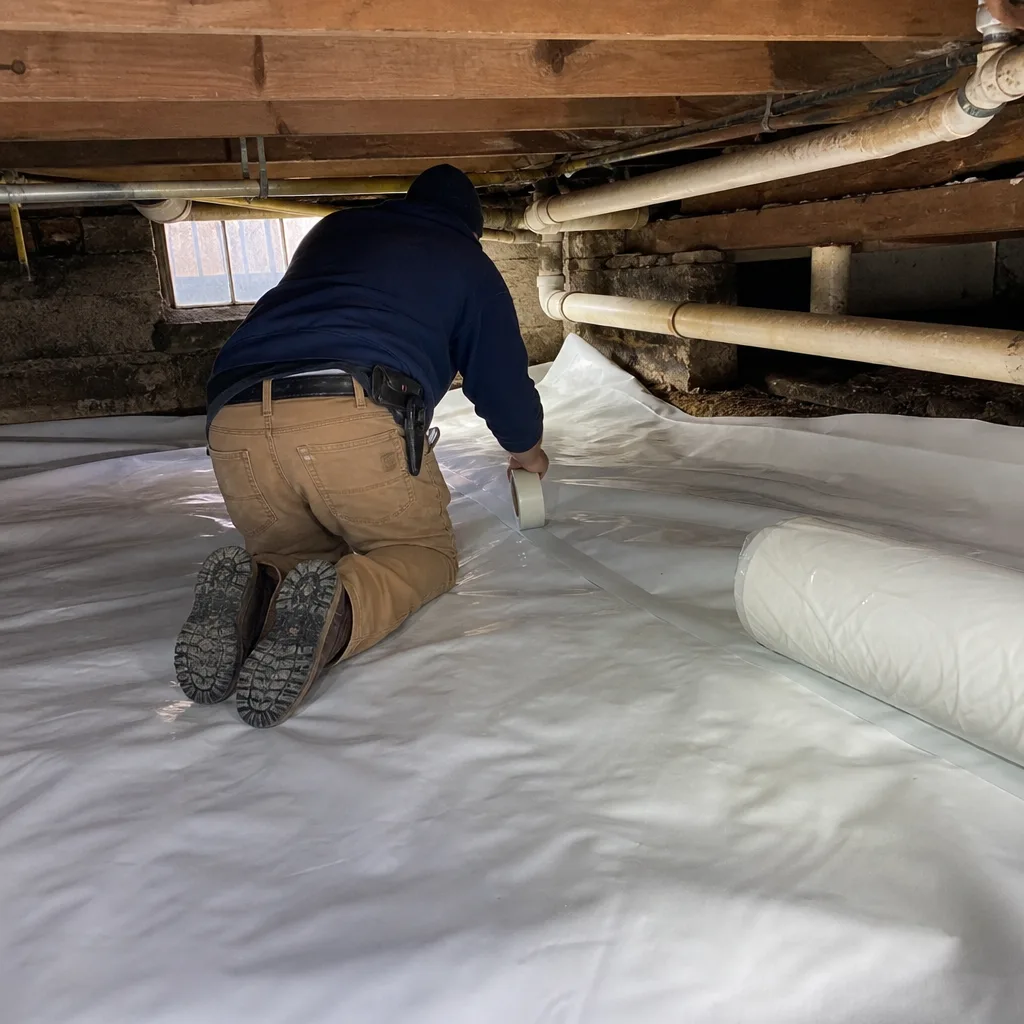
We source materials from Owens Corning, Johns Manville, Knauf, and Reflectix in Houston, and we choose products based on the specific Houston conditions of your crawl, not on a preferred supplier contract. That means closed-cell spray foam where air sealing matters, reinforced poly where soil movement demands it, and batt insulation only where it’s appropriate. No proprietary lock-in. The materials get matched to the job, and you see exactly what’s being installed in the written scope.
We Also Serve Cities Near Houston
Our Houston crews run encapsulation and vapor barrier jobs throughout the metro, including crawl space encapsulation and vapor barrier work in Pasadena, Pearland, Baytown, and Missouri City. Same written pricing, same documented record, same 365-Day promise. If you’re in a neighboring city, call (218) 261-7714 and we’ll schedule a walkthrough.
Serving Houston, TX - Our Local Coverage Area
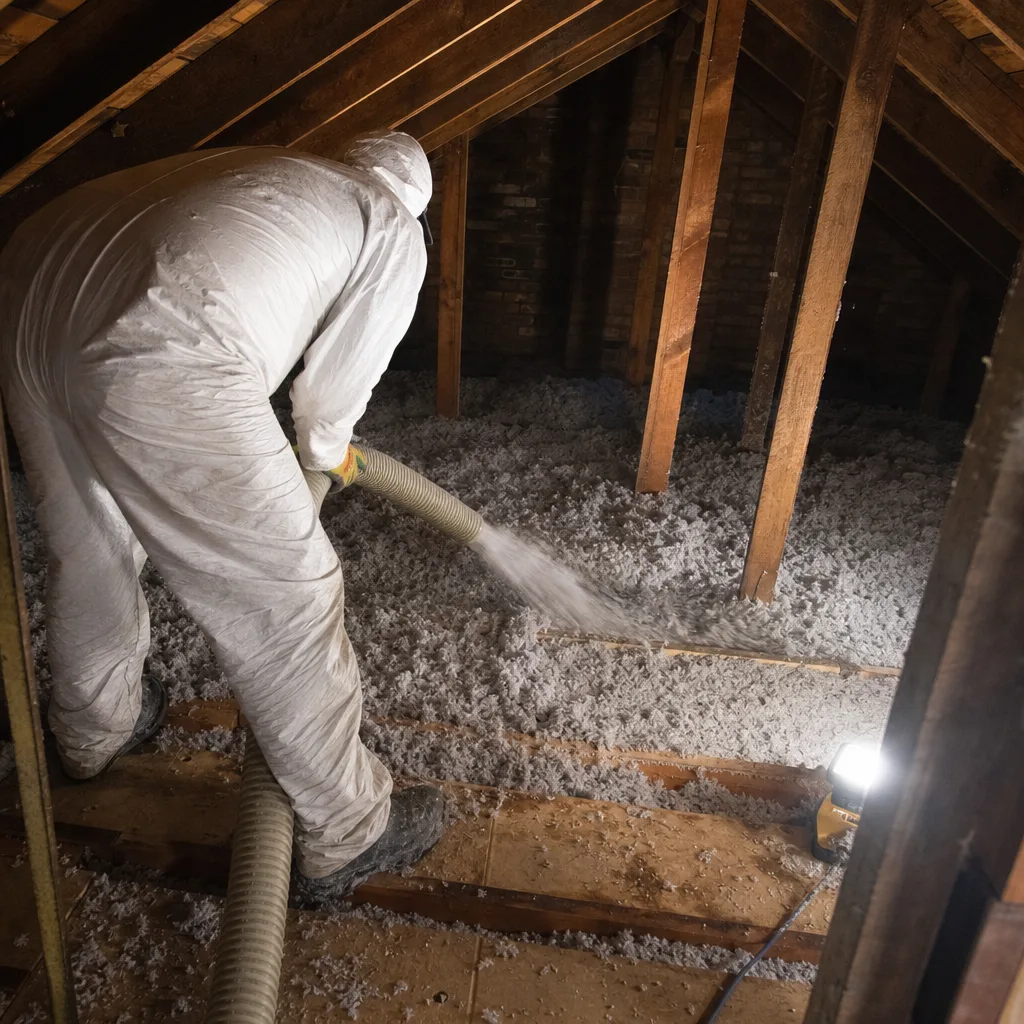
We’re based in the Houston area and know this community well. Use the map below to see our service coverage - if you’re nearby, we can almost certainly help.
FAQs - Crawl Space Encapsulation and Vapor Barrier in Houston
Most likely the barrier has torn at the pier attachments or the seams, and Houston’s humid air is entering through those openings. In Heights bungalows on gumbo clay, a 6-mil barrier often splits when the soil contracts in summer. We check for pier attachment failures first, then look for gaps at the foundation wall and open vents. If the barrier is compromised, we replace it with 10-mil or 12-mil reinforced material. Call (218) 261-7714 for a crawl inspection in The Heights with a written price before any work starts.
Yes, in almost every case. Houston’s outdoor dew point stays above 60°F for much of the year, so even a sealed crawl space will accumulate moisture from the ground and any minor air infiltration. A dehumidifier sized to the cubic footage keeps relative humidity at or below 55%, which is the threshold where mold and wood rot stop advancing. We size and install the unit as part of the encapsulation scope.
A properly installed vapor barrier slows the moisture that causes joist rot, but it doesn’t fix existing rot or address rim joist condensation. The joists that are already compromised need to be evaluated and possibly repaired, and the rim joist and band board need closed-cell spray foam to stop air from reaching the cold wood. A vapor barrier alone is incomplete in Houston. We’ll document the condition of your joists in the written scope.
10-mil or 12-mil reinforced is the minimum we install in Houston. A 6-mil barrier cannot handle the soil movement in pier-and-beam crawls over gumbo clay and will tear at the seams and pier attachments. The heavier reinforced poly resists that tension and holds a sealed seam for years. In drier markets, 6-mil may pass. In Houston, it fails.
Yes. When your crawl space is sealed and dehumidified, the air under your floor stops pulling humid outside air into the house, which reduces the moisture load your AC has to remove. You also stop losing conditioned air through floor penetrations and duct leaks in the crawl. We’ve documented humidity reductions from over 70% RH to under 55% RH in Memorial and Briargrove homes, and that translates to a measurable drop in cooling load.
Call Topside Attic Insulation for Crawl Space Work in Houston
If your Houston crawl space smells musty, has standing water after rain, or you’re seeing mold on the floor joists, don’t wait through another humid season. We’ll send a technician to measure the crawl, document the condition, and hand you a written price with a written scope and warranty before any work starts. A live person answers calls 24/7. Call (218) 261-7714 today to schedule your free crawl space assessment in Houston.
Written by Wes Okafor, Owner at Topside Attic Insulation, serving Houston since 2016.