

Fast, Reliable Crawl Space Encapsulation & Vapor Barrier Across Plano
Most crawl space work in Plano is not what a typical encapsulation company expects. We get calls from homeowners in the Spring Creek corridor, downtown near Haggard Park, and the older pockets off Parker Road who have discovered a pier-and-beam addition or a raised porch foundation that is sweating, molding, or dropping cold air into the house. Topside Attic Insulation coordinates crews from our Dallas-Fort Worth office to serve Plano directly, and we approach every one of these jobs with structural awareness that slab-focused crews simply do not carry. If you’ve got a damp, musty crawl space under a Plano home, call (218) 261-7714 for a written price before any work starts.
Here’s the thing about Plano specifically: this city exploded between 1978 and 1998, and nearly everything built in that window went on slab. True crawl spaces are rare. What we actually see are pier-and-beam foundations on pre-boom farmhouse remnants, 1980s additions, and raised porches that were never properly sealed. That’s the niche this page is about.
What Crawl Space Encapsulation Means in Plano, Specifically
Plano’s residential core is overwhelmingly built in a tight 1978-1998 window, when the city went from roughly 72,000 residents to nearly 220,000 on the back of corporate relocations like EDS and Frito-Lay. That construction era leaned hard on slab foundations, which means the crawl spaces we do encounter in Plano are almost always attached to something older or nonstandard: a 1920s farmhouse remnant behind a Spring Creek corridor home, a pier-and-beam addition tucked onto a 1980s Kaufman & Broad original, or a raised porch that a previous owner closed in. Our Crawl Space Encapsulation & Vapor Barrier work in Plano therefore starts from a different question than it does in, say, Garland or Richardson: not “how do we seal a full crawl,” but “what is this foundation actually doing, and what’s the right intervention for this specific structure?”
The practical upshot is that Plano homeowners need a crew that understands both vapor dynamics and the way expansive clay soil moves under shallow pier-and-beam footings. That’s what we do. A 24-inch crawl space under a 1920s-era addition off Spring Creek is a far cry from a 4-foot vented crawl under a new build in Frisco, and it demands different materials, different sealing tactics, and different drainage thinking.
One thing we tell every Plano homeowner who calls about a crawl space: if the floor above is cold in winter and the crawl smells like wet cardboard in summer, it is almost always a moisture problem first and an insulation problem second. Air sealing and vapor control come before batts; that sequencing is the entire founding premise of our company, and it applies doubly in Plano where the clay soil underneath is actively moving against whatever barrier you put down.
Why Plano Homeowners Choose Topside Attic Insulation for Crawl Space Work
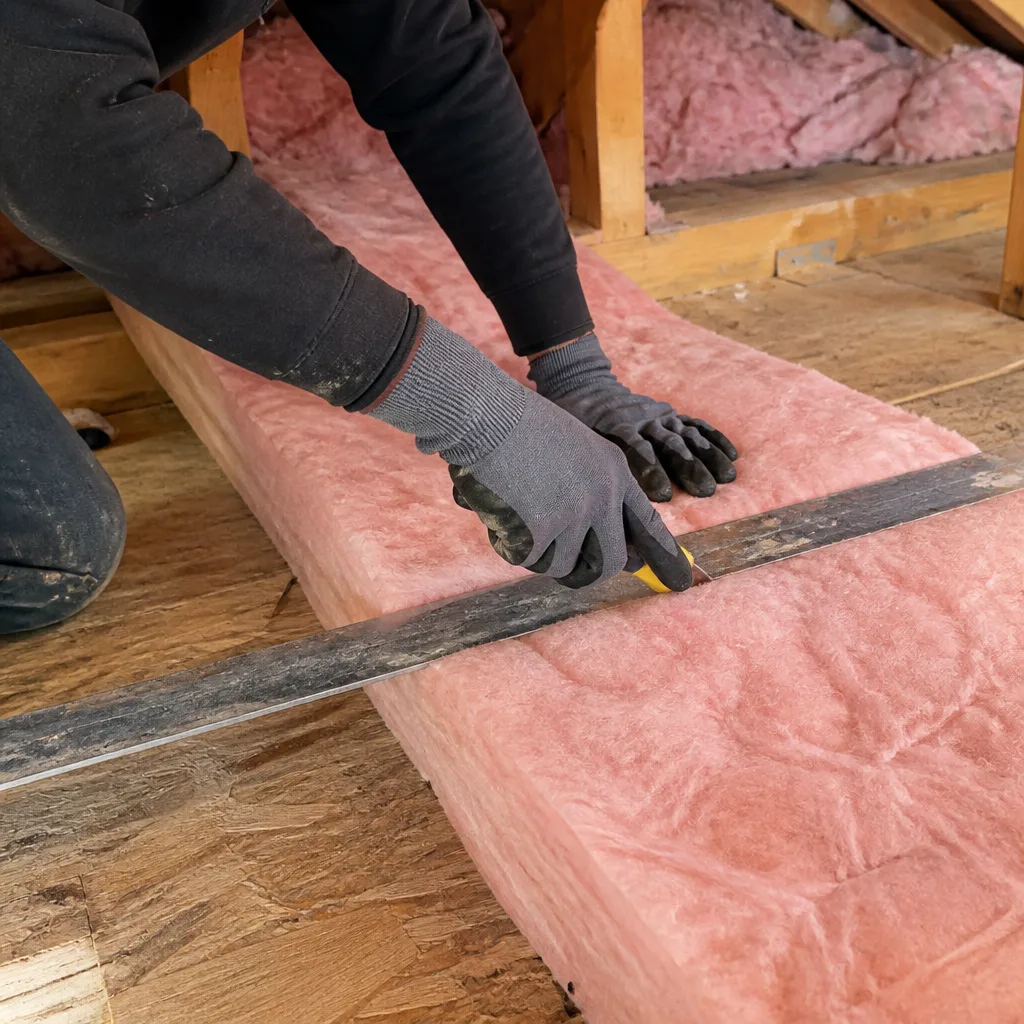
We have been operating independently under The Haven Standard since 2016, and that standard governs every Plano crawl space job the same way it governs every attic air-sealing job: a written scope, a written warranty, and a flat price before anyone lifts a tool. There is no “call for a quote” theater here. You get a number on paper.
Plano customers have consistently told us the same three things in their reviews: the crew showed up on time and texted before arrival, the before-and-after photo record made the work legible, and the price that was written before the job started was the price that appeared at the end. We publish blower-door numbers on every applicable job, which means if we seal the rim joists and the crawl space under your addition, you will see the air-leakage figure drop in writing, not just feel a vague improvement.
Our local knowledge matters because the failure modes in Plano are not the same as they are in Carrollton or Allen. We know that the K-Area neighborhoods east of Independence Parkway have a concentration of 1980s additions with inadequate perimeter drainage. We know that pier-and-beam runs near the Spring Creek floodplain move more during drought years because the clay shrinks away from the footings. And we know that a 6-mil vapor barrier laid loosely over bare dirt in a Plano crawl space will be torn at the seams within twelve months by the same shrink-swell cycle that cracks driveways and shifts fence posts.
Scheduling from our Dallas-Fort Worth office covers all Plano ZIP codes, including 75023, 75024, 75025, 75074, and 75075. We respond to emergency moisture calls in Plano the same day when the schedule allows, and a live person answers the phone 24/7, so you’re never pushing digits through a voicemail tree.
Our Crawl Space Encapsulation & Vapor Barrier Services in Plano
Crawl Space Vapor Barrier
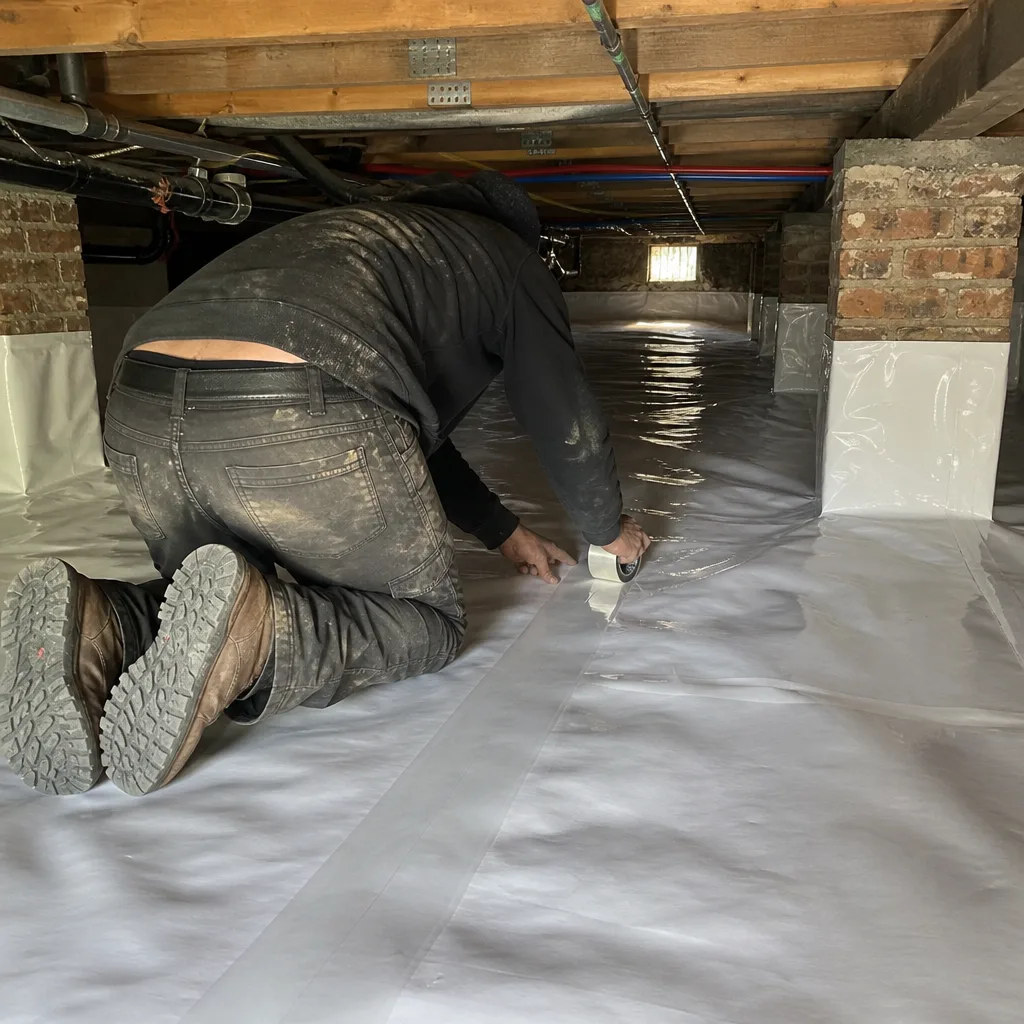
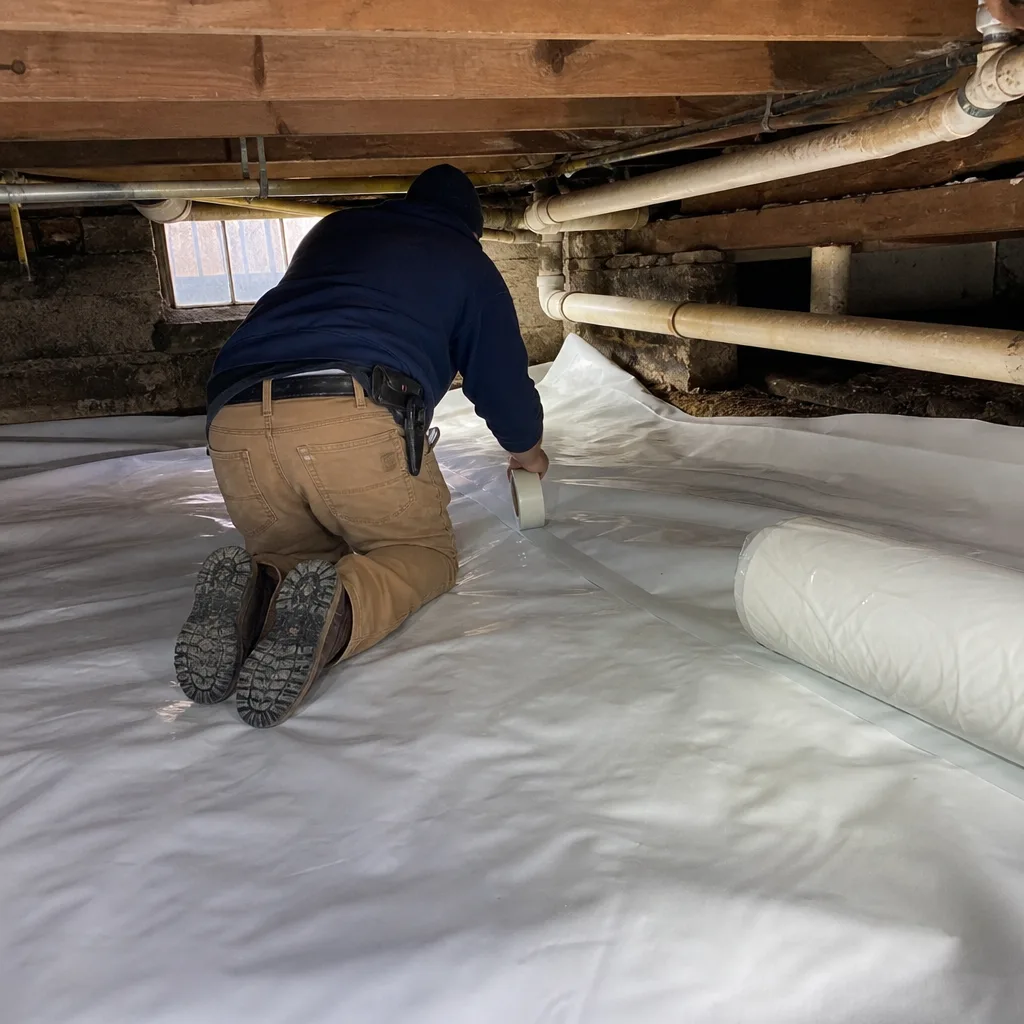
A vapor barrier is a reinforced polyethylene sheet laid over the dirt floor of a crawl space to block ground moisture from evaporating up into the joists and subfloor. In Plano, we install 12-mil reinforced barrier with taped and mechanically fastened seams as the default, not 6-mil. Plano’s clay-heavy soil expands and contracts aggressively between monsoon rains and drought summers, and a thin barrier laid over that moving ground fails fast. Every vapor barrier we install in Plano is secured at the perimeter and sealed at the piers so the clay can move under it without tearing it.
Crawl Space Encapsulation
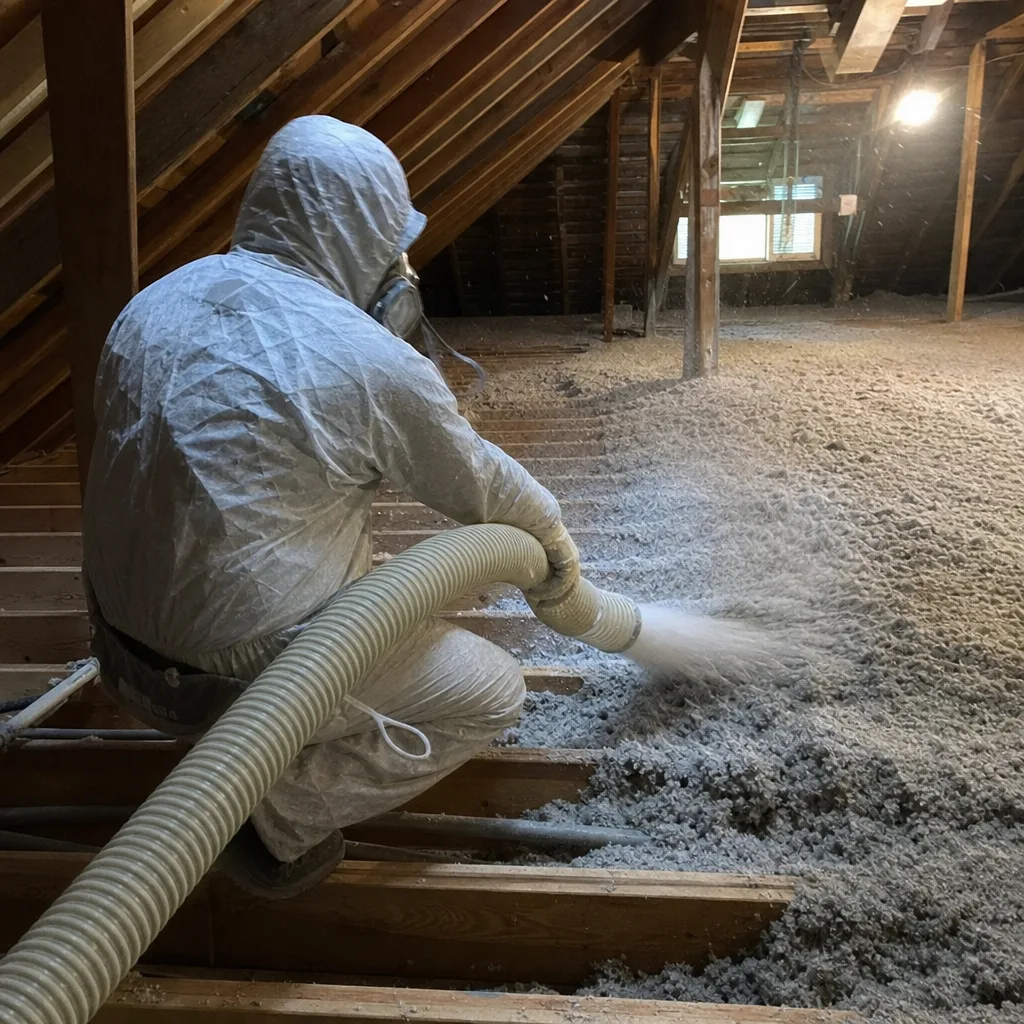
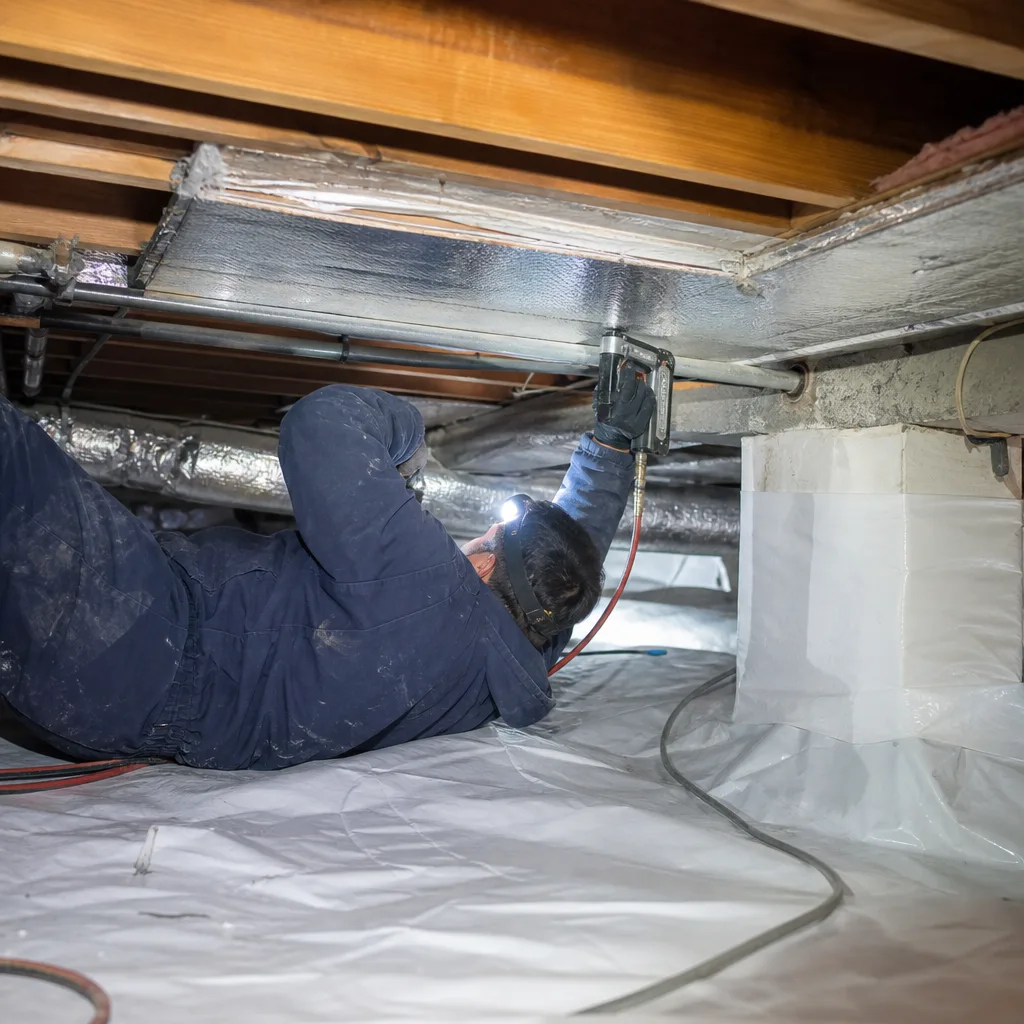
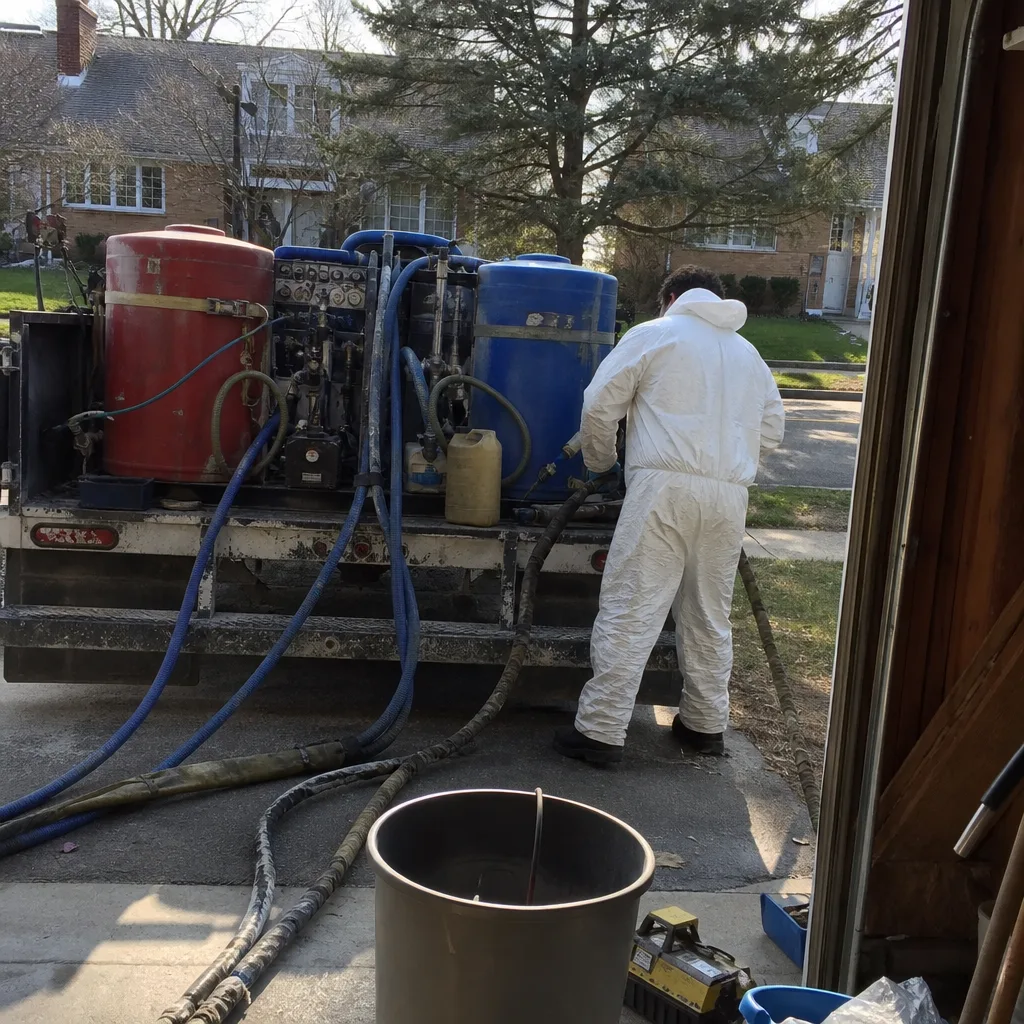
Encapsulation goes one step further than a vapor barrier: the floor, and typically the walls and rim joists, are sealed into a conditioned or semi-conditioned space that is cut off from outside air and ground moisture. For a Plano pier-and-beam addition, this usually means installing a 12-mil barrier running up the brick kneewalls, sealing the rim joist bays with closed-cell spray foam, and adding a dehumidifier sized for the cubic footage. The goal is to stop the stack effect from pulling hot, humid Plano summer air through the crawl and up into the living space.
Our techs recently encapsulated a 24-inch crawl space under a 1920s-era addition behind a Spring Creek corridor home. The original cedar piers had settled, leaving the vapor barrier punctured and the joists sweating. We installed a 12-mil reinforced vapor barrier with taped seams, sealed the rim joists with closed-cell spray foam, and added a dehumidifier. The homeowner’s upstairs bedroom stopped dropping below 50°F during the Uri-style cold snap the following winter. That is what encapsulation is supposed to do in Plano: not just stop mold, but actually hold temperature.
Crawl Space Insulation
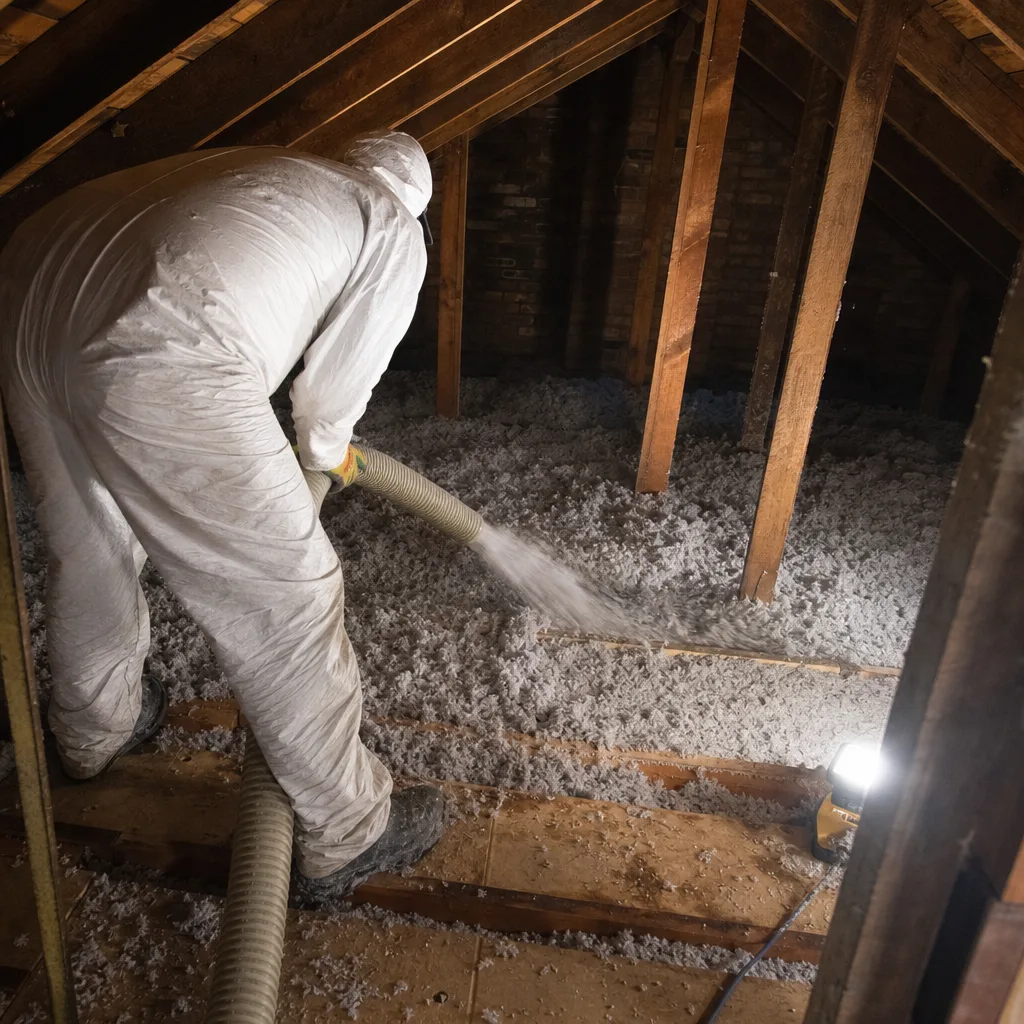
In a Plano crawl space, insulation is the last step, not the first. Once the vapor barrier is sealed and the rim joists are air-sealed, we install batt or board insulation against the kneewalls and in the joist bays if the space is vented. But we never blow or bat insulation over an unsealed Plano crawl space, because the first humid summer will saturate it, the batts will slump, and you’ll be paying twice. The order is non-negotiable: seal first, then insulate. That is the same discipline we apply to attic work in Plano, where we seal top plates, can lights, and penetrations before anything gets blown in.
Crawl Space Moisture Control
Plano’s summer stretches above 100°F push unventilated crawl space temperatures high enough that any exposed ductwork condenses constantly, especially from May through September. We see rusted-out metal duct runs under Plano pier-and-beam additions all the time, usually where a previous “fix” was just a dehumidifier in the corner with no air sealing and an unsecured vapor barrier. Proper moisture control in Plano means three things working together: a sealed vapor barrier, sealed rim joists, and mechanical dehumidification. We have used Johns Manville and Owens Corning products on Plano jobs where the homeowner preferred a specific material spec, but we carry no proprietary lock-in; the right product depends on the crawl’s height, venting, and soil exposure.
Crawl Space Cleanout
Before any Plano encapsulation job, we assess what is actually in the crawl: construction debris from the original build, animal droppings, failed insulation, standing water, or dead ductwork. A cleanout is the pre-requisite for a vapor barrier that can actually seal. In older Plano pier-and-beam additions, we frequently find the original builder’s scrap lumber and brick ends still under the house from the 1980s; removing that and addressing the moisture source is the first physical work on site.
What happens when you call
- 1
A real person answersNo phone trees - you reach a local pro.
- 2
You get an upfront price rangeHonest numbers before anyone is dispatched.
- 3
A background-checked tech heads outLicensed & insured, dispatched right away.
- 4
You approve before work beginsNothing starts until you say go.
Trusted Brands We Service in Plano
We spec materials based on the crawl space’s specific conditions, not a pre-set product list. On Plano jobs we have used vapor barriers and insulation products from Owens Corning, Johns Manville, Knauf, and Rockwool, and we carry stock for the most common Plano crawl space scenarios so we’re not waiting on a distributor when a homeowner needs a job finished before a rain front arrives. The brand matters less than the installation sequence, and in Plano the sequence is always the same: resolve drainage, seal the rim, lay and secure the barrier, then condition the space.
Common Crawl Space Encapsulation & Vapor Barrier Problems We See in Plano Homes
- Clay-soil barrier failure. Plano’s expansive clay shrinks during droughts and swells during the monsoon rains, tearing unsecured 6-mil vapor barriers at the seams within a single season. We replace these with 12-mil reinforced barrier that is fastened at the perimeter and sealed at every pier, so the soil can move beneath it without shredding it.
- Wicking through brick kneewalls. Pier-and-beam additions from the 1980s often lack perimeter drainage, so water wicks up the brick kneewalls and saturates fiberglass batt insulation, causing it to slump and mold. This is a signature Plano failure mode on east-side subdivisions along the Spring Creek corridor.
- Condensate from exposed ductwork. Uninsulated metal ducts running through shallow crawl spaces condense heavily during Plano’s 100°F summer stretches, dripping onto the vapor barrier and creating standing water that rusts out the ductwork from below. The fix is sealing the rim joists and conditioning or dehumidifying the space, not patching the barrier.
- Freeze-thaw damage from Uri-type events. The February 2021 freeze exposed how little thermal buffering Plano’s 1980s and 1990s pier-and-beam additions actually had. Many homeowners only discovered their crawl space existed when burst pipes or frozen joists forced them under the house; the thermal shock also separated poorly taped vapor barrier seams and opened rim joist gaps that had been hidden for decades.
Pricing for Crawl Space Encapsulation & Vapor Barrier in Plano, TX
A vapor barrier replacement in a typical Plano pier-and-beam crawl space, roughly 800 to 1,200 square feet, runs $1,800 to $3,400 depending on the barrier mil thickness and how much prep cleanout is required. Full encapsulation on the same footprint, including rim joist sealing, kneewall barrier, and a dehumidifier, runs $6,000 to $12,000 in Plano. If the crawl is unusually shallow, which is common on pre-boom farmhouse remnants near downtown Plano, the labor hours increase because the crew is working in tight clearance; that can push full encapsulation toward the top of that range. Every Plano estimate is a written price before any work starts, and it includes the documented photo record and the written warranty. Call (218) 261-7714 and we’ll give you a number, not a ballpark.
We Also Serve Cities Near Plano
Our Plano crews regularly handle crawl space work in Plano and the surrounding Metroplex: Allen, Richardson, Carrollton, and Garland. If you’re in one of those cities and your pier-and-beam addition is showing the same clay-soil movement and moisture issues, call us and we’ll send the same team that works the Spring Creek corridor and the K-Area subdivisions every week.
Serving Plano, TX - Our Local Coverage Area
We’re based in the Plano area and know this community well. Use the map below to see our service coverage - if you’re nearby, we can almost certainly help.
FAQs - Crawl Space Encapsulation & Vapor Barrier in Plano
The deciding factors are whether the crawl space vents to outside air, whether the floor above it is a conditioned living space, and whether you have standing water or active mold. If the crawl under your Plano addition vents freely and the floor above is not finished living space, a properly sealed 12-mil vapor barrier with rim joist sealing is often the right scope. If the space is under a bedroom or bathroom and you feel cold floors in winter and smell must in summer, full encapsulation with dehumidification is the better investment. We will write the scope either way and tell you which one we would do if the house were ours. Call (218) 261-7714 and we’ll walk through it.
The February 2021 Winter Storm Uri event exposed how little thermal buffering most 1980s and 1990s Plano pier-and-beam additions actually had, and home inspectors have been conditioned to flag any crawl space that shows signs of frozen joists, burst pipe repairs, or barrier separation. Many Plano homeowners only discovered their crawl existed after that freeze. The inspector is flagging a real problem: freeze-thaw cycles on the clay soil under shallow Plano crawl spaces shift footings just enough to open rim joist gaps and tear unsecured vapor barrier seams. We see dozens of these post-Uri inspections every year in Plano’s 75023 and 75025 ZIPs.
Yes, and it is a real design factor, not a sales talking point. Plano sits on the Blackland Prairie’s clay belt, and that soil expands and contracts more aggressively than the sandier soils you see in parts of east Garland or parts of Richardson. A barrier that is simply laid over the dirt and pinned at the edges will tear within one drought-to-monsoon cycle. We mechanically fasten the barrier at the perimeter, seal it at every pier, and run it up the kneewalls far enough that soil movement underneath cannot pull it loose. The encapsulation itself is not more difficult; it just demands details that generic crews skip in Plano.
First we check the crawl space height and access, then we check what the foundation is actually sitting on: cedar piers, concrete pads, brick kneewalls, or some combination. On a 1980s Plano addition, there’s a good chance the original builder never installed perimeter drainage, so water pools against the kneewall after any heavy rain. We note that. Then we check the condition of whatever vapor barrier exists, whether the rim joists are sealed at all, and whether the ducts are sweating or already rusted. That first visit produces a written scope and a flat price, not just a look around.
A properly installed 12-mil reinforced vapor barrier with taped seams and mechanical fastening in a Plano crawl space will last 15 to 20 years under normal conditions, and the dehumidifier should last 8 to 12 years with filter changes. The barrier’s biggest enemy here is not age; it’s soil movement. A 6-mil barrier may not survive two monsoon-drought cycles in Plano’s clay. The encapsulated space itself, once sealed, typically shows stable relative humidity within the first week after installation. We include a written warranty with every Plano encapsulation, and the 365-Day Done Right Promise covers the workmanship.
Get a Written Price for Plano Crawl Space Work
If you’ve got a damp crawl space under a Plano home, you don’t need a sales pitch. You need a technician who has worked under the same 1980s pier-and-beam additions you’ve got off Parker Road, and a written price before anyone starts. That’s what we do. Call (218) 261-7714 for a free estimate on crawl space encapsulation, vapor barrier, moisture control, or a full cleanout in Plano, TX. Wes Okafor and the team will give you the number on paper.
Written by Wes Okafor, Owner at Topside Attic Insulation, serving Plano and the Dallas-Fort Worth Metroplex since 2016.