
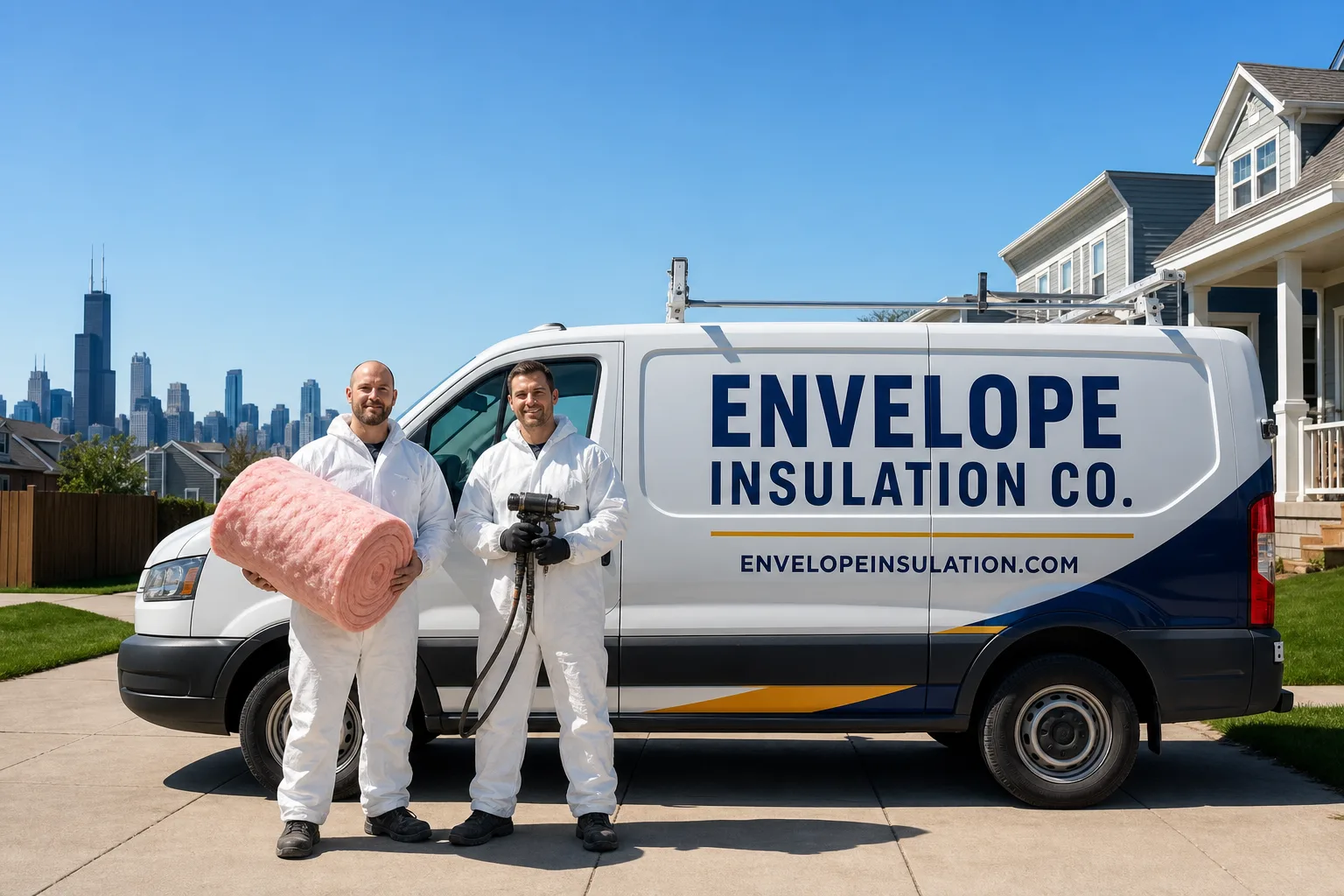
Crawl Space Encapsulation & Vapor Barrier in Roswell: What It Costs and Why River Adjacency Changes the Job
Crawl space encapsulation in Roswell, GA typically runs $5,500-$13,000 for a full 1,500-2,200 sq ft crawlspace, depending on liner thickness, drainage needs, and whether rim joist insulation is included. A standalone vapor barrier replacement runs $1,800-$4,200. Homes west of Highway 9 toward the Chattahoochee River corridor routinely need more aggressive moisture control than homes in east Roswell, which is why we never quote a Roswell job over the phone without seeing the crawlspace floor and measuring the relative humidity first. Call (218) 261-7714 and we’ll put a written price in your hand before any work starts.
Why Roswell Crawlspaces Fail More Often Than You’d Expect
The Chattahoochee River corridor along Roswell’s western edge does something specific to crawlspaces that homeowners in Alpharetta or Marietta don’t face the same way. River adjacency creates localized humidity pockets that push crawlspace relative humidity above 70% for weeks at a time between May and September. The soil under homes in subdivisions off Riverside Road and Azalea Drive holds more moisture than the clay-heavy ground further east. Now layer in the housing stock: Roswell’s dominant buildout from roughly 1985 to 2000 produced thousands of large two-story traditional and colonial homes on crawlspace foundations, built to pre-2000 Georgia codes that required minimal vapor protection. Most got a 6-mil polyethylene sheet laid loosely on the floor, lapped only up the stem walls, never sealed to piers, and never reinforced. That sheet is now 25 to 40 years old. It’s torn, it’s sagging, and it’s doing almost nothing.
We see the result on nearly every crawlspace inspection we do in Horseshoe Bend, Willow Springs, and the subdivisions lining Holcomb Bridge Road and Highway 92: damp fiberglass batts falling out of floor joists, sweating ductwork, musty odors migrating into bonus rooms and kitchens, and standing water pooling in low spots after rain. This is not a normal crawlspace. It’s a river-adjacent, code-lag crawlspace. It needs a different approach.
What We Found in Horseshoe Bend: A Field Record
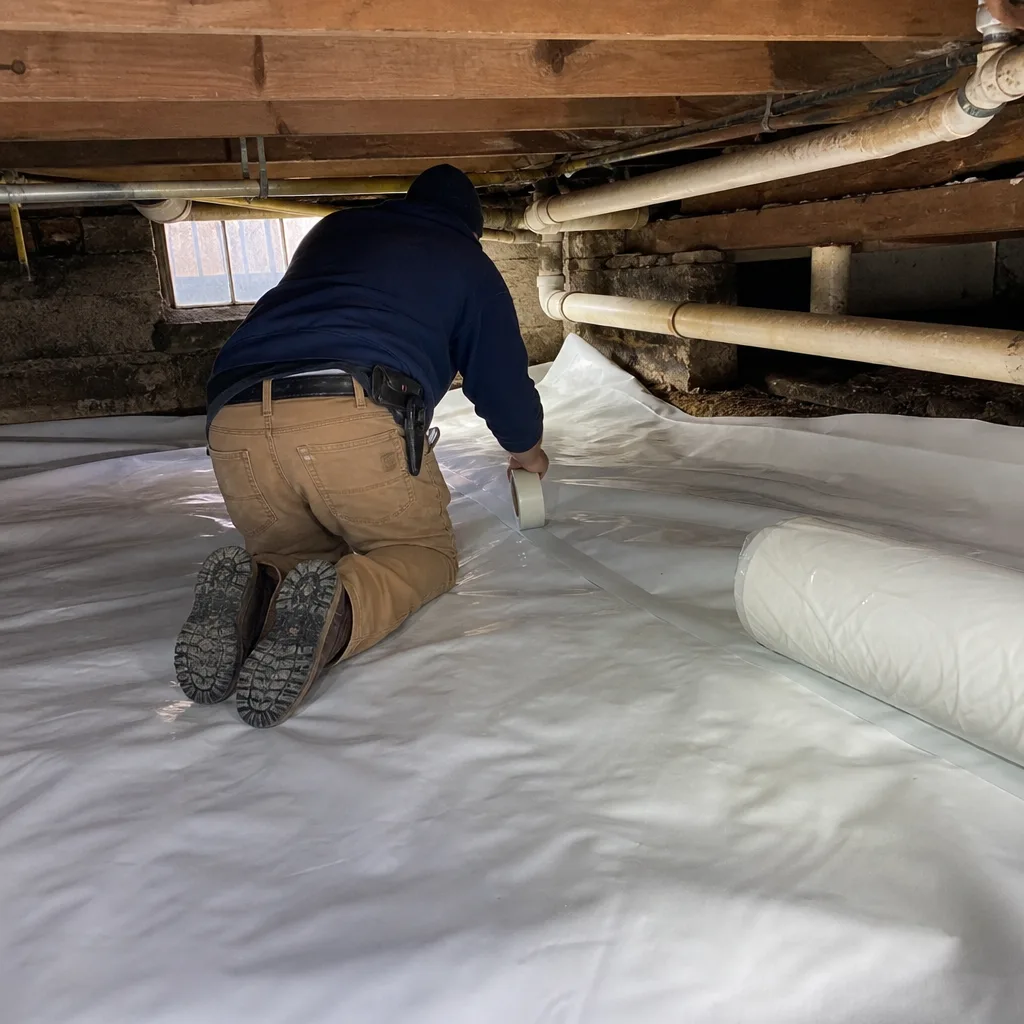
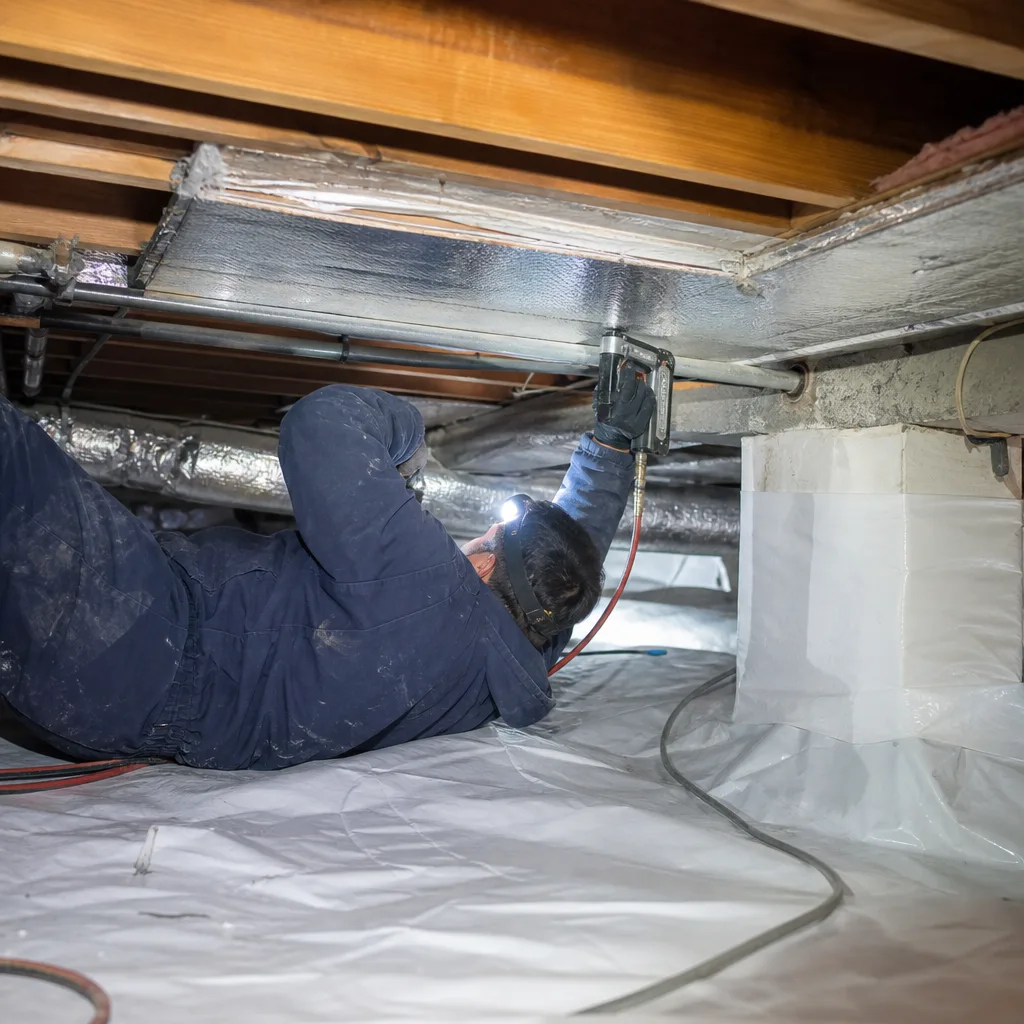
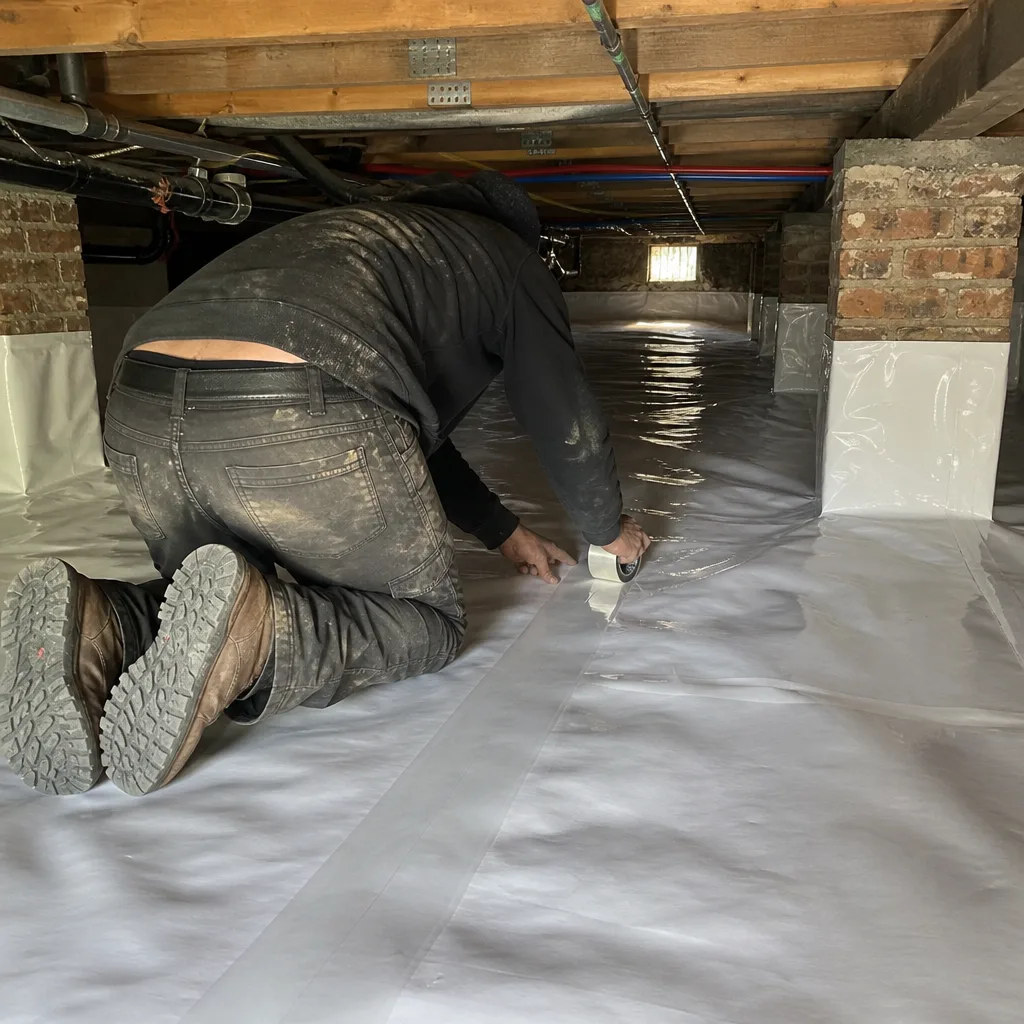
We recently encapsulated a crawlspace in the Horseshoe Bend subdivision where the homeowner had noticed a musty smell in the bonus room above the garage. The crawlspace entry was through a vent well under the deck. Our crew found the original 6-mil vapor barrier torn in a dozen places, lapped only up the stem walls, not sealed to the support piers. The rim joists were completely uninsulated. Humid air from the Chattahoochee-fed soil was condensing on the floor deck above, and fiberglass batts were saturated and sagging. We removed the failed barrier, cleaned out the debris, installed a 12-mil reinforced liner sealed to piers and walls, closed the crawlspace vents, and added closed-cell foam at the rim. The homeowner reported the bonus room stabilized within a week. That’s the scope of work most Roswell crawlspaces in this housing era actually need.
Crawl Space Services We Provide in Roswell
Crawl Space Vapor Barrier
A vapor barrier is the baseline moisture fix for any Roswell crawlspace with exposed dirt. We install 10-mil, 12-mil, and 20-mil reinforced polyethylene, sealed at every seam and mechanically attached to piers and walls. For 1990s-era homes in subdivisions along Eves Road and Nesbit Ferry Road, this is the first thing that should happen before any insulation is touched.
Crawl Space Encapsulation
Encapsulation goes further: sealed vents, conditioned air supply, closed-cell foam at the rim joists, and a liner that isolates the crawlspace from the ground entirely. In Roswell, encapsulation is not an upsell for homes west of Highway 9. It’s the difference between a crawlspace that stays dry through a Chattahoochee Valley summer and one that grows mold on the subfloor by August. Our Crawl Space Encapsulation & Vapor Barrier team has sealed hundreds of Roswell crawlspaces, every one with a before-and-after photo record and a written scope.
Crawl Space Insulation
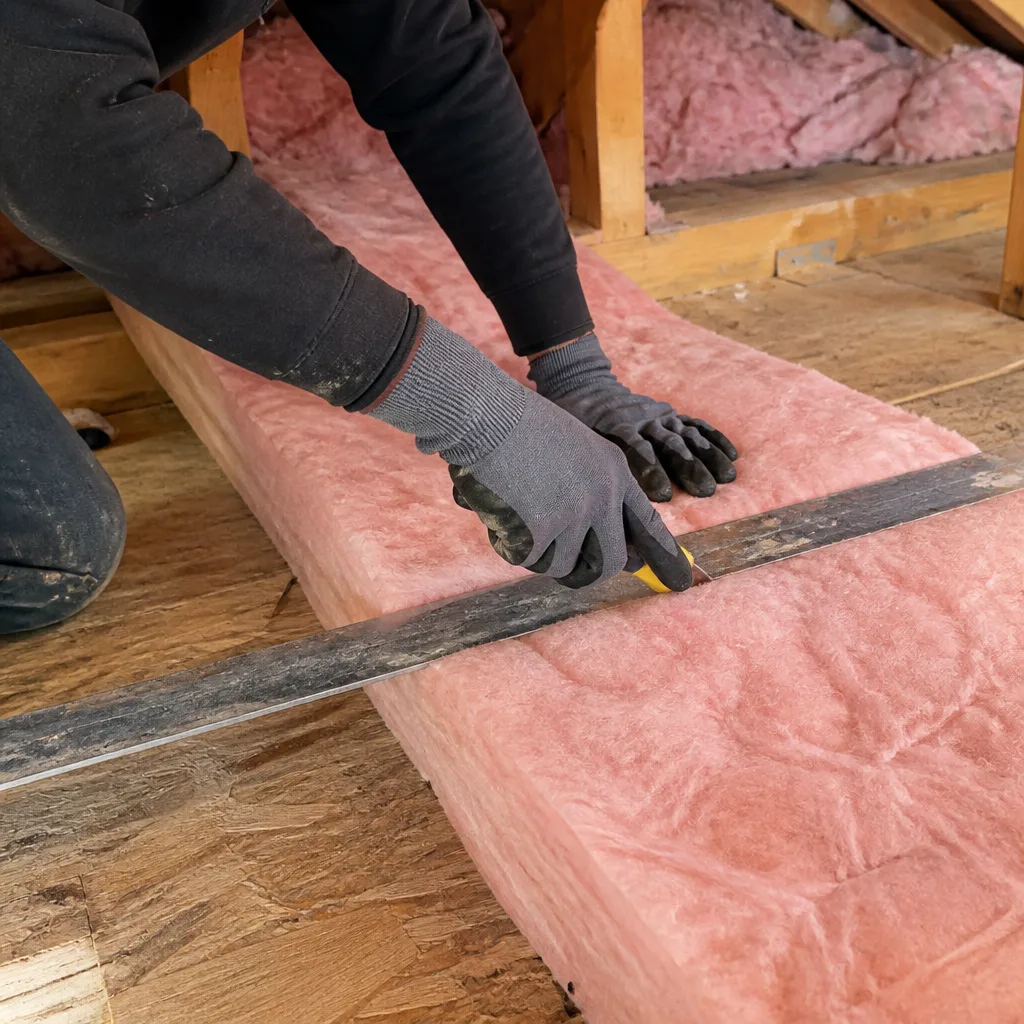
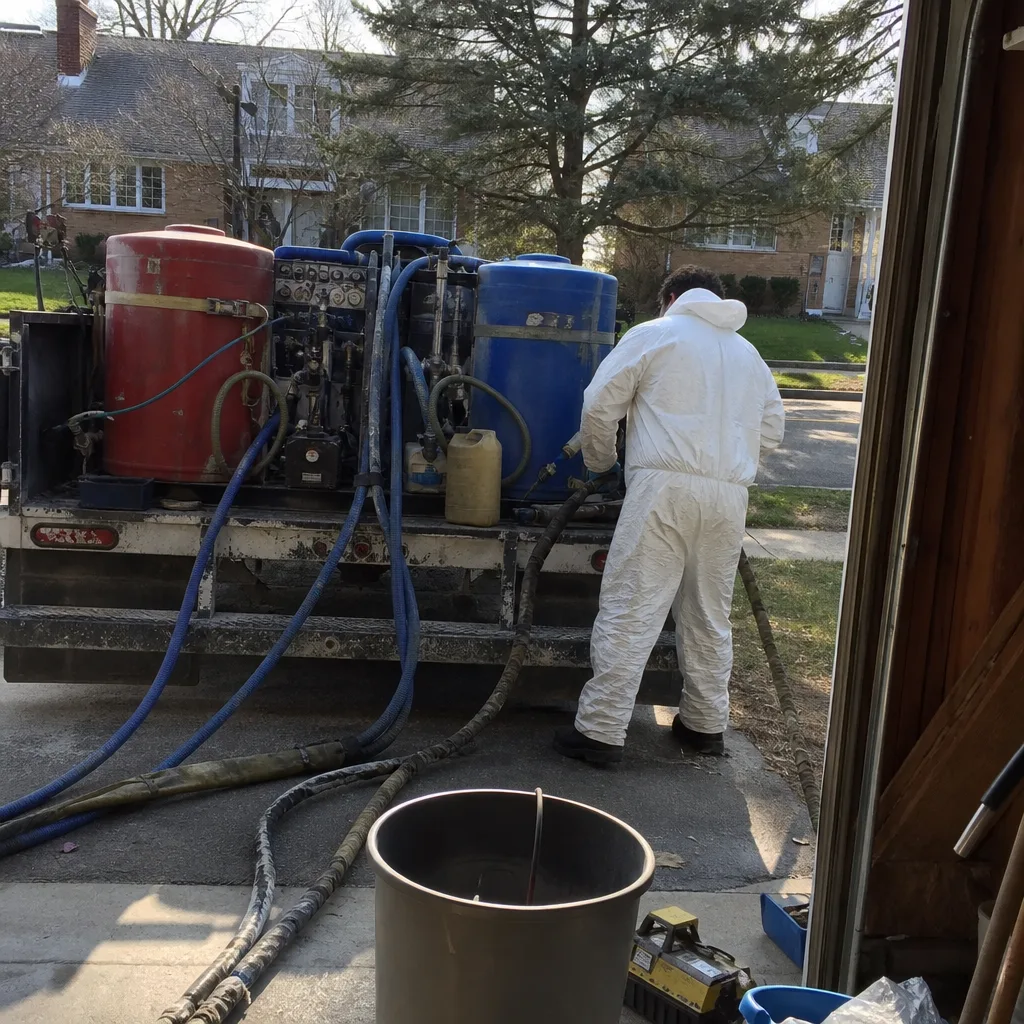
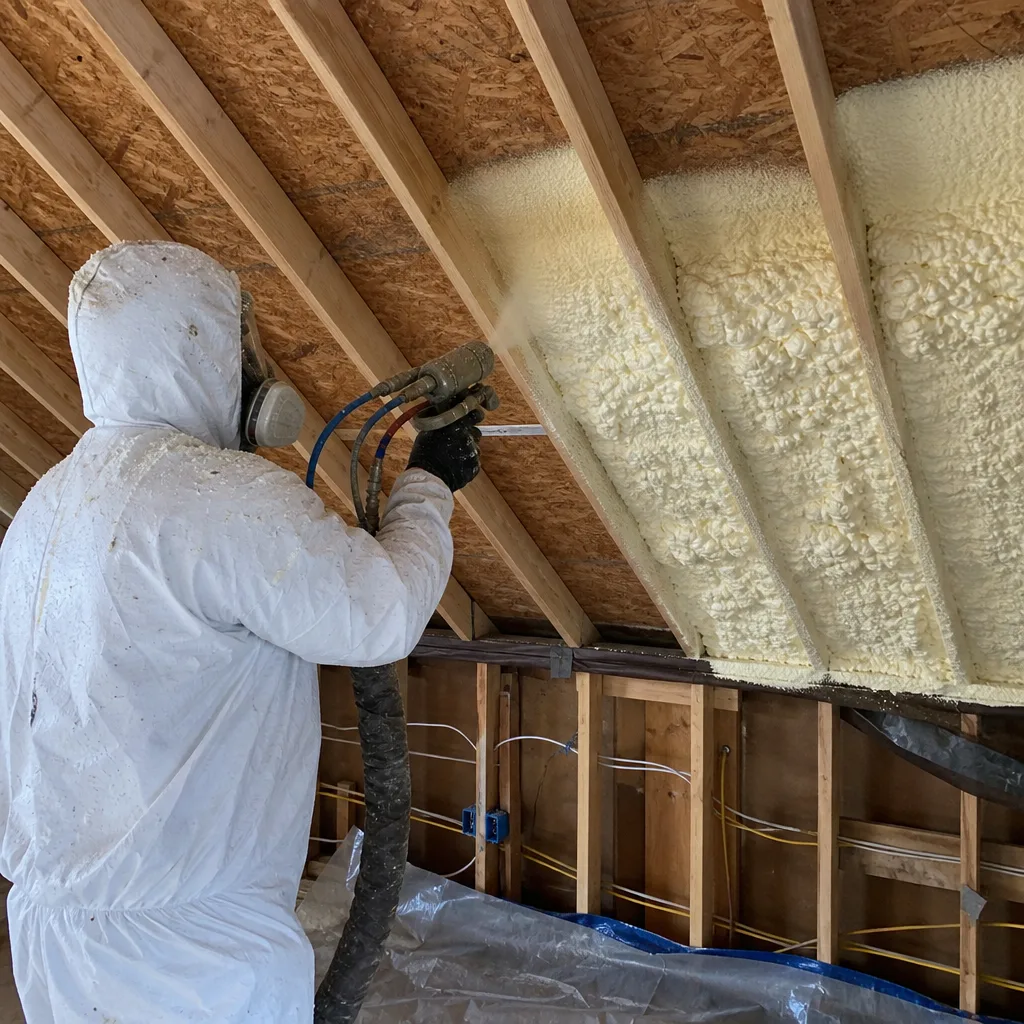
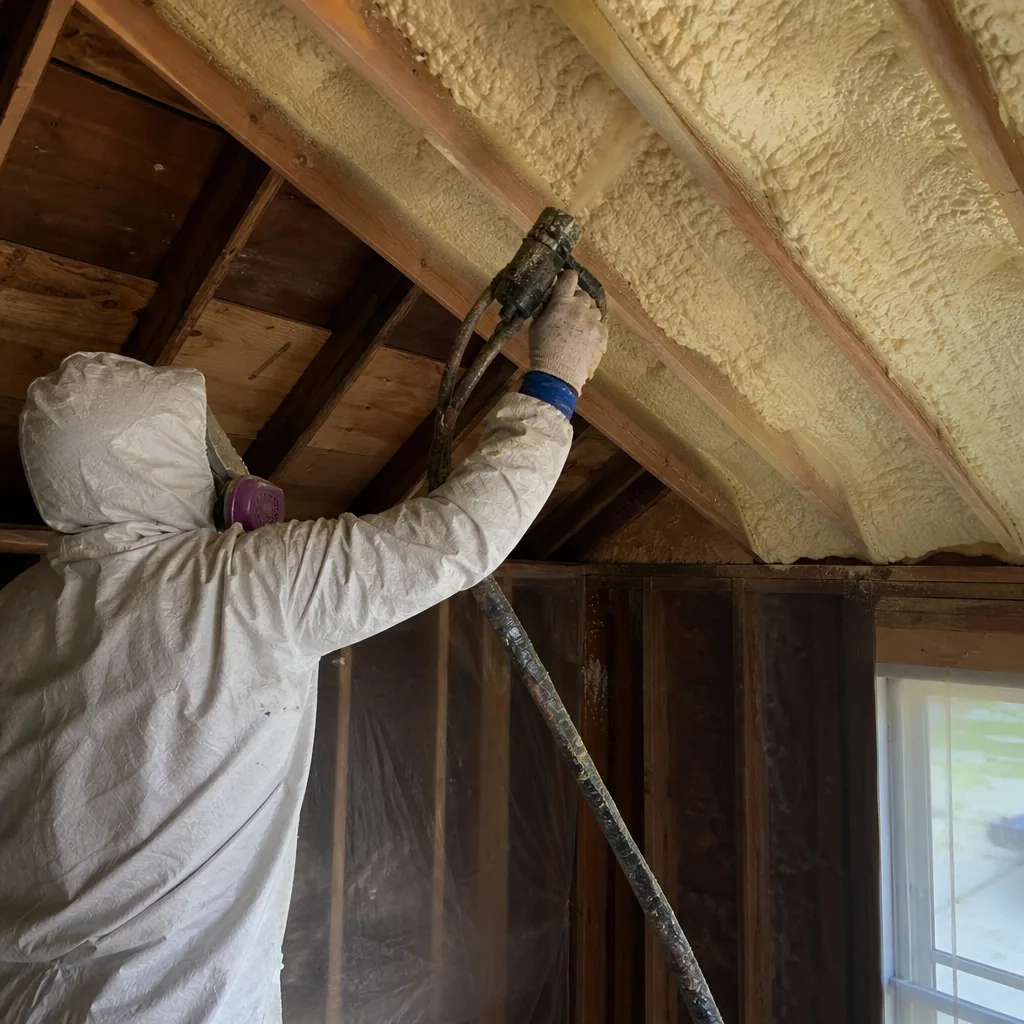
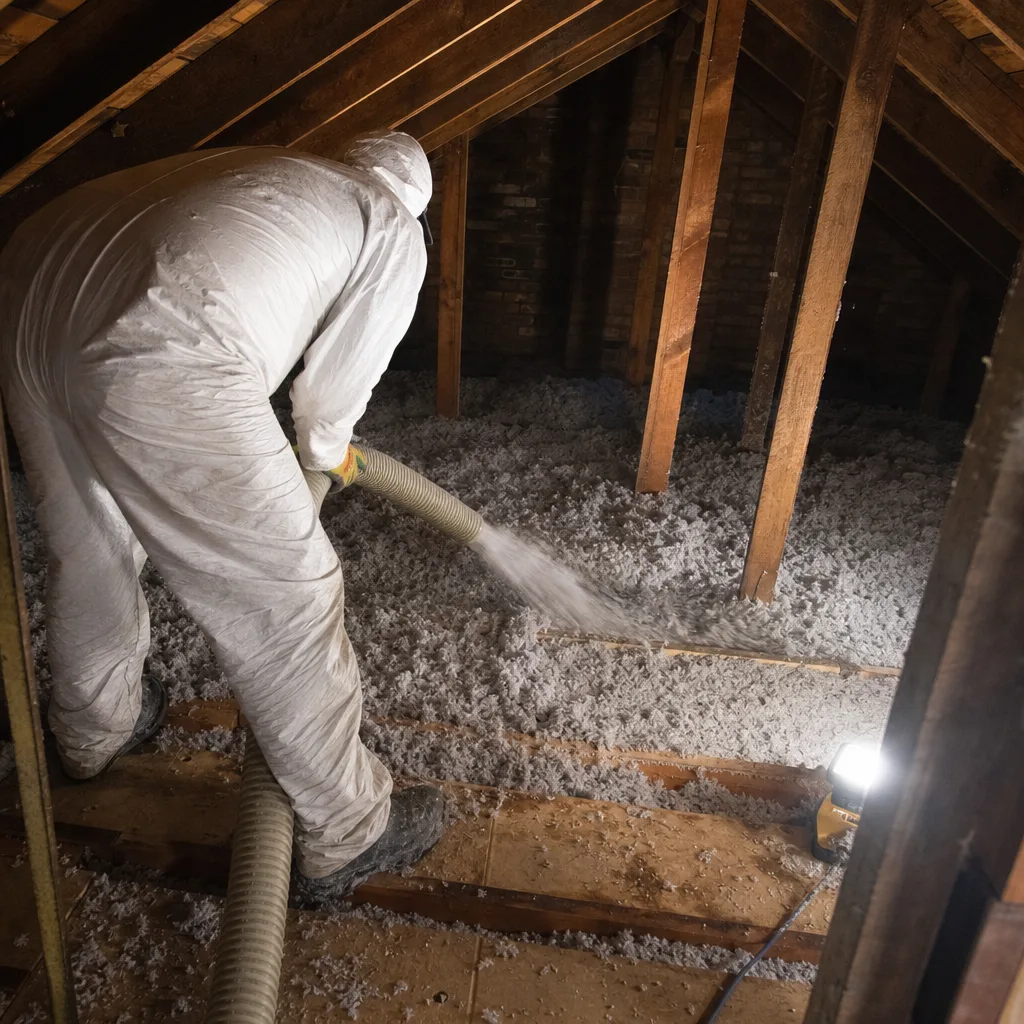
Insulation goes in after the crawlspace is dry. That’s the order, and we don’t deviate from it. Closed-cell spray foam at the rim joists is the standard for Roswell crawlspaces because it combines air sealing and insulation in one pass, stopping the stack effect that pulls humid air through the band joist. For floor decks over vented crawlspaces, we often recommend dense-pack cellulose or closed-cell foam after the vapor barrier is repaired and sealed. Under The Haven Standard, the crawlspace is sealed first. Insulation never goes over an unsealed, damp surface.
Crawl Space Moisture Control
Moisture control in a Roswell crawlspace means managing three sources: ground evaporation, humid outside air entering through vents, and condensation on cold ductwork and floor joists. We address all three in sequence: seal the ground with a vapor barrier or full liner, close the vents and condition the space, and insulate surfaces that fall below dew point. In homes near the Chattahoochee, we also recommend a crawlspace dehumidifier when the design relative humidity cannot be held under 60% by sealing alone.
What happens when you call
- 1
A real person answersNo phone trees - you reach a local pro.
- 2
You get an upfront price rangeHonest numbers before anyone is dispatched.
- 3
A background-checked tech heads outLicensed & insured, dispatched right away.
- 4
You approve before work beginsNothing starts until you say go.
Trusted Materials We Use in Roswell
We stock 12-mil and 20-mil reinforced vapor barrier liners, closed-cell foam from Icynene and Demilec, and Rockwool and Knauf insulation products for Roswell jobs, so we’re not waiting on a supplier when your crawlspace is open. Everything we install has a published spec sheet we’ll include in your documentation package. No proprietary product lock-in. If a specific liner or foam system is specified in your scope, you’ll see the manufacturer and the product name on the written price before we start.
Common Crawlspace Problems in Roswell Homes
- Torn 6-mil polyethylene from the 1990s. Original vapor barriers in Roswell’s late-80s and 90s-era subdivisions are now shredded, letting ground moisture evaporate directly into the crawlspace air. That moisture then condenses on subfloor and fiberglass batts, which slowly peel out of the joist bays.
- Unsealed vents and open rim joists near the Chattahoochee. Vented crawlspaces west of Highway 9 pull in river-humid air all summer. The rim joist is the biggest air leak in the crawlspace assembly, and in Roswell it’s also the biggest moisture leak.
- Duct sweating in vented crawlspaces. Builders of the 1985-2000 wave often ran HVAC ducts through vented crawlspaces without insulating them. Cold supply ducts hit humid crawlspace air and sweat, dripping onto the vapor barrier and pooling in low spots.
- Fiberglass batts falling from floor joists. Once fiberglass gets wet, it loses its loft and starts to fall. In Roswell crawlspaces with river-adjacent humidity, this is the single most common call we get: “the insulation under the house is falling out.” The fix is remove, air seal, install a proper vapor barrier, and re-insulate with a moisture-tolerant material.
Roswell Crawl Space Encapsulation Pricing
Here’s what we quote for typical Roswell homes:
- Vapor barrier replacement (10-mil, sealed to piers and walls): $1,800-$4,200 for an 800-1,500 sq ft crawlspace.
- Full encapsulation with 12-mil reinforced liner, sealed vents, and rim joist foam: $5,500-$9,500 for 1,200-1,800 sq ft.
- Full encapsulation with 20-mil liner, dehumidifier, and drainage corrections: $9,000-$13,000 for larger or river-adjacent homes with standing water problems.
- Closed-cell foam at rim joists only: $1,200-$2,800 depending on linear footage.
- Crawlspace cleanout and debris removal before liner install: $400-$1,200.
These are flat prices. You get the same number whether you call once or three times. Factors that move a Roswell quote: crawlspace height (homes off Eves Road and King Road often have low clearances under 30 inches), drainage corrections for standing water, whether we need to remove failed insulation first, and whether the Crawl Space Cleanout scope includes rodent or pest debris. Every quote includes a written scope, a written warranty, and a documented photo record of what we found before and what we left after. Call (218) 261-7714 for a free estimate and we’ll schedule a crawlspace inspection at your Roswell home.
Roswell Crawlspace Codes and Inspection Requirements
Roswell sits in IECC Climate Zone 3A, which sets the energy code baseline for crawlspace work. The city of Roswell adopts the Georgia State Minimum Standard Energy Code with local amendments. For crawlspace encapsulation, the relevant requirements are: a Class I vapor retarder (minimum 6-mil, though we strongly recommend 10-mil or thicker for anything river-adjacent) covering the crawlspace floor; the retarder must lap up the stem walls and be sealed at seams. If you’re in an unincorporated pocket of Fulton County served by the Roswell office, the same state code applies. We pull permits when required and handle the inspection coordination for you. Under The Haven Standard, you get the permit scope in writing before we start, and the inspection record is included in your final documentation package.
Roswell Neighborhoods We Serve Weekly
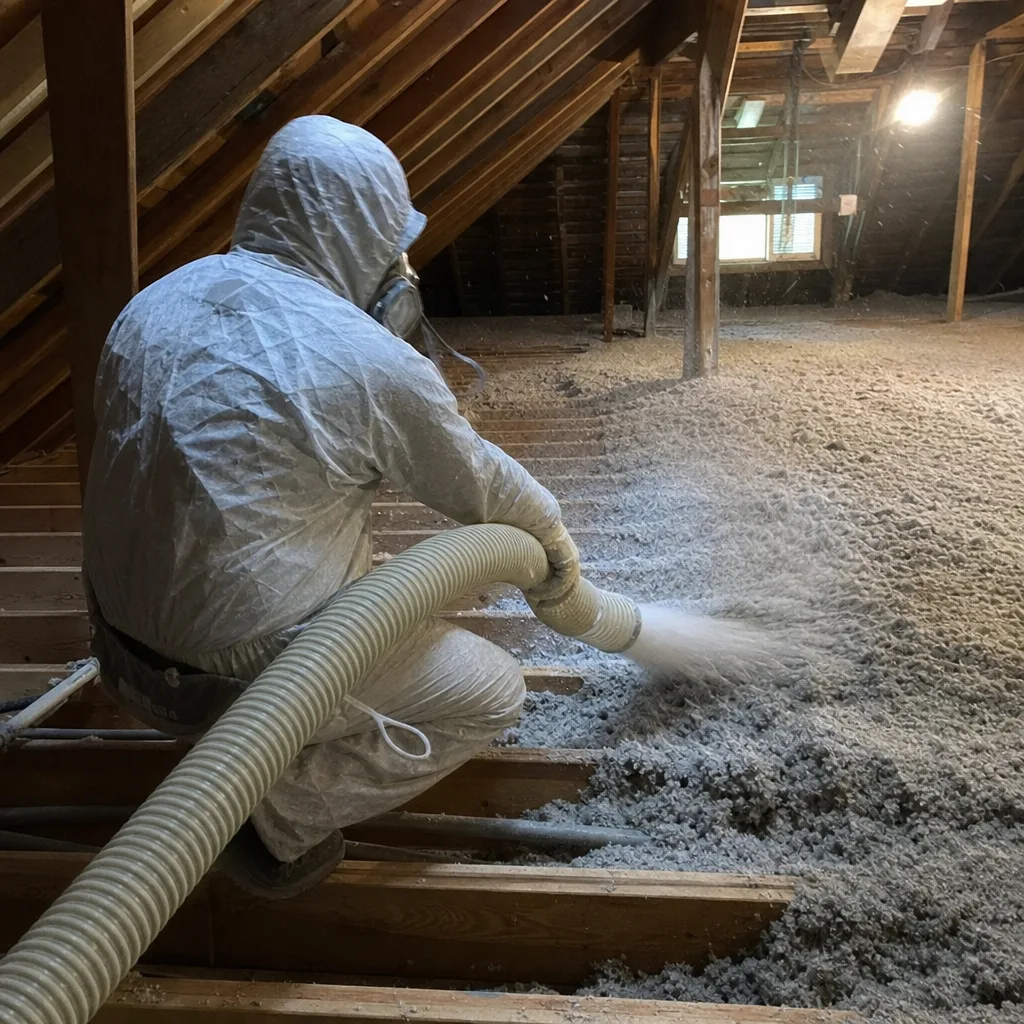
Our crews are in Roswell neighborhoods every week, including Horseshoe Bend, Willow Springs, Inverness, Lake Charles Estates, Sentinel on the River, and the subdivisions running along Holcomb Bridge Road, Highway 92, Eves Road, and Nesbit Ferry Road. We know the difference between a crawlspace off Riverside Drive that needs dehumidification year-round and one off Warsaw Road that might only need a liner upgrade and sealed vents. That local knowledge is what determines whether your encapsulation actually holds through a Roswell summer.
Cities Near Roswell We Also Serve
We provide the same Crawl Space Encapsulation & Vapor Barrier in Roswell service across Alpharetta, Marietta, Smyrna, and Atlanta. If your home is within 30 minutes of Roswell and built in the same 1985-2000 era, the failure modes are often similar, but the specific humidity profile changes once you leave the Chattahoochee corridor. Call us and we’ll tell you what matters for your specific address.
Serving Roswell, GA - Our Local Coverage Area
We’re based in the Roswell area and know this community well. Use the map below to see our service coverage - if you’re nearby, we can almost certainly help.
FAQs - Crawl Space Encapsulation & Vapor Barrier in Roswell, GA
Horseshoe Bend and other neighborhoods west of Highway 9 sit in the Chattahoochee River corridor, where soil moisture and ambient humidity run measurably higher than in Alpharetta. Combined with 1990s-era 6-mil vapor barriers that are now torn and unsealed, those river-adjacent crawlspaces pull humid air through open vents and rim joists every summer. Alpharetta homes, especially those further from the river, simply don’t face the same localized dew-point conditions. Call (218) 261-7714 for a moisture reading in your Roswell crawlspace; we’ll show you the numbers before recommending any work.
A vapor barrier replaces the failed polyethylene on the crawlspace floor and seals it to piers and walls. It stops ground evaporation. Full encapsulation adds sealed vents, closed-cell foam at the rim joists, and a conditioned air supply, which stops humid outside air from entering at all. For a 1990s Roswell home near the river, a vapor barrier alone may lower humidity but won’t solve duct sweating or mold on the subfloor if vents and rim joists remain open. Encapsulation is the complete fix. We’ll quote both options and show you the expected humidity difference for each before you choose.
No. Encapsulation stops the moisture source, but the failed fiberglass must be removed and replaced with a moisture-tolerant material. Once fiberglass gets wet, its loft is gone and it won’t recover. In Roswell crawlspaces we typically remove the failed batts, encapsulate the space, then install closed-cell foam at the rim joists or replace floor deck insulation with spray foam where the design calls for it. The order matters: seal and dry first, insulate second. Call (218) 261-7714 and we’ll tell you exactly what your crawlspace needs.
Yes. Roswell enforces the Georgia State Minimum Standard Energy Code, which requires a Class I vapor retarder of at least 6-mil (we recommend 10-mil or thicker) covering the crawlspace floor and lapped up the stem walls, sealed at seams. If you’re doing full encapsulation, the vents must be closed and the space typically conditioned per code. We pull permits when required and coordinate inspections. Your documentation package includes the permit scope and the final inspection record.
Yes, with careful detailing around the balloon-framed wall cavities. Historic Roswell homes, particularly in and around the historic district, often have balloon framing where wall cavities open directly into the crawlspace. We seal those cavities at the sill and the band joist first, then install the liner. We never alter structural members without a written scope and your approval. The process is careful, slow, and documented. If you own a pre-1940 Roswell home, call (218) 261-7714 and we’ll walk the crawlspace with you before we quote anything.
Contact Topside Attic Insulation for Roswell Crawlspace Work
If your Roswell crawlspace has a musty smell, sagging insulation, standing water, or just feels damp, call (218) 261-7714. We’ll schedule a crawlspace inspection, give you a written price before any work starts, and provide a documented photo record when the job is done. Wes Okafor leads the team, and every Roswell job gets the same Haven Standard: a flat written price, a written scope, and before-and-after documentation you can actually verify. No voicemail loops. A live person answers, 24/7.
Written by Wes Okafor, Owner at Topside Attic Insulation, serving Roswell crawlspace encapsulation and vapor barrier work under The Haven Standard since 2016.