Fast, Reliable Attic Insulation Across Houston
Attic insulation in Houston is a different animal than anywhere else in Texas. That’s not marketing talk. It’s physics. Houston sits in IECC Climate Zone 2A, a hot-humid climate where summer vapor drive runs inward toward your air-conditioned interior. That single fact changes which insulation materials work, where they go, and what happens when someone installs them wrong. If you own a home in Houston built before 2000, your attic is almost certainly under-insulated relative to what a nine-month cooling season actually demands. We’re Topside Attic Insulation, and fixing that is what we do. Call us at (218) 261-7714 for a written price before any work starts.
Why Houston’s Climate Demands Different Attic Insulation
Most insulation advice written for the national market assumes a cold climate: vapor barrier on the inside, fluffy insulation on the attic floor, done. That advice fails in Houston. Here, the problem runs the other direction. From roughly April through October, hot, humid air pushes inward toward air-conditioned spaces. Standard batt insulation installed with an interior-side vapor retarder traps that inward-driven moisture inside wall cavities and attic assemblies. The result is mold on roof sheathing, saturated fiberglass, and insulation that stops insulating. This failure pattern is rare in drier Texas metros like Dallas or San Antonio. In Houston, our technicians see it on a weekly basis across neighborhoods from Westbury to Kingwood.
This is why Attic Insulation strategy in Houston increasingly centers on conditioned attic assemblies. Closed-cell spray foam applied to the roof deck keeps attic air and ductwork inside the thermal envelope, so the air your HVAC fought to cool doesn’t get roasted in a 150°F attic before it reaches your living room. It’s a fundamentally different approach than blowing more fiberglass on the attic floor. Blowing more insulation over an unsealed, unventilated attic floor in a Houston home is like adding a thicker blanket to a bed that’s already wet. We seal first, then insulate. Always in that order.
Why Topside Attic Insulation Is Houston’s Preferred Attic Insulation Company
We’ve sealed and insulated more than 9,000 homes since 2016, operating under The Haven Standard. That standard means every job begins with a written price and ends with a documented record: photos, blower-door readings where applicable, and a written scope. No exceptions. Houston homeowners who read the three-star reviews as carefully as the five-star ones tend to appreciate that. Wes Okafor, who leads our Houston operations, has built the company around the idea that homeowners deserve evidence, not assurances.
We publish before-and-after blower-door numbers on every applicable job. A blower-door test is a pressurization reading that shows, in a single figure, how much conditioned air your building envelope was losing before the work and after it. In Houston homes built during the 1960s-1990s oil-boom decades, we routinely see readings of 4,000 CFM50 or higher before sealing, dropping to under 2,000 after. That’s a measurable change in how your house performs. Not a feeling. A number.
Response time matters when your attic hits 150°F in July. Our crews dispatch from the Houston office and serve the entire metro locally. A live person answers calls 24/7, no voicemail loops. When we say we’ll arrive on schedule, you get a named technician and a text when they’re on the way. That’s Haven Standard: Arrive on schedule, documented.
Our Attic Insulation Services in Houston
Blown-In Attic Insulation
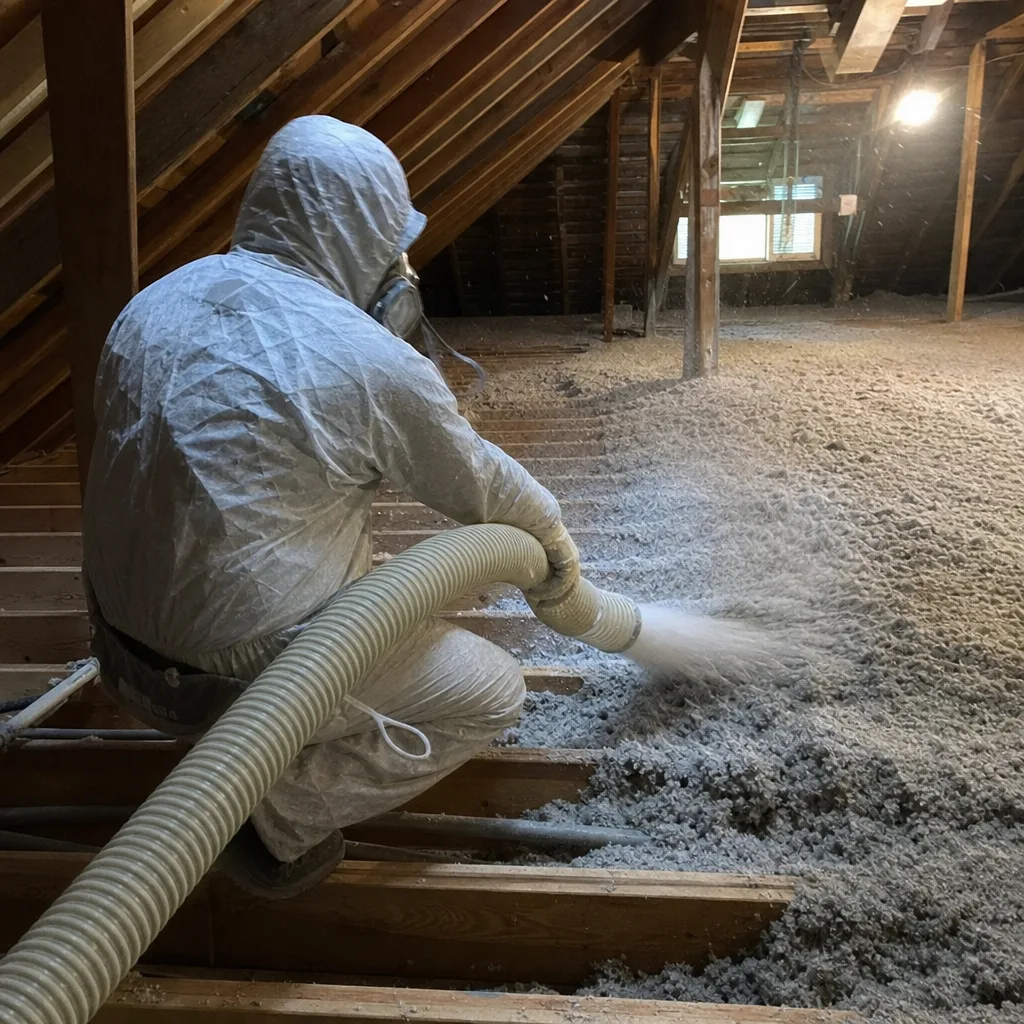
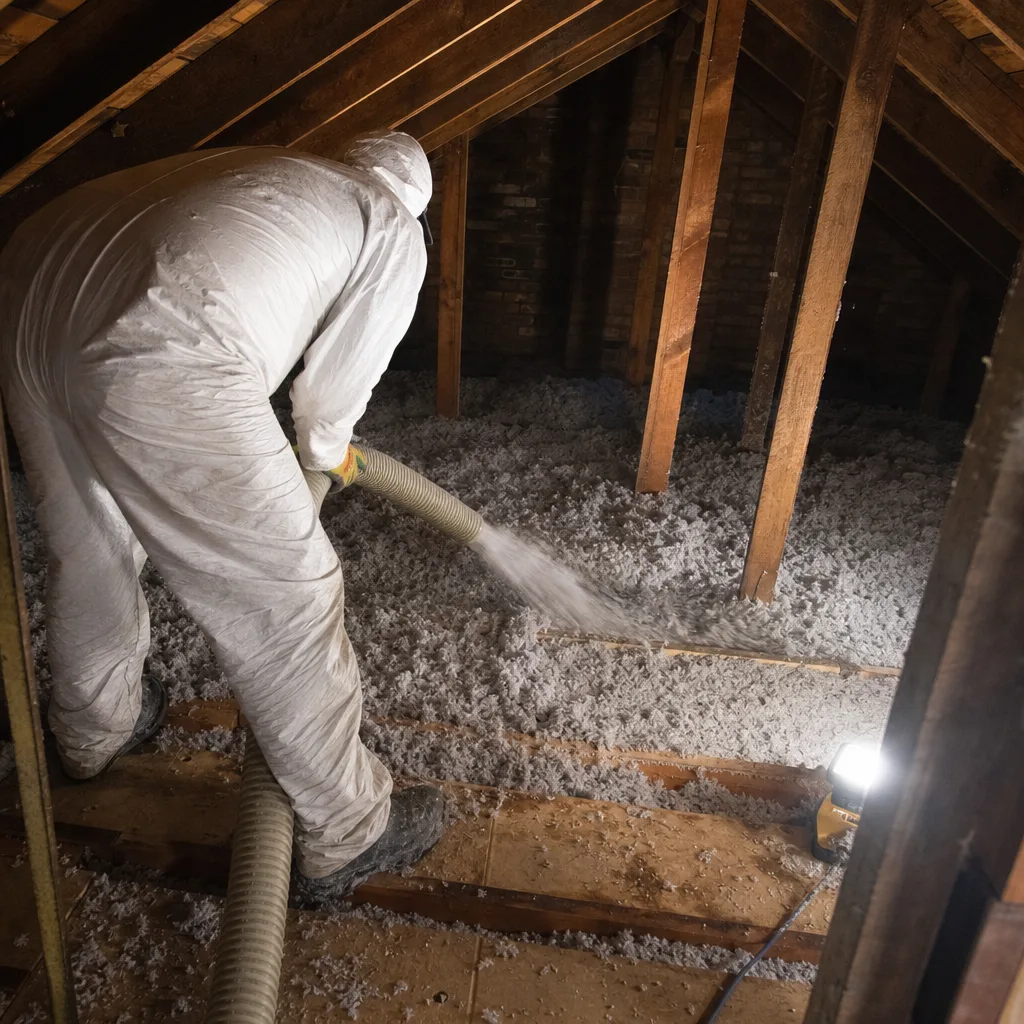
Blown-in fiberglass or cellulose is the workhorse for Houston attic floors, but only after air sealing. We air-seal top plates, can lights, and penetrations before any insulation is added. A typical blown-in job in a 1,800-2,400 square foot Houston home runs $1,800-$3,400, depending on current depth and target R-value. In neighborhoods like Meyerland or Clear Lake, where attic access is often tight, we use a hose-fed blower system that reaches every corner without disturbing your living space.
Attic Batt Insulation
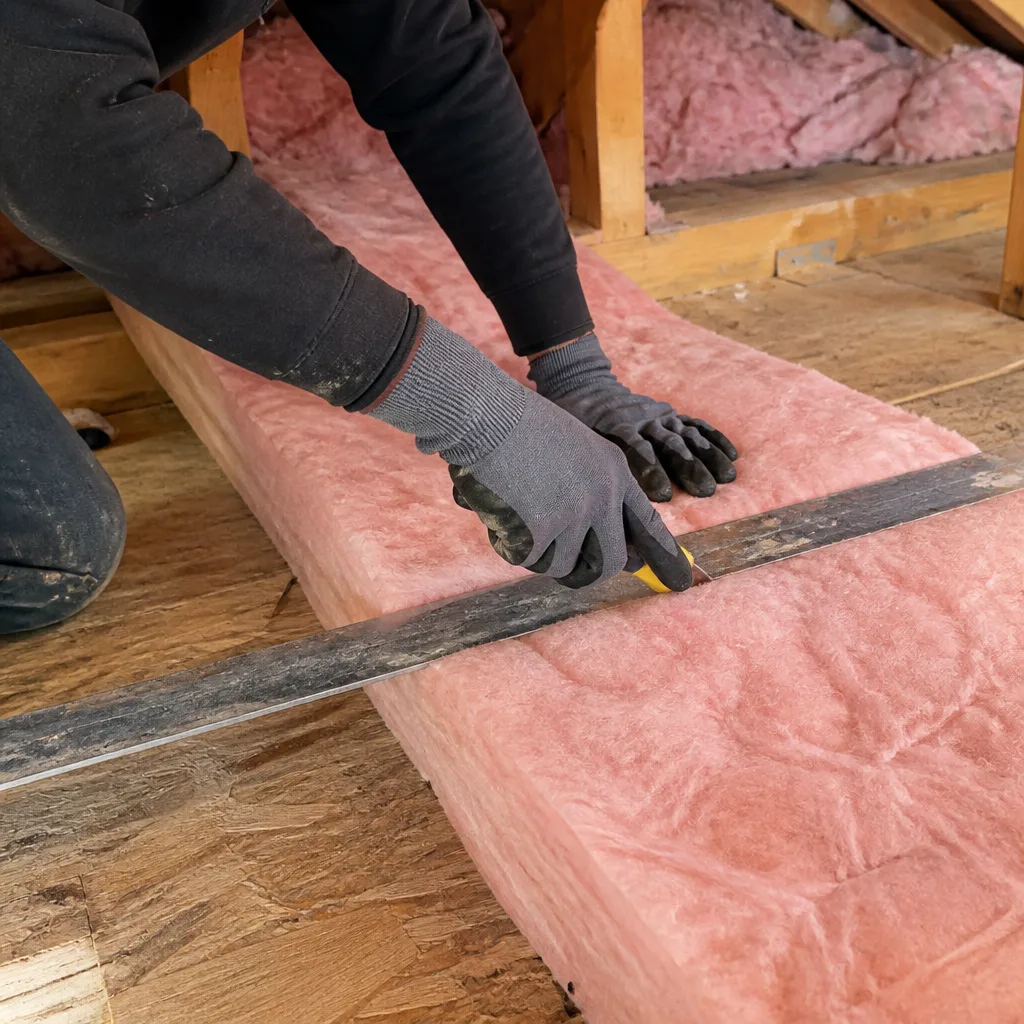
Batt insulation still has a place in Houston, particularly for wall cavities and side attics where blowing loose-fill doesn’t make sense. We use Rockwool and CertainTeed batts, chosen for their moisture resistance and dimensional stability in high-humidity environments. For pier-and-beam bungalows in The Heights or Montrose, batt insulation in floor assemblies can stop the stack effect that pulls hot attic air down and cooled air up. Expect $2,200-$4,800 for a full batts replacement in a typical Houston bungalow.
Attic Insulation Top-Up
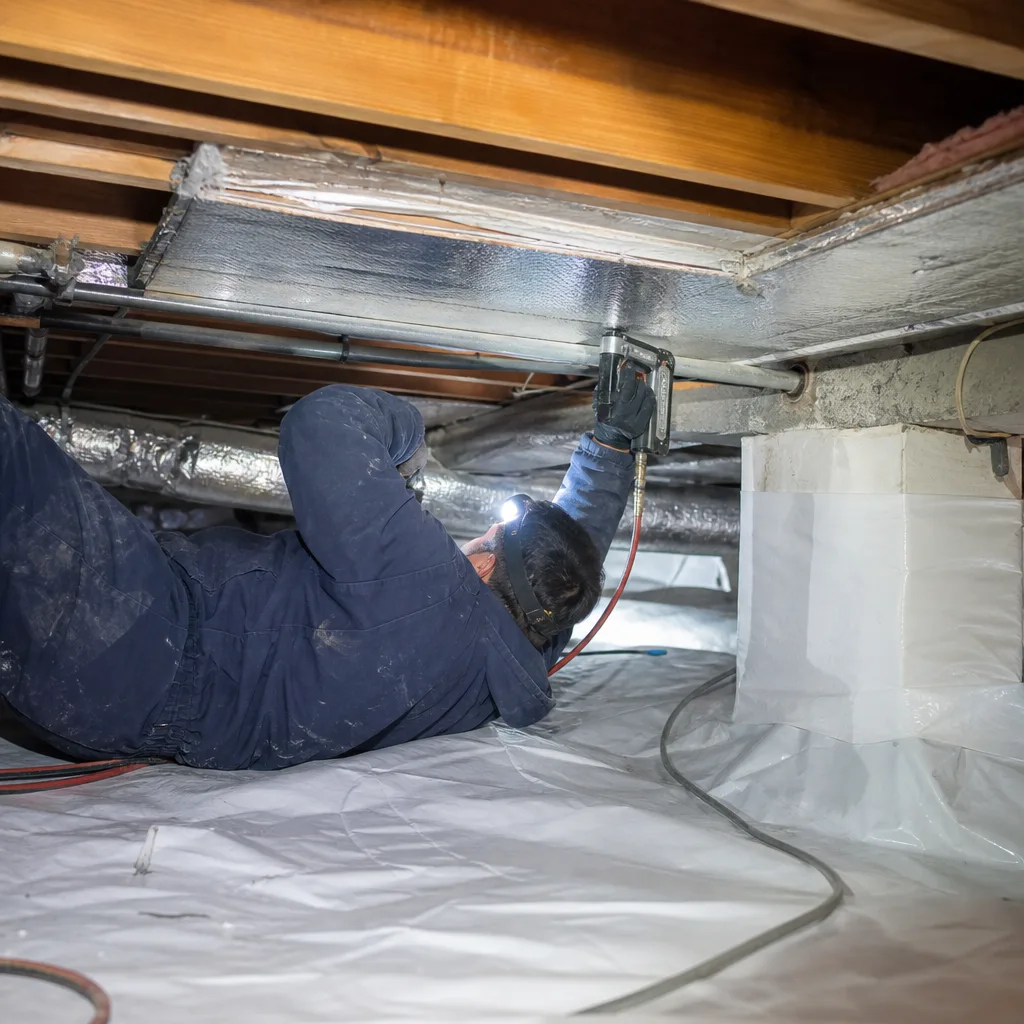
If your existing insulation is dry, clean, and just thin, a top-up gets you to current code minimums without a full removal. In Houston, the dominant stock is slab-on-grade brick veneer built during the 1960s-1990s, and many of those homes were framed with R-11 to R-19 attic insulation. That’s roughly half of what current DOE guidance recommends for Zone 2A. A top-up on a 1,500-2,000 square foot Houston home typically runs $900-$1,800, including air-sealing verification. We won’t blow over an unsealed attic floor. The air sealing happens first.
Attic Insulation Replacement
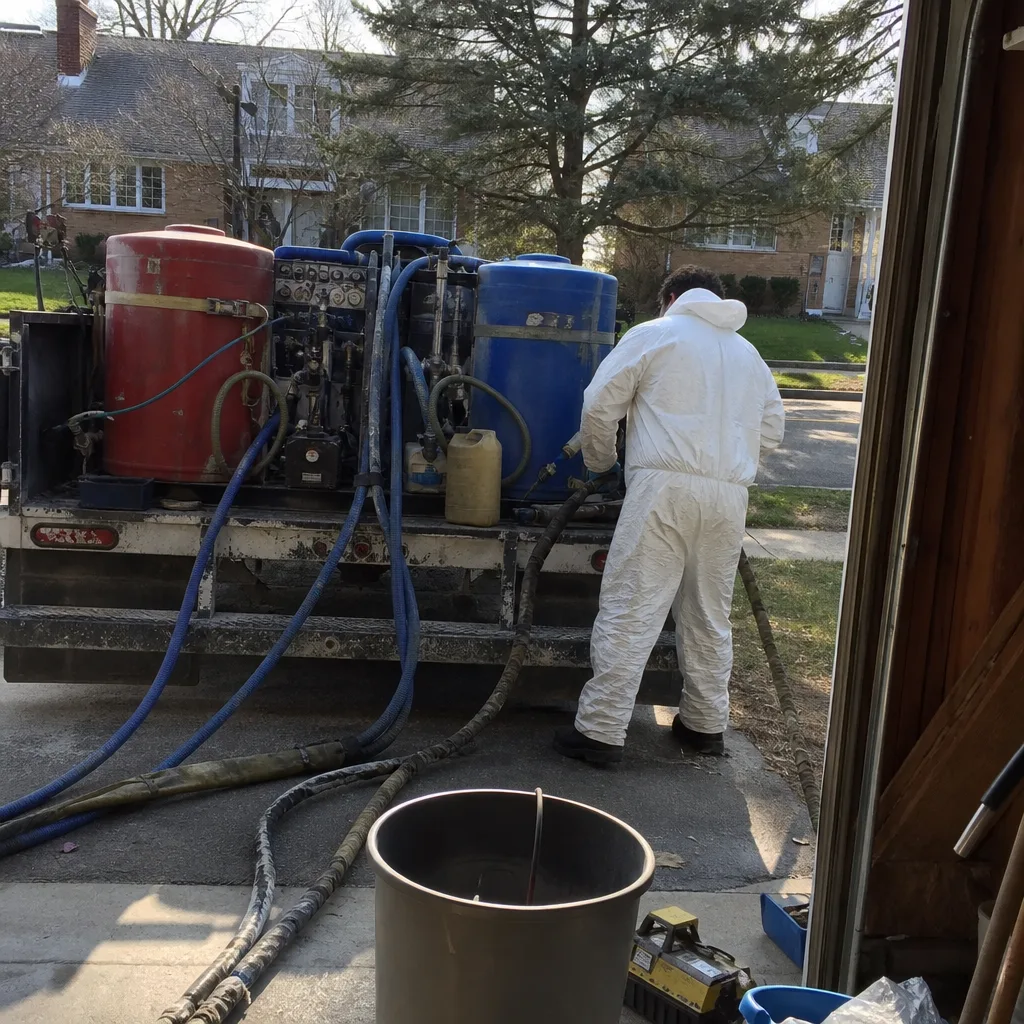
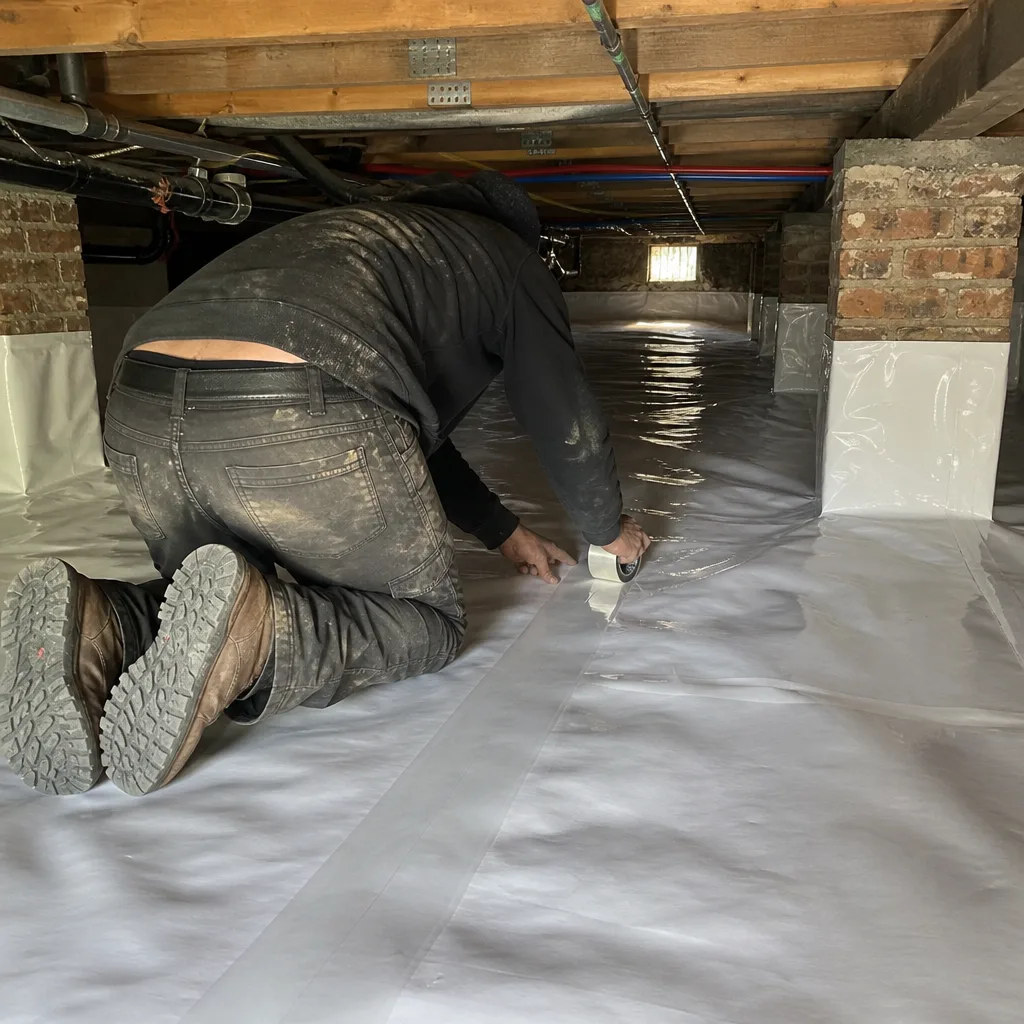
This is where Houston’s climate does the most damage. In a 1970s brick-veneer home in Memorial, our crew opened the attic to find original R-11 fiberglass batts saturated from decades of Gulf Coast humidity, compressed to half their labeled depth and holding moisture against the ceiling drywall. That’s not a rare find. It’s the standard condition of homes built across west Houston neighborhoods like Memorial and Briargrove during the 1970s-80s boom. We removed the degraded batts, corrected the ventilation with new baffles, and installed closed-cell spray foam on the roof deck to bring the ductwork and attic air inside the thermal envelope. Attic temperatures dropped from over 150°F to near indoor conditions. Full replacement with closed-cell foam on the roof deck runs $6,500-$14,000 depending on attic square footage and deck condition. Blown-in replacement with air sealing runs $2,800-$5,500.
What happens when you call
- 1
A real person answersNo phone trees - you reach a local pro.
- 2
You get an upfront price rangeHonest numbers before anyone is dispatched.
- 3
A background-checked tech heads outLicensed & insured, dispatched right away.
- 4
You approve before work beginsNothing starts until you say go.
Trusted Brands We Install in Houston
We source materials from Knauf, Rockwool, and Icynene, among others. No proprietary product lock-in, no manufacturer quotas. We spec the material that fits the assembly. For Houston’s hot-humid climate, that often means closed-cell spray foam from Icynene for roof decks and exterior walls, Rockwool batts for sidewalls and sound control, and Knauf blown-in fiberglass for attic floor top-ups after sealing. Parts and materials are stocked at our Houston office, so turnaround on standard jobs runs two to five days from written agreement to crew arrival.
Common Attic Insulation Problems We See in Houston Homes
- Humidity-saturated fiberglass batts. Decades of Gulf Coast humidity compresses batts and turns them into a moisture reservoir inside the attic assembly. This is the dominant failure mode in Houston homes built before 1990. The insulation isn’t just underperforming; it’s actively holding water against your ceiling drywall.
- Interior-side vapor retarders trapping summer moisture. Many Houston homes have batt insulation installed with a kraft paper vapor retarder facing the living space. In a heating climate, that’s correct. In Houston’s cooling climate, it pushes summer vapor into the cavity and holds it there. Mold on roof sheathing is the visible symptom.
- Unconditioned attics roasting ductwork at 150°F+. From May through September, attic temperatures in Houston regularly exceed 150°F. Ductwork left in that environment loses a substantial fraction of HVAC output before air reaches living areas. More attic floor insulation can’t fix this. The ductwork has to move inside the thermal envelope or the attic has to be conditioned.
- No air sealing under the insulation. Most Houston attics have can lights, top plates, and plumbing penetrations that leak conditioned air straight into the attic. Blowing insulation over those leaks is waste. We seal first, then insulate. Every job.
Pricing for Attic Insulation in Houston, TX
Here are real numbers for the Houston market, based on homes we’ve sealed and insulated across the metro.
| Service | Typical Houston Range |
|---|---|
| Attic Insulation Top-Up (1,500-2,000 sq ft) | $900-$1,800 |
| Blown-In Attic Insulation (1,800-2,400 sq ft) | $1,800-$3,400 |
| Attic Batt Insulation (full bungalow) | $2,200-$4,800 |
| Attic Insulation Replacement (blown-in with air sealing) | $2,800-$5,500 |
| Attic Insulation Replacement (closed-cell foam on roof deck) | $6,500-$14,000 |
| Attic Baffles & Ventilation Prep (standalone) | $450-$1,200 |
What moves the price inside those ranges: attic square footage, current insulation depth, access difficulty (skewed attics in The Heights are tighter than open trusses in Katy), and whether air sealing means a dozen penetrations or a hundred. We give a written price before any work starts. That’s Haven Standard Clause 1: flat price, written scope, written warranty before anyone lifts a tool. Call (218) 261-7714 for your number.
We also offer a Free Second Opinion on any written estimate. Bring us a competing quote from any Houston contractor and we’ll read it with you, line by line. You’ll see exactly what they’re sealing, what R-value you’re getting, and whether the price matches the scope. Documented Photo Record included on every visit, not available on request.
We Also Serve Cities Near Houston
Our crews handle Houston proper and the surrounding metro. We regularly work in Pasadena, Pearland, Baytown, and Missouri City, where the same hot-humid climate and aging housing stock create the same attic problems. Dispatch is coordinated from our Houston office, so response times to these nearby cities run the same as inside the loop.
Serving Houston, TX - Our Local Coverage Area
We’re based in the Houston area and know this community well. Use the map below to see our service coverage - if you’re nearby, we can almost certainly help.
FAQs - Attic Insulation in Houston
Houston’s climate zone drives summer vapor inward toward the air-conditioned interior, while Dallas and San Antonio see less extreme humidity and more seasonal balance. In Houston, insulation that works in drier Texas metros can trap moisture inside your walls and attic. That’s why we spec closed-cell spray foam for roof decks in Houston more often than our crews working other Texas markets. Call (218) 261-7714 to have your attic evaluated for how it performs in this specific climate.
Almost certainly not. Original fiberglass batts from the 1970s-80s boom era in Memorial and Briargrove have absorbed decades of Gulf Coast humidity. They’re compressed, degraded, and holding moisture against your ceiling drywall. We routinely find R-11 batts performing at R-6 or less. The fix is removal, air sealing, baffle correction, and either closed-cell foam on the roof deck or new blown-in on the sealed attic floor. Call us for a written price.
In most Houston homes, no. The bigger problem is air leakage and ductwork sitting in 150°F attic air. Blown-in insulation on the floor helps the ceiling, but it doesn’t stop conditioned air from leaking through top plates and can lights, and it doesn’t help ductwork that’s outside the thermal envelope. We seal and measure before adding insulation. That’s the order that produces documented results. Call (218) 261-7714 for a blower-door reading on your house.
Harder is the wrong word. Different. Bungalows from the 1920s-1940s have balloon-framed walls that were never insulated, open crawl spaces, and often no air barrier between the crawl space and the house. Floor assembly insulation, wall cavity treatment, and crawl space sealing all have to work together. We handle these projects regularly and the results are dramatic. A blower-door reading before and after shows the difference in one number.
Yes. Uri exposed that Houston’s housing stock has virtually no resilience to hard freezes. Proper air sealing and insulation makes a home hold heat during freeze events and hold cool air during the nine-month cooling season. The same envelope work solves both problems. After February 2021, we saw a sustained increase in Houston homeowners asking for both air sealing and attic insulation as a freeze-protection measure, not just a summer efficiency play. Call (218) 261-7714 for an assessment.
Written by Wes Okafor, Owner at Topside Attic Insulation, operating under The Haven Standard since 2016.
Attic Insulation in Nearby Areas