Fast, Reliable Crawl Space Encapsulation & Vapor Barrier Across Rock Hill
Crawl space encapsulation in Rock Hill means sealing the dirt floor, foundation vents, and rim joists so groundwater vapor and humid Piedmont air stop moving through your floor system. Most encapsulations we do in Rock Hill run $4,800 to $9,500 depending on square footage, access, and whether the rim and band need air sealing first. We schedule Rock Hill jobs Monday through Saturday with crews dispatched from our Charlotte office, and a live person answers at (218) 261-7714 when you call.
The catch with Rock Hill specifically is that many homes under 1,200 square feet near Cherry Road, Ebenezer Avenue, and the Catawba River corridor were built before insulation was code. Those mill-village cottages have open pier-and-beam foundations and balloon-framed walls. A vapor barrier laid over the dirt helps, but humid air still moves up through the stud bays if nobody touches the rim and band. We address that before encapsulation because skipping it means the plastic sweats from below and the homeowner pays twice. Our Crawl Space Encapsulation & Vapor Barrier work always begins with a written scope and price, no exceptions.
Why Topside Attic Insulation Is Rock Hill’s Preferred Crawl Space Encapsulation & Vapor Barrier Company
Rock Hill homeowners tend to research before they call. They read the three-star reviews first. They want to know what they’re paying for and what documentation they’ll have when the crew leaves. That’s how we’ve operated since 2016 under The Haven Standard: a written price before any work starts, a written scope that names the materials and methods, and a Documented Photo Record on every visit. No work begins without the paperwork.
Local builders and homeowners in Rock Hill have seen too many crews lay 6-mil poly over a wet dirt floor, call it encapsulated, and leave. That liner starts smelling like a wet tarp within months because nobody addressed the groundwater or the open balloon-frame cavities. Wes Okafor, who leads our crews, has walked enough Rock Hill crawls near Winthrop University and the old mill sites to know that the problem is never just moisture. It’s airflow. Seal the air, then the vapor barrier does its job.
We answer by a person around the clock, not a voicemail tree. When you schedule, you get a named technician and a text when they’re on the way. For Rock Hill jobs, that usually means same-week scheduling for standard encapsulations and next-day response for active water intrusion or standing water in the crawl.
Our Crawl Space Encapsulation & Vapor Barrier Services in Rock Hill
Crawl Space Vapor Barrier
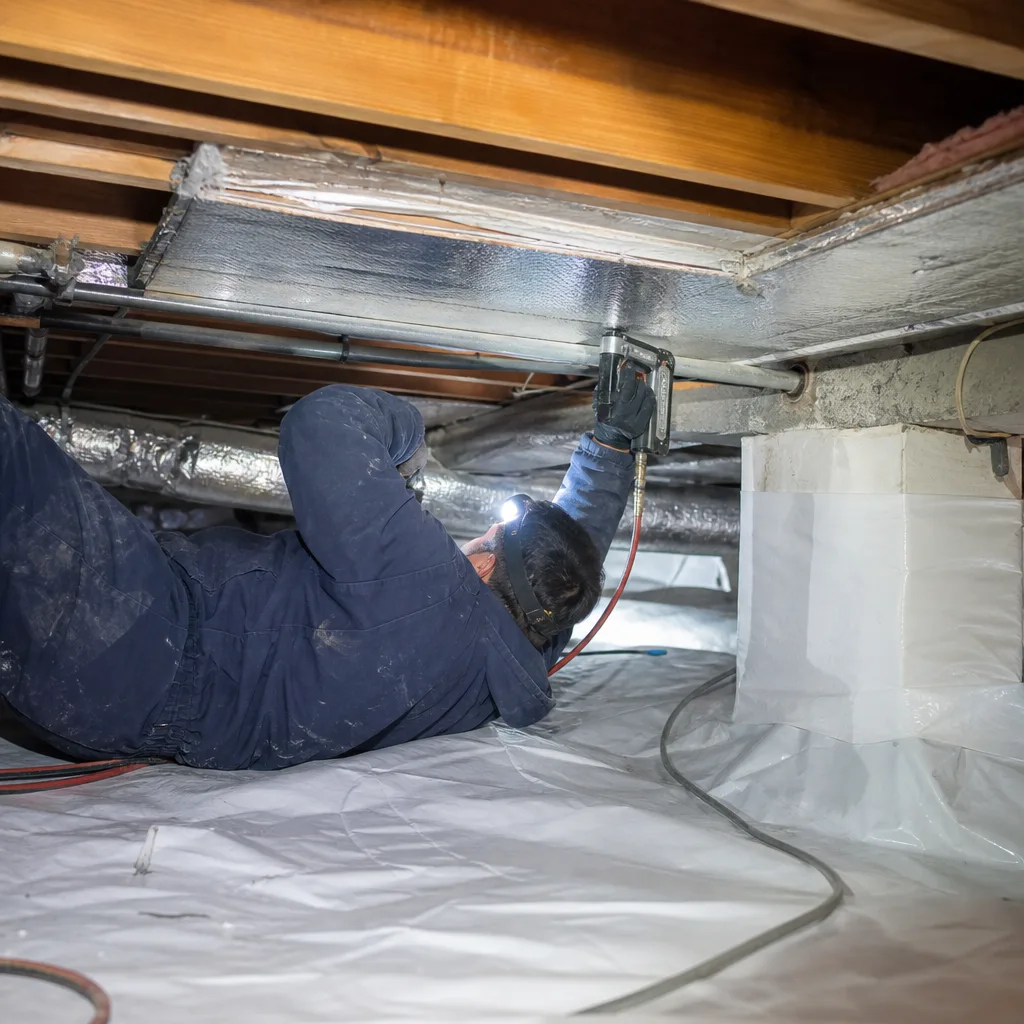
In Rock Hill’s Zone 3A climate, vapor drive pushes moisture from the warm, humid exterior into the cooler crawl space for much of the year. A 6-mil poly laid on the dirt does little against that pressure. We install 10-mil or 12-mil reinforced liners, run them up the piers, and mechanically fasten them to the foundation walls. For homes off Route 21 in neighborhoods like Newport or Rawlinson Acres, where crawl floors sit close to the water table, we specify a higher-perm liner and check drainage before we lay anything.
Crawl Space Encapsulation
Encapsulation is a system, not a product. In Rock Hill, complete encapsulation means sealing the vents and access door, air-sealing the rim and band, covering the dirt with a 12-mil liner, and conditioning the space with a dehumidifier sized to the square footage. We do this on mill cottages near downtown Rock Hill and on 1990s tract homes in areas like Manchester Meadows and the streets off Celanese Road. The process looks the same on paper, but the older homes always need more air-sealing before the liner goes down.
Crawl Space Insulation
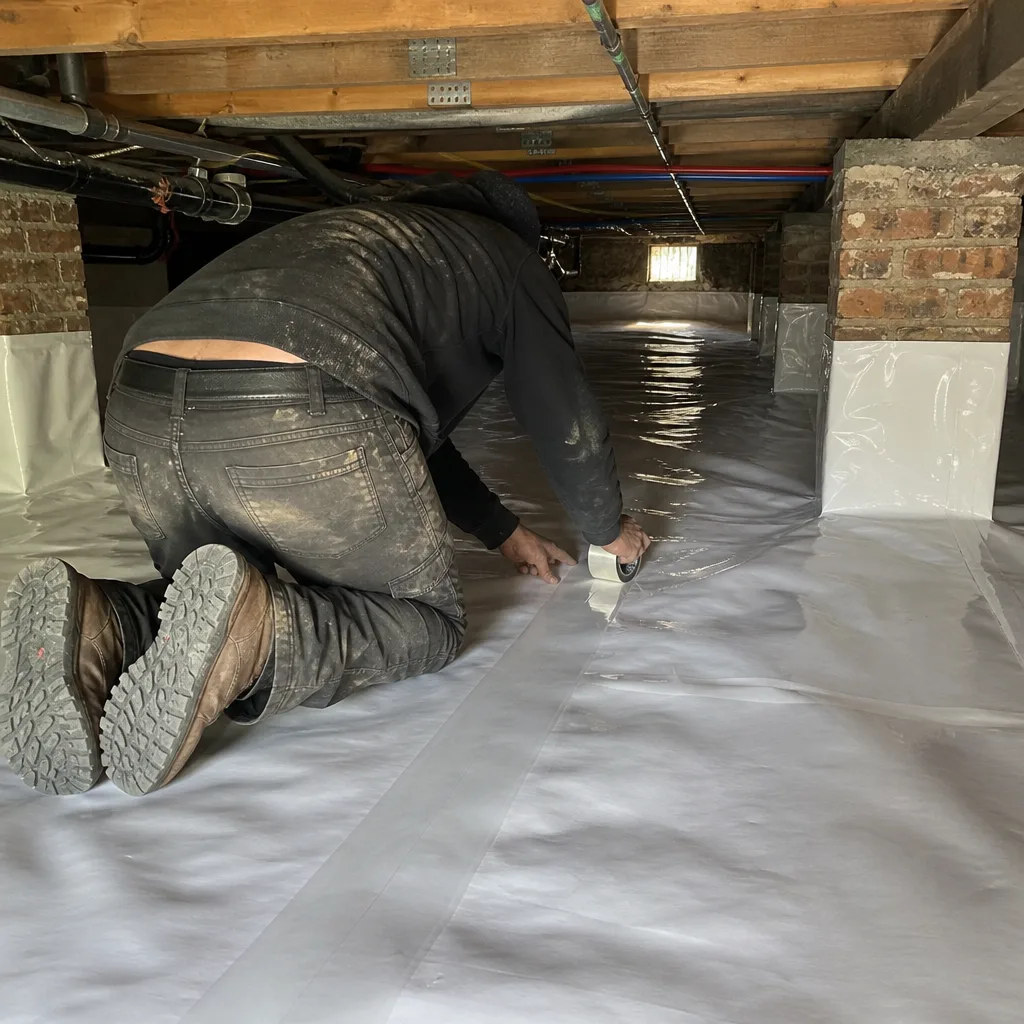
Rock Hill sits in IECC Climate Zone 3A, which requires R-19 floor insulation or R-5 to R-13 on crawl space walls depending on whether the space is vented or unvented. South Carolina code differs from what Charlotte crews are used to bidding under North Carolina’s Zone 4A. We specify Knauf and Rockwool products for crawl wall applications in Rock Hill. The material changes depending on whether the crawl stays vented or gets fully encapsulated. That decision gets made before the bid, not on site.
Crawl Space Moisture Control
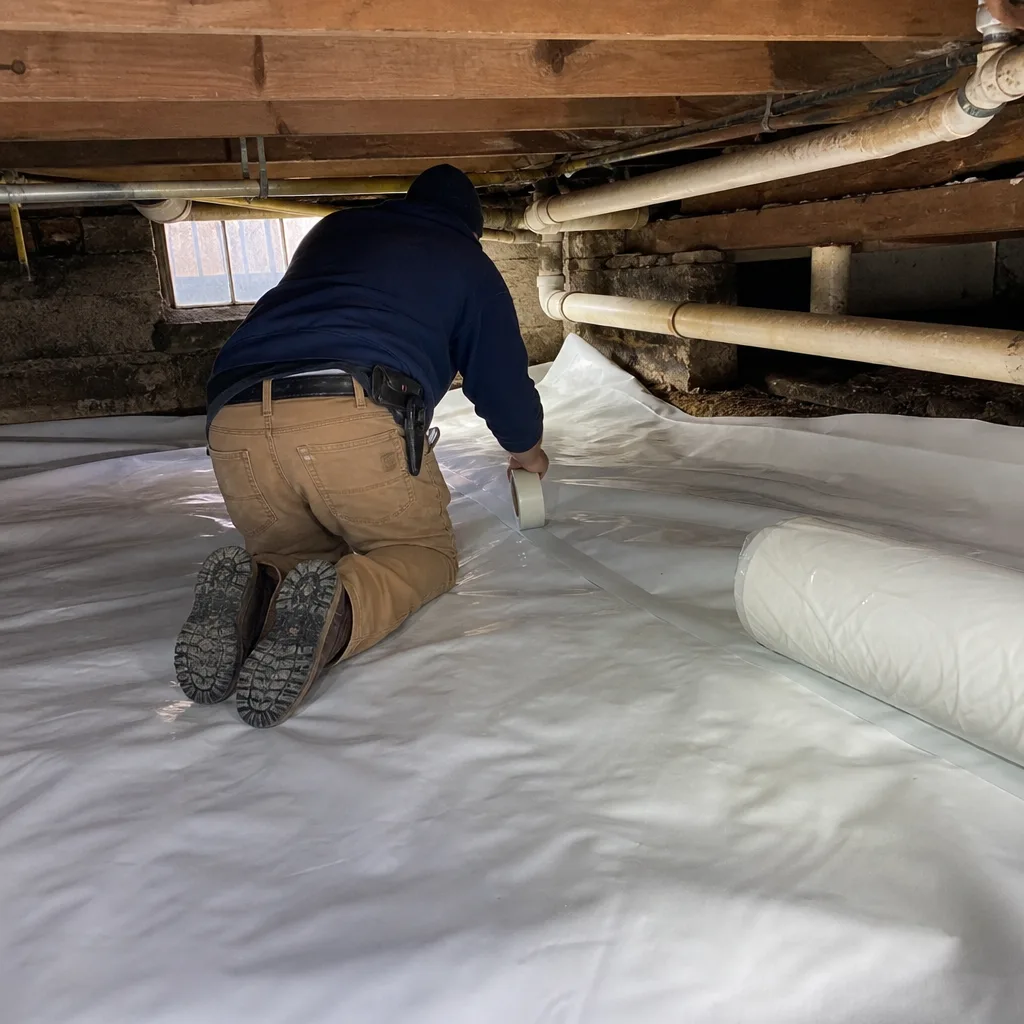
Moisture in a Rock Hill crawl comes from three places: groundwater wicking through the dirt, humid outside air entering through vents, and condensation on cold ductwork and floor joists. You need to address all three or you keep chasing symptoms. We install Sanidry and Santa Fe dehumidifiers sized to the crawl’s cubic footage and set them to maintain 50 to 55 percent relative humidity. For homes near the Catawba River floodplain, where seasonal saturation is common, we add a sump pump conversation in the same visit rather than waiting for the next wet season.
What happens when you call
- 1
A real person answersNo phone trees - you reach a local pro.
- 2
You get an upfront price rangeHonest numbers before anyone is dispatched.
- 3
A background-checked tech heads outLicensed & insured, dispatched right away.
- 4
You approve before work beginsNothing starts until you say go.
Trusted Brands We Service in Rock Hill
We stock and install materials from Knauf, Rockwool, and CertainTeed, among others. What matters more than the brand name is that the product matches the assembly. A liner that works in a vented crawl fails in a sealed one if vapor retarder placement ignores South Carolina’s Zone 3A requirements. For Rock Hill customers we keep common liner widths and dehumidifier models in local inventory, which means most jobs don’t wait on shipping. If you already have a quote that specifies a certain material, bring it to us. We’ll read it with you under our Free Second Opinion policy, at no charge.
Common Crawl Space Encapsulation & Vapor Barrier Problems We See in Rock Hill Homes
- Vapor barrier laid over standing water. We see this constantly in older crawl spaces around Winthrop and Oakland. The source is usually groundwater, not condensation. Sealing a wet dirt floor without drainage means the liner becomes a breeding ground for odor and mold within a season. Hydrostatic pressure pushes water up under the plastic and it never dries.
- Balloon-frame thermal bypass in mill cottages. Homes built before 1950 near the old Springs Industries sites often have open stud bays running from crawl to attic. Humid crawlspace air gets pulled up through the walls every time the AC cycles. Insulating or encapsulating without air-sealing the rim and band means the humid air simply moves around the work. We seal that pathway before encapsulation or the liner sweats from below.
- Zone 4A specs applied to Zone 3A houses. Rock Hill is 25 miles south of Charlotte, but the energy code doesn’t care about distance. South Carolina’s Zone 3A requires different R-values and different vapor retarder placement than North Carolina’s Zone 4A. We have seen NC-based crews bid Rock Hill jobs with underslab insulation assumptions that trap moisture on the wrong side of the assembly. Verify that the R-values and the license match what York County requires.
- Tight, alley-loaded access in Rock Hill’s mill village. Many older homes off Cherry Road and Ebenezer Avenue have crawl access doors under porches, behind additions, or opening into narrow alley gaps. A crew that shows up with full-size equipment sometimes can’t get the liner in. We carry narrower rolls and shorter handled tools for exactly these access conditions.
Pricing for Crawl Space Encapsulation & Vapor Barrier in Rock Hill, SC
Vapor barrier installation with sealed seams typically runs $1,800 to $3,400 for a 1,000 to 1,500 square foot crawl in Rock Hill. Full encapsulation, which includes vent sealing, rim air sealing, a 12-mil reinforced liner, and a dehumidifier, runs $6,000 to $9,500 on average. Larger crawls under 2,500 square feet or homes with standing water and drainage issues push toward $11,000 to $14,000. These are Rock Hill market numbers, based on the access conditions and foundation types we see in mill-village cottages, 1990s tract homes, and newer construction off Celanese Road and Dave Lyle Boulevard.
What moves the number? Crawl depth and access, the condition of the rim and band, whether the space holds water after rain, and whether the home has balloon framing that needs air sealing first. You’ll get a fixed written price before any work starts, not an estimate that creeps.
Call (218) 261-7714 for a written quote on Crawl Space Encapsulation & Vapor Barrier in Rock Hill. Estimates are free, and the price we give you is the price you pay.
We Also Serve Cities Near Rock Hill
Our Rock Hill crews also cover Fort Mill, Tega Cay, York, Clover, and Indian Land. If you’re in one of those areas, the same Zone 3A code knowledge and the same written-price-before-work-starts policy applies. Dispatch and scheduling run through our Charlotte office, so a live person answers no matter which side of the state line you’re on.
Serving Rock Hill, SC - Our Local Coverage Area
We’re based in the Rock Hill area and know this community well. Use the map below to see our service coverage - if you’re nearby, we can almost certainly help.
FAQs - Crawl Space Encapsulation & Vapor Barrier in Rock Hill
Because the foundation and framing are not the weak point. The weak point is air movement. Mill-village homes near the old Springs Industries sites have balloon-framed walls with open stud bays running from the crawl to the attic. A 6-mil poly on the dirt floor addresses evaporation. It does nothing for the humid air that gets pulled up through the walls every time the AC runs. You have to air-seal the rim and band, then lay a reinforced liner, then condition the space. If a crew quotes you vapor barrier only for a pre-1950 Rock Hill home, ask them how they’re handling the balloon framing. Call (218) 261-7714 to get a written scope that names every step before any work starts.
Yes. Rock Hill sits in IECC Climate Zone 3A, warm-humid, which means summer cooling loads and inward vapor drive are the dominant problems. Vapor retarder placement matters more here than it does 25 miles north. A contractor who defaults to Zone 4A specs, which happens often with Charlotte-based crews, may specify insulation and vapor retarders that trap moisture on the wrong side of the assembly. That shows up later as mold on floor joists and a crawl that smells worse after encapsulation than before. We bid every Rock Hill job to South Carolina Zone 3A thresholds, not North Carolina defaults.
You need a dehumidifier sized to the crawl’s cubic footage, not just square footage. A sealed liner keeps groundwater vapor and outside air out, but it doesn’t dry the air that’s already there. Rock Hill’s summer humidity means that unconditioned air in the crawl will stay above 60 percent relative humidity without mechanical drying. That’s enough for mold on joists and cupping in hardwood floors above. We install dehumidifiers set to 50 to 55 percent and wire them to drain to daylight or a sump where possible.
We plan for access before we bid. Many mill cottages off Cherry Road and Ebenezer Avenue have crawl doors under porches, behind additions, or opening into narrow alleys that a standard panel truck can’t reach. We carry narrower liner rolls, shorter-handled tools, and low-profile dehumidifier models for exactly those conditions. The written scope includes how we’re getting the material in and the debris out before we start. If you know your access is tight, tell us on the call and we’ll bring what’s needed on the first trip, not the third.
You should check both. York County requires a South Carolina contractor license. Some crews crossing the state line from Charlotte hold only North Carolina licenses, which do not transfer. More importantly, code knowledge does not transfer either. Zone 3A R-values and vapor retarder rules differ from Zone 4A. Ask any contractor bidding your Rock Hill crawl what R-value they’re specifying for the walls and what side of the assembly the vapor retarder goes on. If they hesitate, that’s your answer. Topside Attic Insulation holds the proper licensing, and we’ll put the R-values and materials in your written scope before you sign anything.
Get a Written Price Before Any Work Starts in Rock Hill
Every Rock Hill encapsulation we do begins the same way: a written scope that names the materials, the R-values, the dehumidifier model, and the install date. No work starts until you approve that price. The job ends with a Documented Photo Record so you can see exactly what got done under your house. Under Haven Standard, that’s how it works.
Call (218) 261-7714 to schedule a crawl space evaluation in Rock Hill. A live person answers. You’ll get a named technician, a text when they’re on the way, and a written price before anyone lifts a tool.
Written by Wes Okafor, Owner at Topside Attic Insulation, serving Rock Hill under The Haven Standard since 2016.
Crawl Space Encapsulation & Vapor Barrier in Nearby Areas