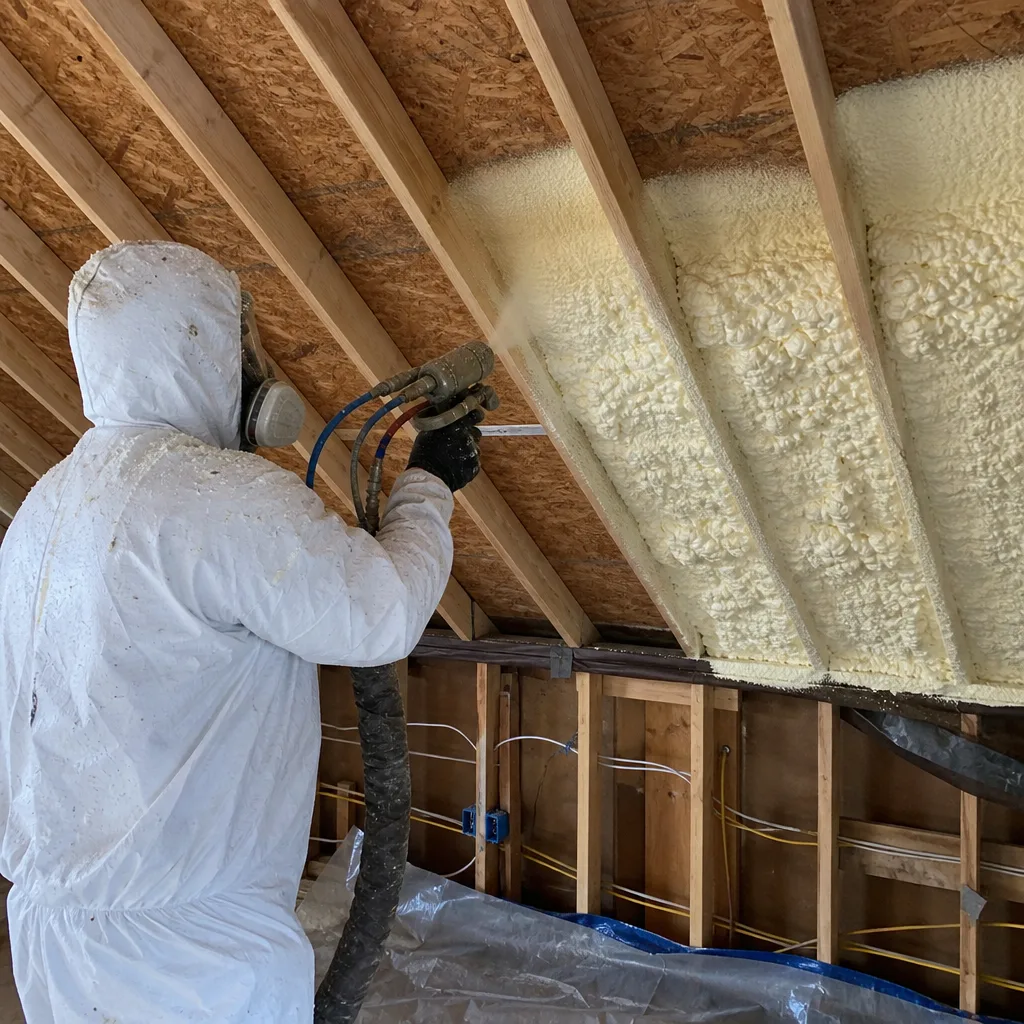
Fast, Reliable Attic Insulation Across Sugar Land
Most attic insulation jobs in Sugar Land run between $1,400 and $3,200 for a standard two-story home top-up, and between $3,000 and $6,500 for a full removal and replacement. We respond to Sugar Land service calls seven days a week, and a live person answers the phone at (218) 261-7714 anytime you call. Our crews work in First Colony, New Territory, Telfair, Riverstone, Greatwood, and every master-planned community in between.
If your upstairs runs hot every August and your AC never seems to shut off, the problem is rarely the unit itself. It’s usually the 25-year-old insulation above your ceiling, doing far less than it did when it was installed. We see it every week in Sugar Land homes built between 1990 and 2005.
Here’s the harder truth most contractors won’t tell you: lots of Sugar Land attics look fully insulated. A thick layer of blown fiberglass, all the way across the floor. But that layer was often dropped directly over unsealed top plates and plumbing penetrations, and it has been quietly compressing for two decades. The insulation is there. The performance isn’t.
Why Sugar Land Homeowners Call Topside Attic Insulation
We’re Attic Insulation contractors who take a different first step. Under The Haven Standard, air sealing of top plates, can lights, and penetrations is completed before any insulation is added. Every job begins with a written price. Before work starts, you have a flat price, a written scope, and a written warranty. No exceptions, since 2016.
That matters in Sugar Land specifically, because unsealed top plates are the most common hidden failure in First Colony and New Territory attics. Homes built during the 1990s and early 2000s were framed, insulated, and drywalled on tight schedules. The shortcut then was standard practice: blow fiberglass over the attic floor and move on. Nobody sealed the interior wall top plates first. So for 25-plus years, conditioned air has been leaking from the wall cavities directly into the attic. In Sugar Land’s hot-humid summers, that attic space routinely hits 140°F. You are effectively paying to cool air that escapes into a superheated attic.
Our reputation across Sugar Land is built on showing homeowners the evidence. Before-and-after blower-door numbers on every applicable job. If the test reads 4,200 CFM50 before sealing and 2,100 after, that is the number you get. Not a description of how hard we worked.
Our Attic Insulation Services in Sugar Land
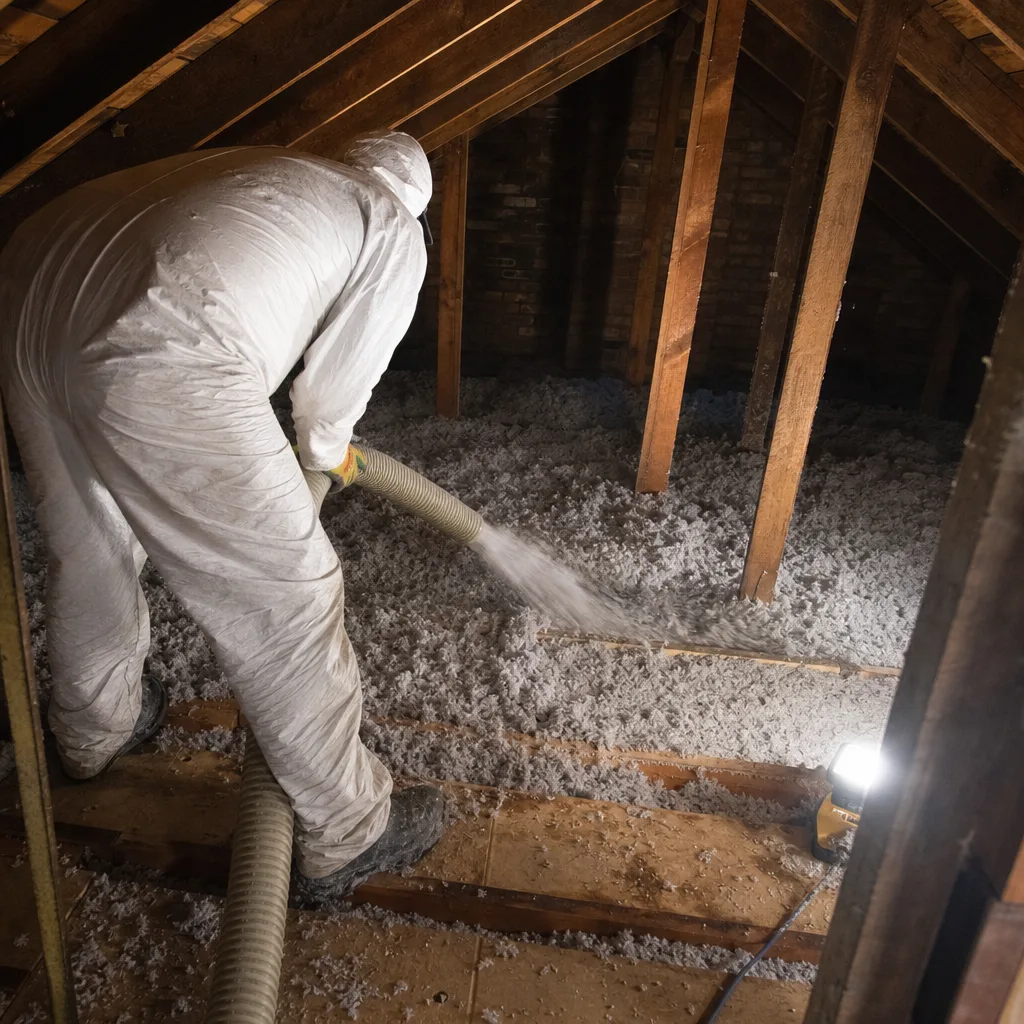
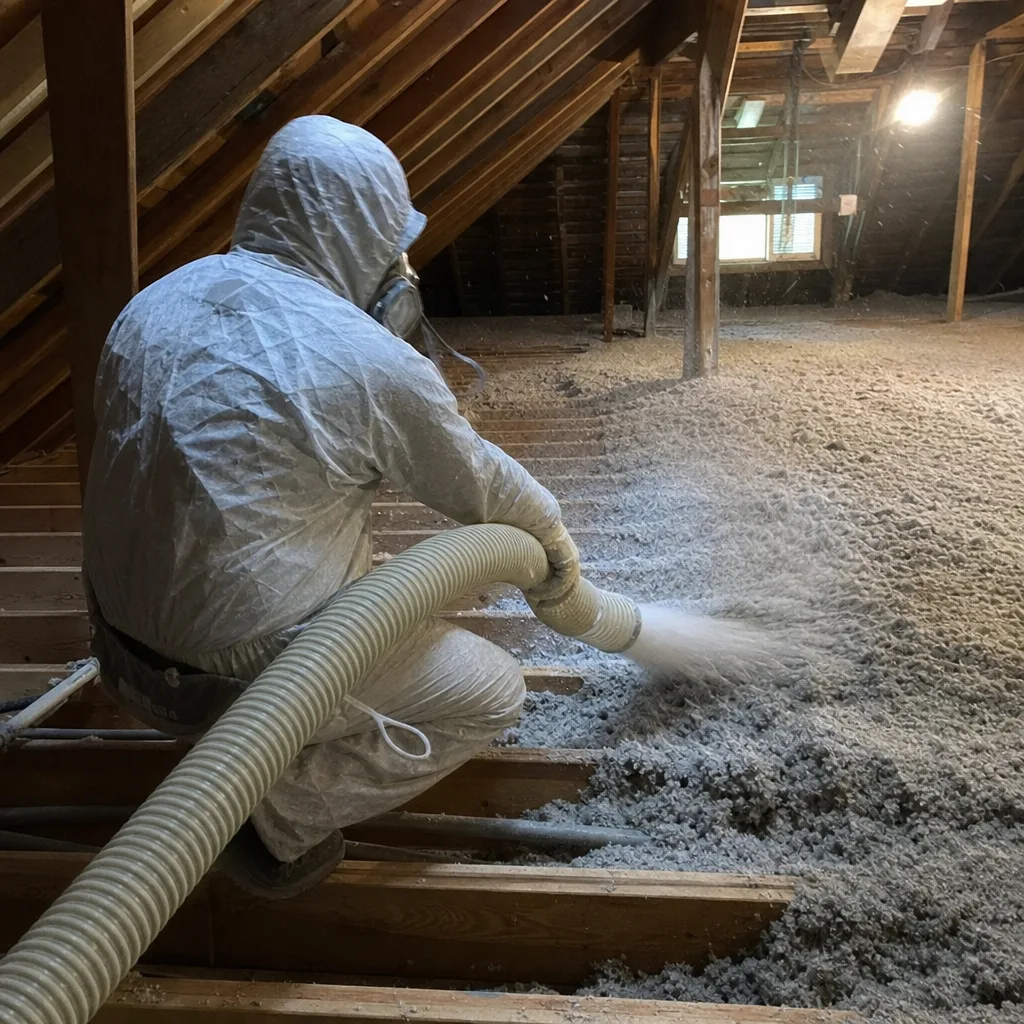
Blown-In Attic Insulation
For most Sugar Land homes, blown-in fiberglass or blown-in cellulose is the most cost-effective route to hit the R-49 recommended for IECC Climate Zone 2A. We blow over a sealed attic floor, never over unsealed penetrations. Johns Manville and Knauf loose-fill fiberglass are our most common materials here. We are product-flexible; no proprietary lock-in, and we will tell you what we would use in our own Sugar Land house.
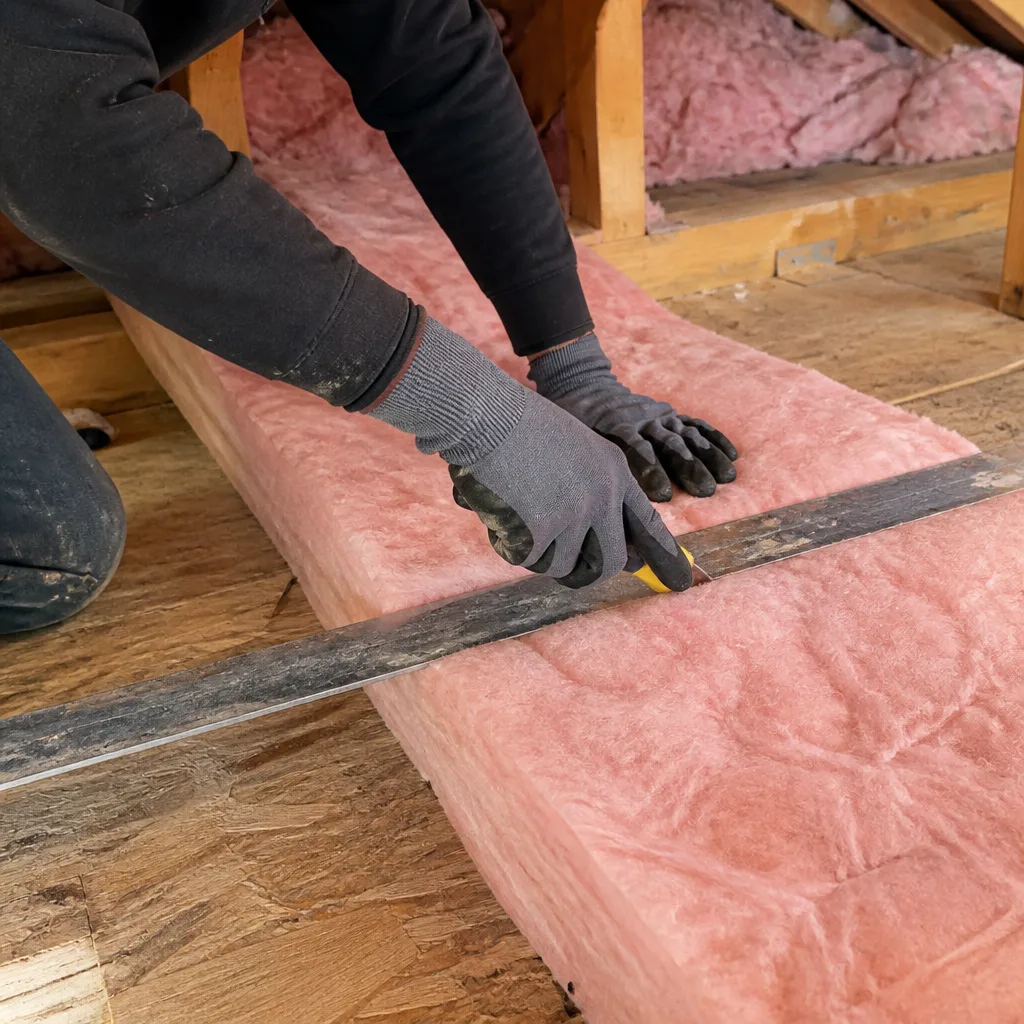
Attic Batt Insulation
Batt insulation works best in Sugar Land attics where access is tight, or where the homeowner wants clean, consistent coverage without the dust of blown fiberglass. Unfaced batts from Rockwool or CertainTeed get friction-fit between ceiling joists. Faced batts are not something we recommend in Zone 2A attics; the vapor retarder belongs on the conditioned side, and a face-up installation can trap moisture in Sugar Land’s humid air.
Attic Insulation Top-Up
If your existing blown fiberglass is dry, free of mold, and still holding at least R-19 after settling, a top-up to R-49 is often the right move. In First Colony and New Territory, we frequently find original R-30 material compacted down to an effective R-15 to R-19. The homeowner sees a “thick layer” and assumes it’s fine. It is not. A top-up in Sugar Land for a 2,000 to 3,000 square foot home typically runs $1,400 to $2,800, including air sealing of the top plates and penetrations before we add material.
Attic Insulation Replacement
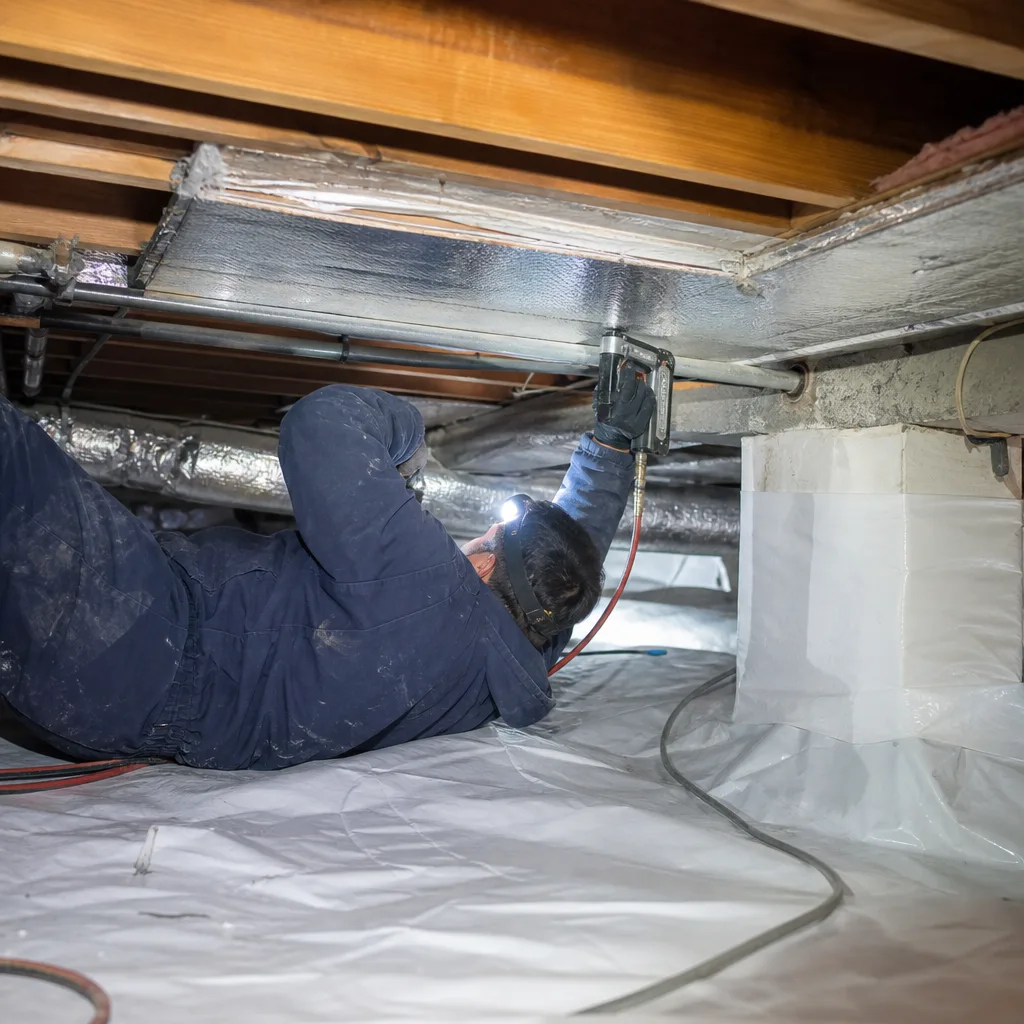
Full replacement is the right call when insulation is moisture-compromised, pest-damaged, or so compressed that adding more would bury the problem rather than fix it. After Hurricane Harvey, many Fort Bend County attics were surface-dried but never fully remediated. Hidden mold in batt insulation, blown fiberglass that held moisture against drywall for weeks. Those situations call for removal, not a top-up. We remove the old material, inspect the decking, air-seal everything, then insulate to R-49.
Attic Baffles & Ventilation Prep
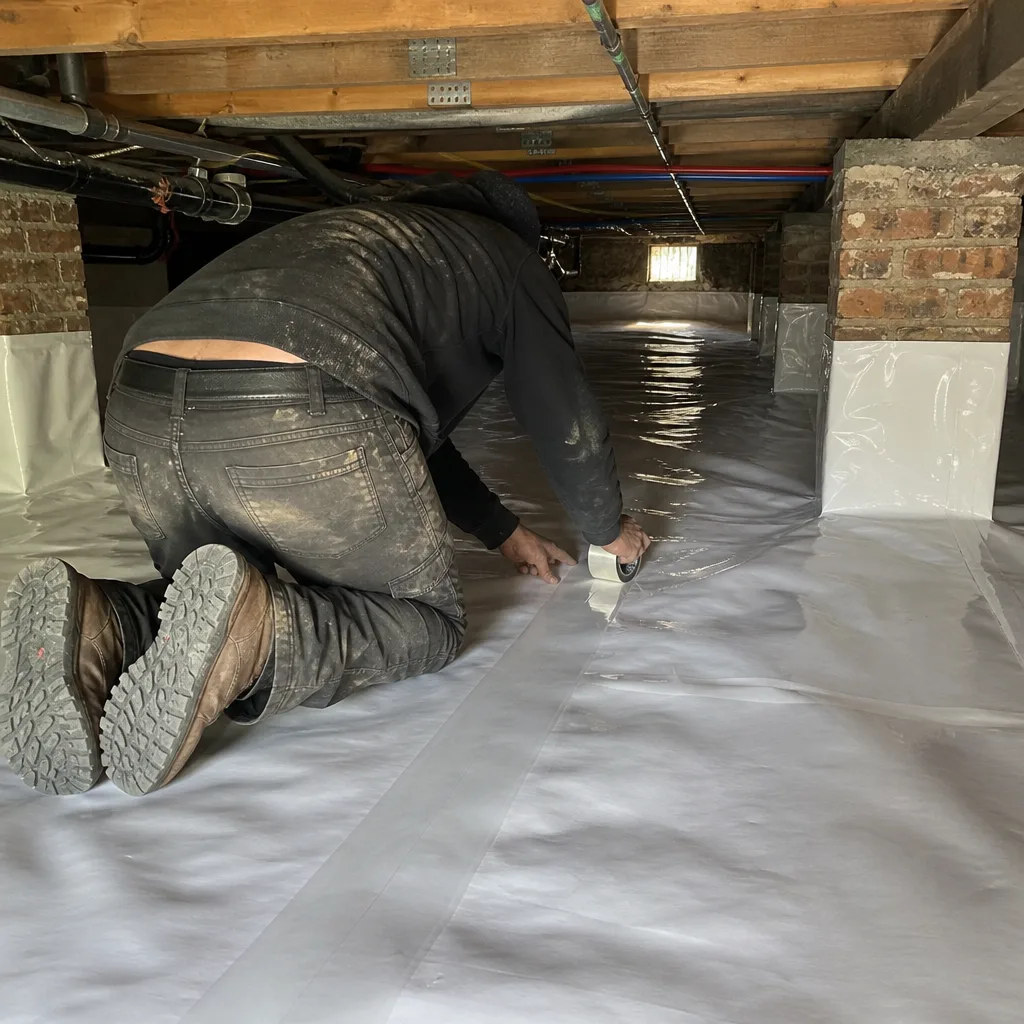
Baffles keep blown insulation from blocking the soffit vents, which is the intake side of your attic’s ventilation system. In Sugar Land, where summer heat saturates the roof deck, blocked soffit vents mean the attic never cools down at night. The whole ventilation cycle stalls. We restore baffles at every soffit before placing new insulation, and we check that the ridge or box vents are actually moving air. Ventilation and insulation are one system in Zone 2A. Treating them separately is how you get a moldy sheathing surprise three years later.
What happens when you call
- 1
A real person answersNo phone trees - you reach a local pro.
- 2
You get an upfront price rangeHonest numbers before anyone is dispatched.
- 3
A background-checked tech heads outLicensed & insured, dispatched right away.
- 4
You approve before work beginsNothing starts until you say go.
Common Attic Insulation Problems We See in Sugar Land Homes
- Settled original blown fiberglass in 25-year-old First Colony attics. What was installed as R-30 in 1998 has often compressed to under R-19 today. The homeowner sees a thick layer and assumes performance is unchanged. R-value is a measure of trapped air, and settled fiberglass traps far less.
- Unsealed top plates and plumbing penetrations under the original insulation. In New Territory and similar subdivisions, interior wall top plates were left unsealed before the fiberglass went in. That means conditioned air leaks into the 140°F attic all summer, and the upstairs rooms never reach setpoint without the AC running constantly.
- Hurricane Harvey flood damage that was only surface-dried. Fort Bend County took significant water in 2017. Some attics had insulation that was dried on the surface but remained moisture-compromised beneath, leading to hidden mold and permanently reduced thermal resistance years later.
- Blocked soffit vents from careless past installations. When insulation gets blown over the soffit intakes, the attic stops venting. In Sugar Land’s humidity, that means moisture builds against the roof sheathing. We find this frequently in homes where the original builder-grade insulation was topped up by a crew that never installed baffles first.
Pricing for Attic Insulation in Sugar Land, TX
Sugar Land attic insulation work runs on a predictable range, and we give you a written price before any work starts. Here is what we typically see:
| Service | Typical Range in Sugar Land |
|---|---|
| Air sealing + blown-in top-up to R-49 (2,000-3,000 sq ft attic) | $1,400-$2,800 |
| Full insulation removal and replacement to R-49 | $3,000-$6,500 |
| Attic baffles and ventilation prep (with insulation) | Adds $200-$600 |
| Attic air sealing only (top plates, penetrations, can lights) | $900-$1,700 |
These ranges assume typical two-story brick-veneer construction in master-planned Sugar Land communities, with accessible attic cavities and no major mold or pest remediation. If your attic has Harvey-related moisture damage, rodent nesting, or HVAC ductwork that needs to be moved for access, the written scope will reflect that before you commit to anything.
We do not ask you to call for a quote. We ask you to call (218) 261-7714 to schedule the inspection that produces the written quote. If you already have a written estimate from another contractor, bring it. We will read it with you, line by line, at no charge.
Trusted Brands We Service in Sugar Land
We regularly install Knauf and Johns Manville loose-fill fiberglass, Rockwool batt insulation, and CertainTeed products. The material choice depends on your roof geometry, your budget, and your performance targets, not on what we happen to have on the truck. We stock local supply in Sugar Land so that a top-up or replacement can usually be scheduled within the same week. No proprietary product lock-in, and no brand claimed as an exclusive partner.
We Also Serve Cities Near Sugar Land
Our crews serve Sugar Land and the surrounding Fort Bend and Harris County communities, including Missouri City, Pearland, Houston, and Pasadena. If you are right on the Sugar Land-Missouri City line near Dulles Avenue, or out near the Brazos River in Greatwood, we are already working in your area most weeks.
Serving Sugar Land, TX - Our Local Coverage Area
We’re based in the Sugar Land area and know this community well. Use the map below to see our service coverage - if you’re nearby, we can almost certainly help.
FAQs - Attic Insulation in Sugar Land
Because the insulation was often installed over unsealed top plates, and because the original blown fiberglass has compressed from R-30 to under R-19 after 25 years. Your attic looks fully insulated, but conditioned air is leaking from the wall cavities into a 140°F attic all summer, and the remaining insulation is doing far less than it did when it was new. The fix is air sealing first, then insulation to R-49. Call (218) 261-7714 and we will schedule the inspection that shows you exactly where the leaks are.
Most Sugar Land attics with dry, mold-free, uncompromised insulation need a top-up, not a full replacement. If the existing material is holding at R-15 or better after settling and shows no signs of moisture or pest damage, adding blown-in fiberglass to reach R-49 is usually the right call. If Harvey left moisture damage, or if rodents have nested, or if the insulation is so compressed it is matted to the drywall, replacement makes more sense. We will give you a straight answer with a written price before any work starts.
Baffles keep insulation from blocking the soffit vents, which are the intake for the attic ventilation cycle. In Sugar Land’s hot-humid climate, a stalled ventilation cycle means the attic holds heat and moisture against the roof sheathing at night. That is how you get warped decking, rusted nails, and mold. Baffles and ventilation are not an add-on we upcharge; they are part of doing the insulation job correctly in Zone 2A.
In most cases, yes, but only after the existing insulation’s condition is confirmed and the attic floor is air-sealed. Adding new fiberglass over unsealed top plates buries the problem under more material and makes future remediation harder. We have seen First Colony attics where a previous contractor blew a fresh layer over original unsealed penetrations, and the homeowner’s cooling bill barely moved. Blowing over an unsealed floor is the same shortcut that started the problem in 1998. Call (218) 261-7714 for an inspection before anyone adds material.
If your attic took water during Harvey or any subsequent flood event, the insulation should be inspected and, in most cases, removed. Blown fiberglass and batt insulation that absorbed floodwater do not dry back to their original R-value, and they often harbor mold beneath the surface. Surface drying is not remediation. If you have flood history in your attic, we will do a moisture inspection and recommend replacement only if the evidence supports it.
Call Topside Attic Insulation for Attic Insulation in Sugar Land
If you live in First Colony, New Territory, Telfair, or anywhere else in Sugar Land, and you suspect your attic insulation is no longer doing its job, call (218) 261-7714. We will schedule a visit, inspect the attic, and give you a written price before any work starts. That includes a blower-door test where applicable, so you can see the actual air leakage number before and after.
We are independently owned and operated, run under The Haven Standard since 2016, and we back every completed job with the 365-Day Done Right Promise: if it is not done right, we make it right. Every job ends with a documented photo record and, on applicable jobs, before-and-after blower-door numbers so you can verify the performance change you paid for.
Written by Wes Okafor, Owner at Topside Attic Insulation
Attic Insulation in Nearby Areas