
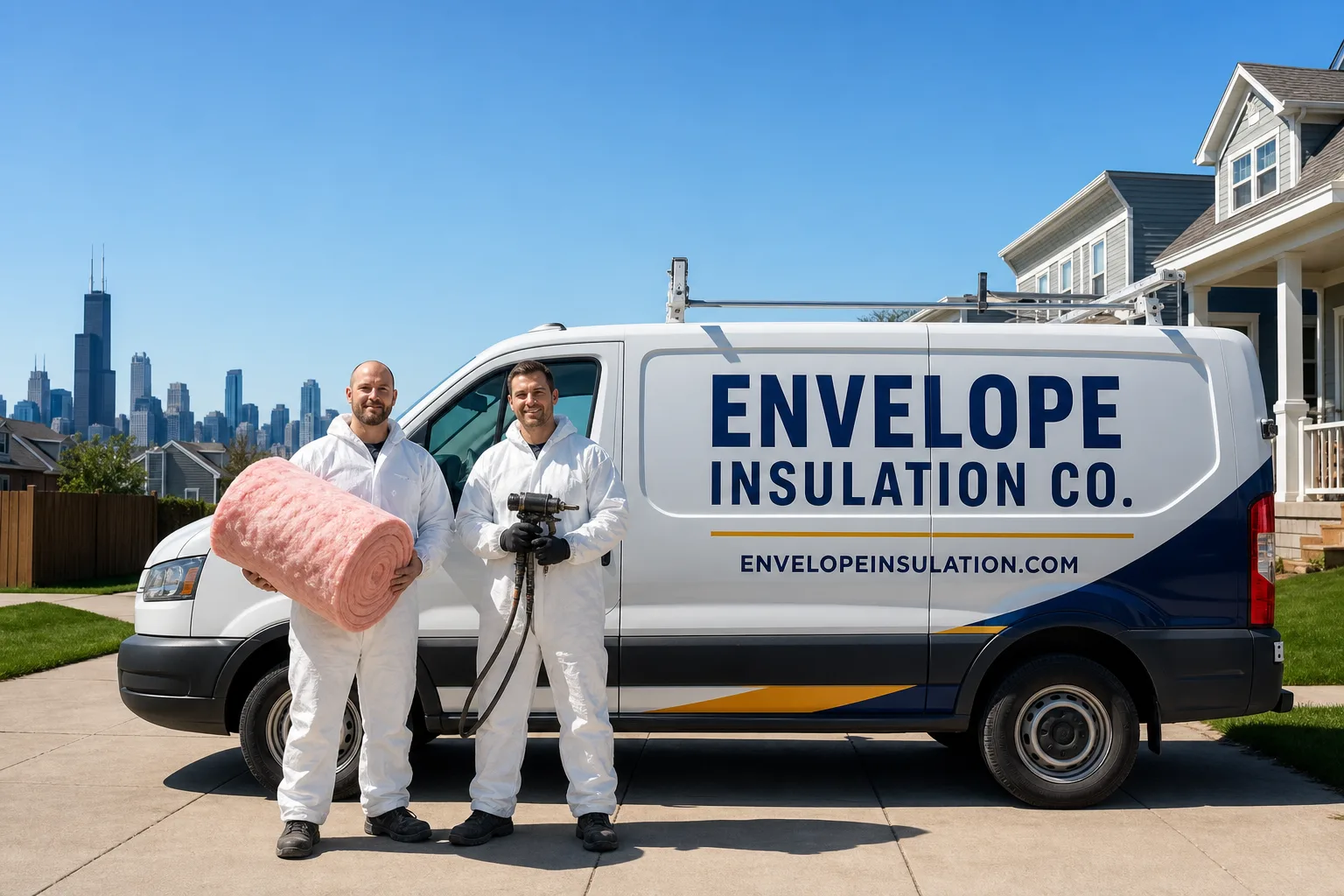
Trusted Blown-In Insulation for Chicago Homeowners
Blown-In Insulation - Chicago typically runs $1,800 to $4,200 for a standard attic, depending on square footage, existing insulation depth, and whether air sealing is part of the job. Most homes we test in neighborhoods like Edison Park, Beverly, or Portage Park are losing far more conditioned air through the attic floor than the homeowner realizes, which is why we run a blower-door test before we quote anything. Since 2016, Topside Attic Insulation has sealed and insulated more than 9,000 homes across Chicagoland, and every one of them started with a written price and ended with a documented record. If you need same-day service or just want a straight answer about your attic, call (218) 261-7714. A live person answers, 24/7.
What Our Blown-In Insulation Service Includes
Blown-In Cellulose
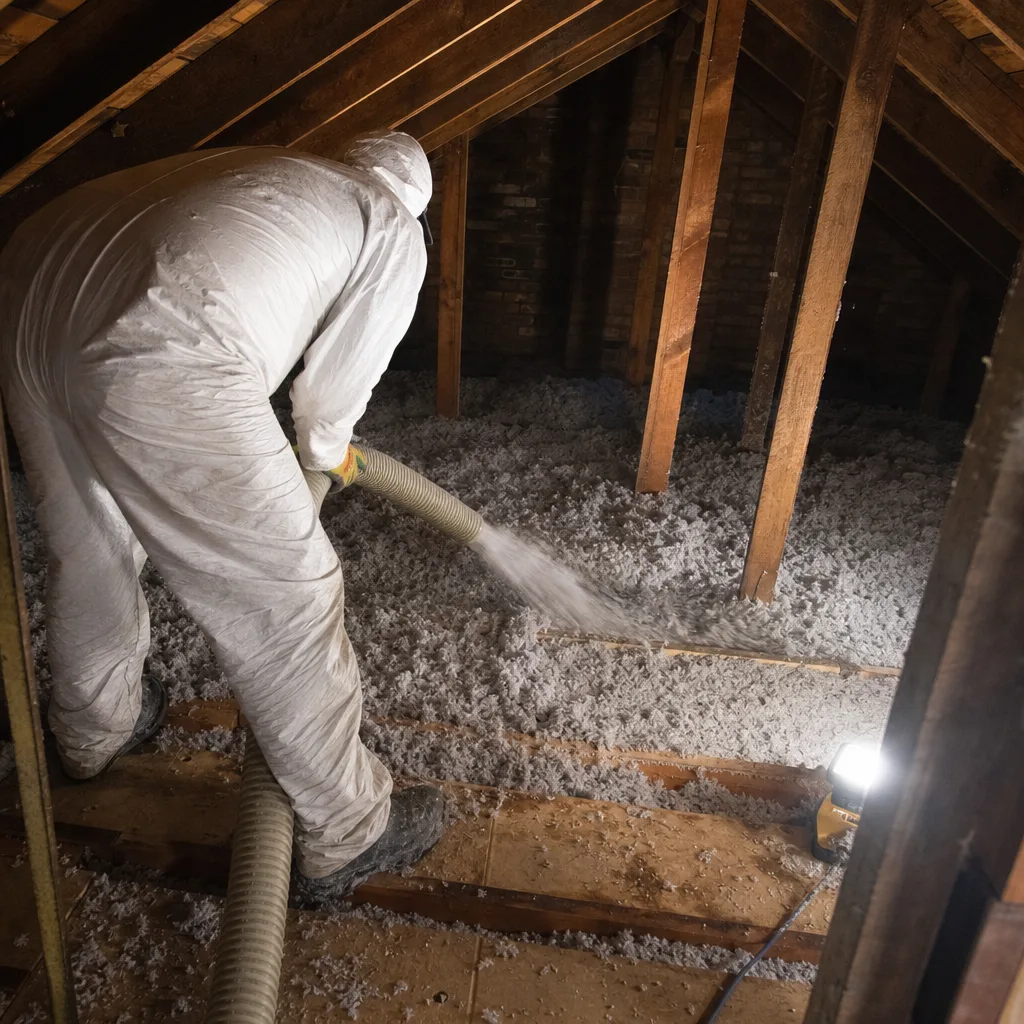
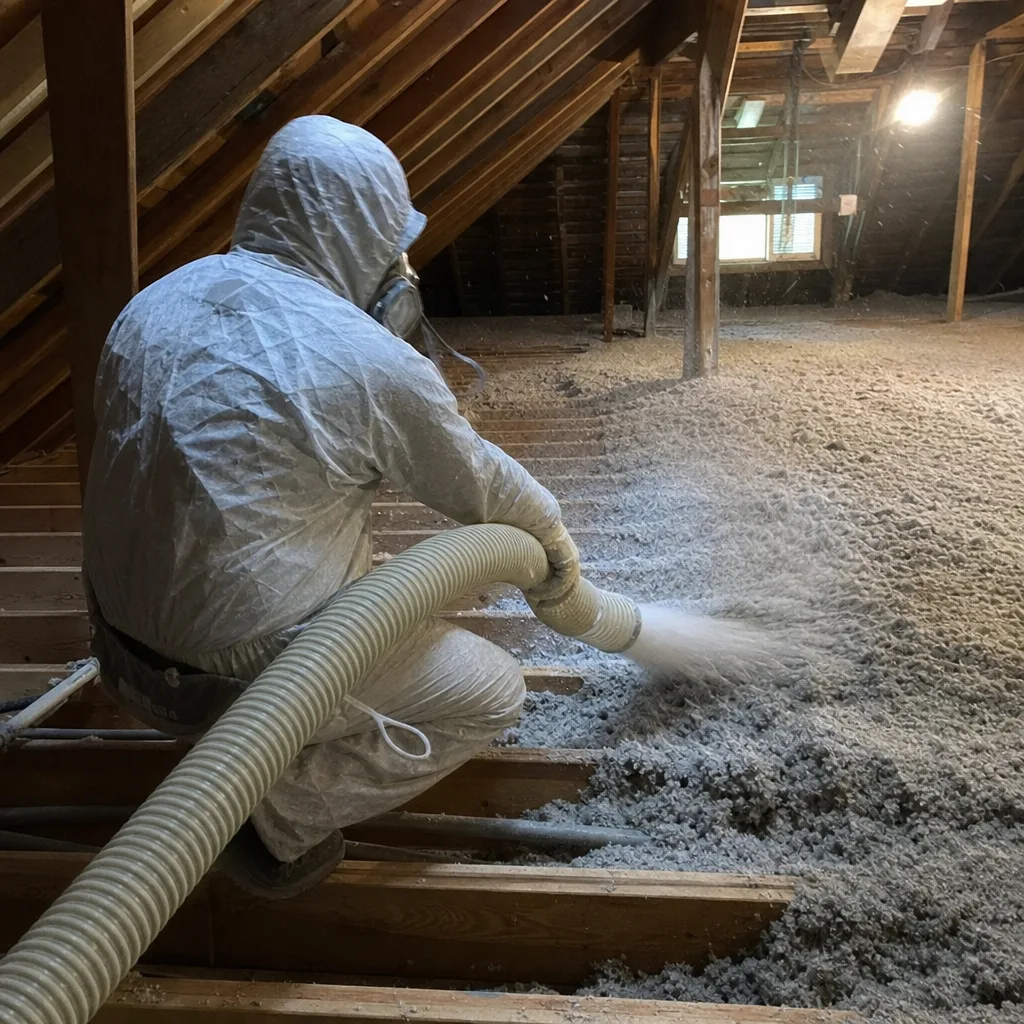
Blown-in cellulose is ground-up recycled paper treated with borate for fire and pest resistance, and it’s the most common material we install in Oak Lawn and Chicago attics because it settles into irregular cavities better than batts ever will. You need this when your attic has inconsistent coverage, gaps around framing, or old insulation that’s matted down to half its original R-value. Topside Attic Insulation installs cellulose only after air sealing is complete, so we’re not burying leaks under a fresh layer of material that will just let conditioned air pass through it.
Blown-In Fiberglass
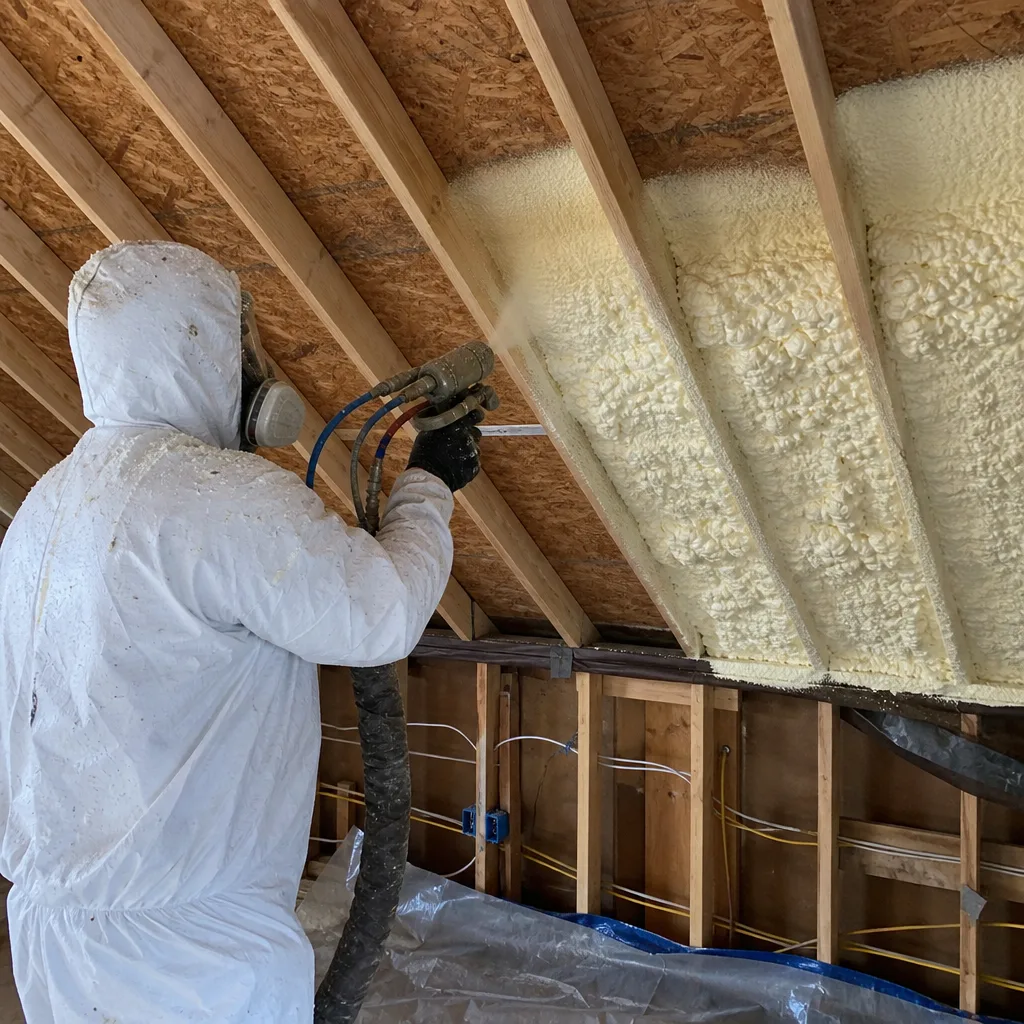
Blown-in fiberglass is spun glass that doesn’t settle as much as cellulose and holds its R-value in Skokie and Chicago’s humidity swings, which matters in attics with marginal ventilation. It’s a good fit when you want a lighter material that won’t compress older layers below it, or when you’re topping up an attic that already has fiberglass batts. We blow it loose and even across the full attic floor, and we document the installed depth in inches and the resulting R-value in the written record you get when we finish.
Dense-Pack Wall Insulation
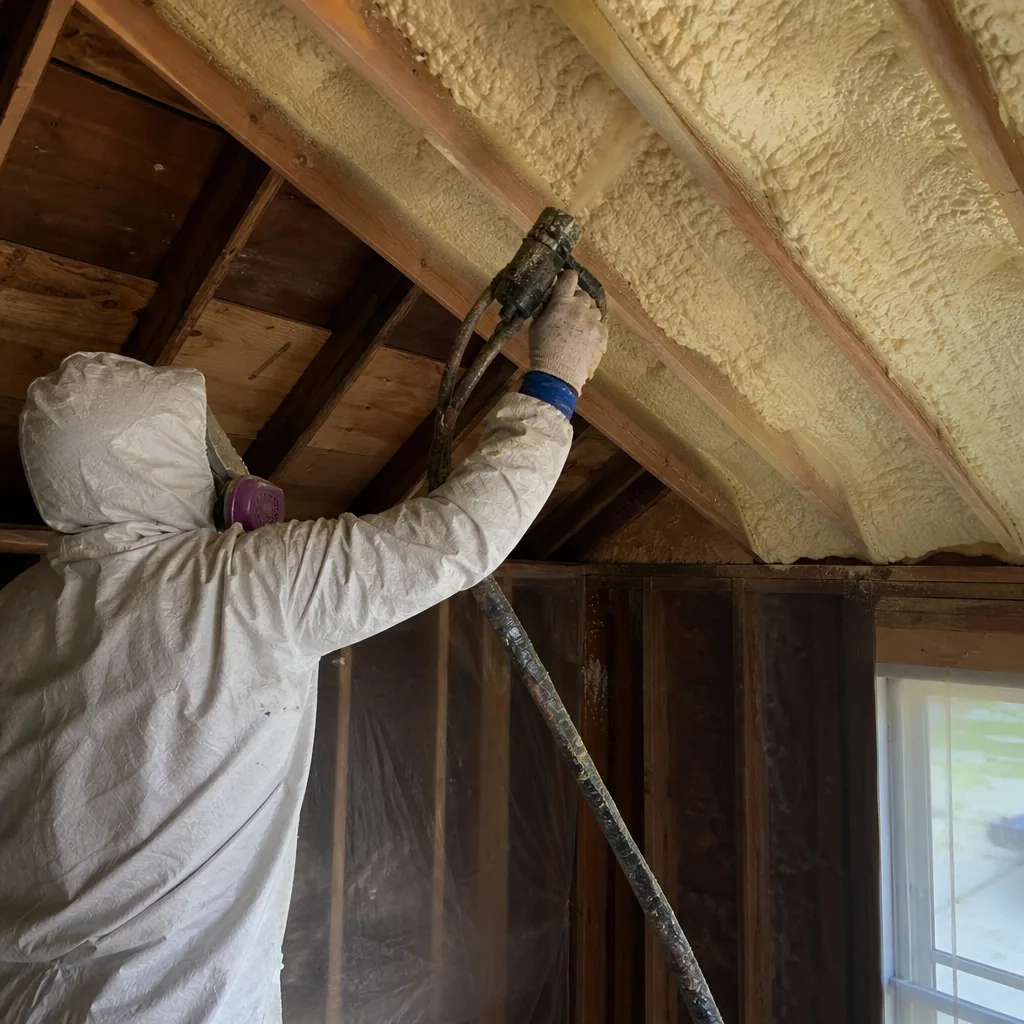
Dense-pack wall insulation is cellulose blown into enclosed wall cavities at high pressure until it reaches roughly 3.5 pounds per cubic foot, which is dense enough to stop air movement, not just slow heat transfer in Hammond and Chicago homes. You need this if your Chicago home was built before 1980 and the walls are empty, or if you’ve noticed rooms that never hold temperature no matter what the thermostat says. Some crews pack walls through one-inch holes drilled from the interior; some drill through exterior siding. We take the interior route whenever possible, patch the holes, and photograph every cavity before and after so you know what went in where.
Blown-In Top-Up
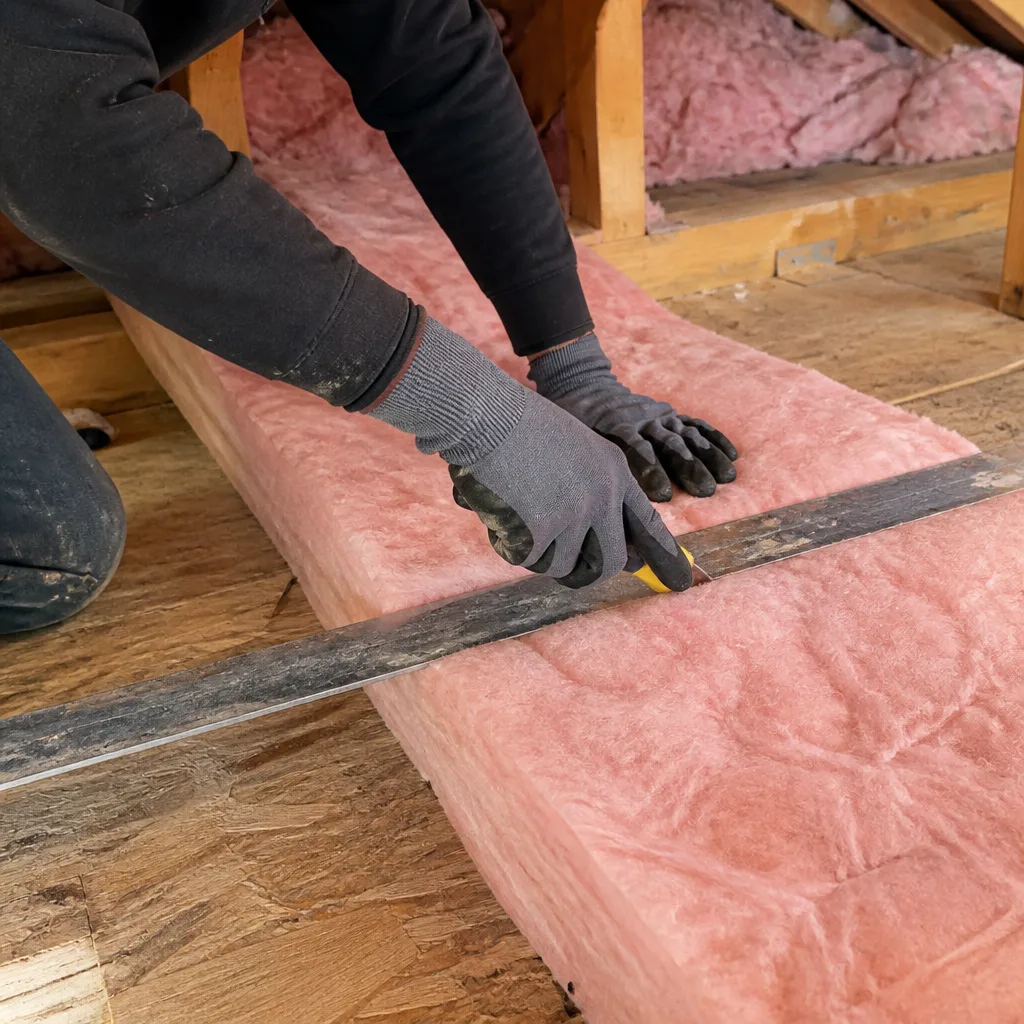
A top-up is adding new blown-in insulation over an existing layer to restore R-value that’s been lost to settling, moisture, or old material that was thin from the start. In Chicago, the Department of Energy recommends attics hold R-49 to R-60, and most homes we inspect are sitting at R-19 or less. We measure what’s there, calculate exactly how many inches of new material are needed to hit the target, and then blow it evenly across the entire attic floor. We never top up over an unsealed attic. The sealing happens first, every time, because new insulation over leaky top plates is just a thicker blanket over a draft.
What happens when you call
- 1
A real person answersNo phone trees - you reach a local pro.
- 2
You get an upfront price rangeHonest numbers before anyone is dispatched.
- 3
A background-checked tech heads outLicensed & insured, dispatched right away.
- 4
You approve before work beginsNothing starts until you say go.
Brands We Service for Blown-In Insulation
We work with Owens Corning fiberglass and Johns Manville loose-fill products regularly on Chicago jobs, so we know their coverage charts and settling expectations cold. That means we can tell you honestly whether a top-up or a full removal and re-blow makes more sense for your attic, instead of guessing. Owens Corning’s ProPink loose-fill, for instance, has a settled R-value chart we’ve verified on hundreds of local attics, and we adjust our installed depth to account for Chicago’s specific temperature swings rather than just hitting a national average number.
Knauf’s blown-in fiberglass is the third material we install most, and it’s a solid choice for homeowners who want a formaldehyde-free product with consistent performance in both attic and dense-pack wall applications. We don’t have a proprietary deal with Knauf, Owens Corning, or Johns Manville, and we don’t push one over the other unless the job specifics call for it. Whether your attic already has one of these brands or a mix of materials from a previous owner, we can assess what’s there and build on it without ripping everything out unnecessarily.
Signs You Need Blown-In Insulation Right Now
- Attic insulation is level with or below the floor joists. In a Chicago attic, joists are typically 2×6 or 2×8, which gives you roughly R-19 to R-30 at best. That’s half of what the Department of Energy recommends for this climate zone, and it means your furnace is working harder than it should every winter. If you can see the tops of the joists, you’re under-insulated, and a top-up will pay for itself faster than most home improvements.
- Upstairs rooms run 8 to 12 degrees hotter than the rest of the house in summer. That temperature split tells you heat is moving through the attic floor in both directions, not just escaping in winter. Blown-in insulation slows that transfer, but only after we seal the bypasses that let hot attic air pour down through can light holes and wall top plates. Insulation without sealing will narrow the gap some, but it won’t close it.
- Ice dams form along the roof edge after snowfalls. Ice dams happen when warm air leaks into the attic, melts the snow on the roof deck, and the melt refreezes at the cold eave. The fix is not just more insulation; it’s sealing the leaks that let heat reach the roof deck in the first place. We’ve measured attics in Norwood Park and Sauganash where the blower-door reading dropped by over 50% after sealing alone, before a single bag of insulation was blown.
- Your furnace runs constantly in January, and the house still feels drafty. A furnace cycling nonstop on a single-digit Chicago day usually means the building envelope is leaking conditioned air faster than the system can replace it. The blower-door test we run before quoting gives you a baseline number in CFM50, which is cubic feet per minute of air leakage at 50 pascals of pressure. After the work is done, we run it again, and the before-and-after numbers are yours to keep.
- You can see daylight through gaps around attic penetrations. Can lights, bathroom fan housings, plumbing vents, and the chimney chase are all common leak points in Chicago homes built between 1920 and 2005. If you can see gaps, air is moving through them, and blowing insulation over the top just hides the problem. Wes Okafor and the crew at Topside Attic Insulation treat these penetrations as mandatory sealing work before any material goes down, because that’s the order that actually changes a home’s performance.
Our Blown-In Insulation Process - Step by Step
- 1
Blower-door test and attic inspection. We start by measuring how much air your building envelope is leaking, in CFM50, with a blower-door test, a pressurization reading that shows in one number how much conditioned air the home is losing. Then we inspect the attic floor, map every penetration, and photograph everything. You get a written scope with a flat price at the end of this visit, not after.
- 2
Air sealing of top plates, can lights, and penetrations. Under The Haven Standard, sealing comes before insulation, always. We seal the gaps where the drywall meets the top plates, the can light housings (with rated covers), the plumbing and electrical penetrations, the chimney chase, and the attic hatch. This is the step most insulation contractors skip or treat as an upsell; for us it’s the prerequisite that makes the insulation number on your quote actually mean something.
- 3
Ventilation check and baffle installation where needed. If your soffit vents are blocked or missing baffles, we install or clear them so attic airflow works correctly after the insulation goes in. A blown-in attic with soffit vents buried under 18 inches of cellulose turns into a moisture trap, and Chicago’s freeze-thaw cycles will punish that mistake within two years. We don’t let that happen.
- 4
Blown-in installation to specified depth and R-value. We blow the material evenly across the full attic floor, checking depth against the manufacturer’s settled R-value chart as we go. We mark depth gauges on the joists, and if the job includes walls, we run dense-pack at the correct pressure and verify fill at each cavity. The crew documents the installed depth in inches and the resulting R-value.
- 5
Post-work blower-door test and documented record. We run the blower-door test a second time so you see exactly how much leakage dropped. You walk away with the before and after CFM50 numbers, the written scope you approved, a written warranty, and a Documented Photo Record showing every stage of the work. Every one of the 9,000+ homes we’ve sealed and insulated since 2016 got this same record.
How Much Does Blown-In Insulation Cost in Chicago?
A blown-in attic top-up in a typical Chicago bungalow or two-story frame home runs between $1,800 and $3,400, including air sealing of the standard penetrations. A full attic insulation job where old material is removed first runs $3,000 to $5,500 depending on attic size and access. Dense-pack wall insulation for an average three-bedroom Chicago home typically lands between $4,500 and $9,000, because every cavity is filled at pressure and every hole is patched and documented. A top-up alone, with no sealing, is cheaper, but we won’t quote it that way. Sealing first is the standard, not the upgrade.
What moves the price: attic square footage, existing insulation depth, how many can lights and penetrations need sealing, whether the attic hatch needs to be weatherstripped and insulated, and whether we’re doing walls or just the attic. The honest way to avoid overpaying is to compare written scopes line by line. If one quote includes air sealing and a post-work blower-door test and another doesn’t, they’re not quoting the same job. Bring us any written estimate and Wes Okafor will read it with you, line by line, at no charge. That’s the Free Second Opinion, and it’s been our policy since 2016. Call (218) 261-7714 and a live person will schedule it. The estimate is free, and the price you see is the price you pay.
Blown-In Insulation Near Chicago - Our Service Area
We work across the city and the surrounding counties, including the North Side, South Side, and western neighborhoods like Jefferson Park, Beverly, Rogers Park, and Austin, plus inner suburbs from Oak Park to Evanston to Berwyn and Skokie. Typical response time for a blown-in insulation job in Chicago is 1 to 3 business days from the written estimate to the crew arriving, and we also serve home markets including Houston and Dallas for homeowners who know that a documented envelope job travels. If you’re not sure whether we cover your block, call and ask. A person answers, and they’ll tell you straight.
Serving Chicago, IL - Our Local Coverage Area
We’re based in the Chicago area and know this community well. Use the map below to see our service coverage - if you’re nearby, we can almost certainly help.
Frequently Asked Questions - Blown-In Insulation in Chicago
Blown-in insulation is loose material, either cellulose or fiberglass, that’s blown into an attic or wall cavity through a hose to create a continuous thermal layer. It fills irregular spaces better than batts because it settles around framing, wiring, and ducts without leaving the gaps that batts leave. We install it in Chicago attics year-round, and we always seal the attic floor first so the insulation is doing its job in a building that’s already leaking less.
A standard Chicago attic top-up with air sealing takes one day, usually 4 to 7 hours on site including the before and after blower-door tests. Dense-pack wall insulation takes 1 to 2 days depending on how many exterior walls are being filled and whether we’re drilling from the interior or the exterior. You’ll get a named technician and a text when the crew is on their way, which is part of the Haven Standard arrival promise.
Most blown-in attic jobs in Chicago run between $1,800 and $5,500 depending on whether it’s a top-up or a full removal and re-blow, and dense-pack walls run $4,500 to $9,000 for a standard three-bedroom home. Every job starts with a written price before any work begins, so you’ll never be asked to approve a number mid-job. Call (218) 261-7714 for a free estimate with a flat price in writing. Estimates cost nothing, and the price is fixed before anyone lifts a tool.
Yes. We install Owens Corning, Johns Manville, and Knauf blown-in fiberglass and cellulose regularly, and we know each brand’s settled R-value charts well enough to quote depth accurately before the first bag is opened. We’re not tied to any single manufacturer, so the material choice is about your attic’s conditions, not a supply contract. If you already have one of these brands in place, we can top up over it without removing everything.
If an attic hatch has blown open in a winter storm or a water leak has soaked through the ceiling insulation, we can usually get a crew out same-day or next-day. A live person answers calls 24/7, so you won’t be routed through a voicemail loop when you need a real answer. For non-emergency insulation work, we schedule within 1 to 3 business days of the written estimate.
Every blown-in insulation job we complete in Chicago is covered by the 365-Day Done Right Promise: if it’s not done right, we make it right. That’s on top of the written scope and written warranty you receive before the work starts, under Haven Standard Clause 1. The material itself carries the manufacturer’s warranty, and our workmanship is documented in the photo record you get when the crew leaves.
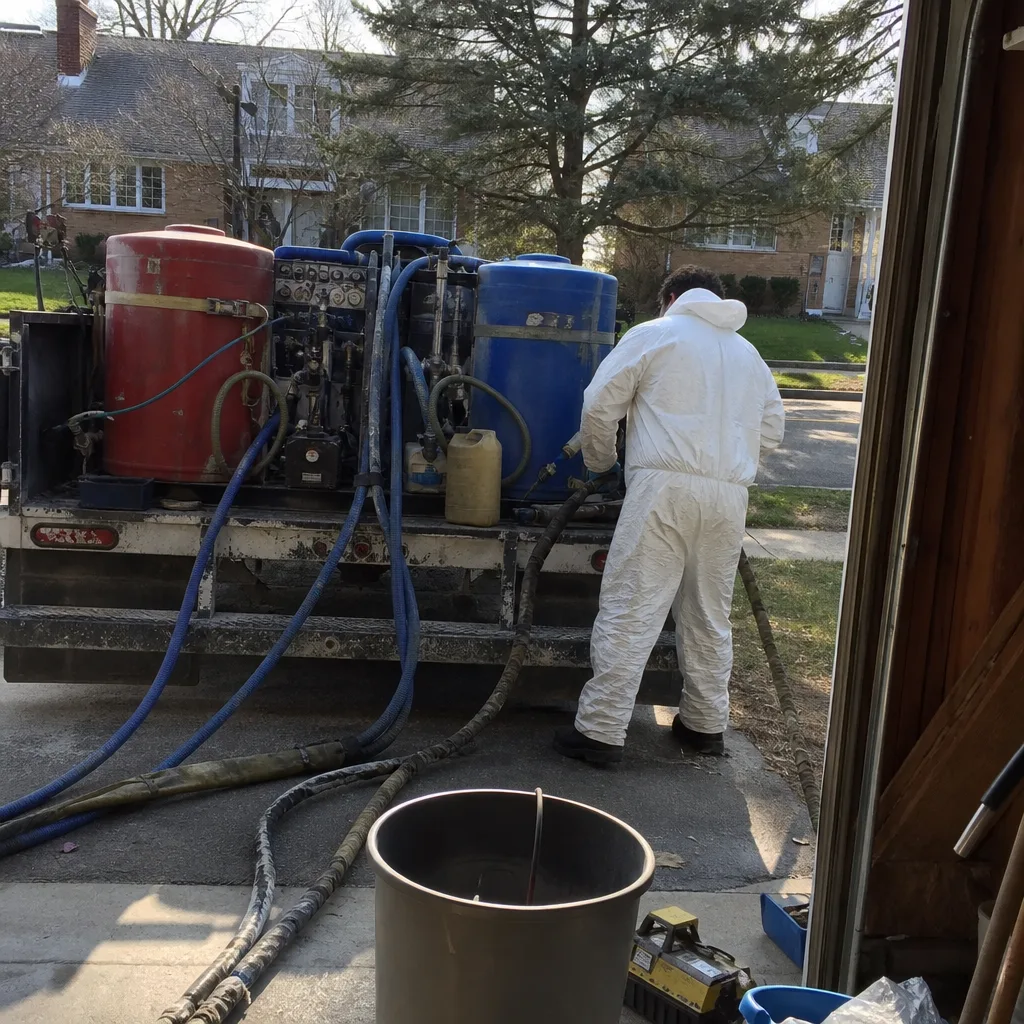
You don’t need to move furniture or empty closets for an attic job; we handle access from the attic hatch and protect the surrounding area with drop cloths. For dense-pack wall insulation, we’ll need clear access to the walls being filled and a place to park the blowing truck near an exterior door. The written estimate email includes a short prep checklist, and if anything’s unclear, call (218) 261-7714 and a person will walk you through it.
Schedule Your Blown-In Insulation Service in Chicago Today
Call (218) 261-7714 and a live person will schedule your free estimate, give you a flat written price before any work starts, and answer whatever questions you have about your attic. No obligation, no push, no “today only” pricing. Just a straight scope, a written number, and a documented record when the job is done. Wes Okafor and the Topside Attic Insulation crew have sealed and insulated over 9,000 Chicago homes since 2016, and every one of them started with a phone call like this one.
Written by Wes Okafor, Owner at Topside Attic Insulation, serving Chicago since 2016.