
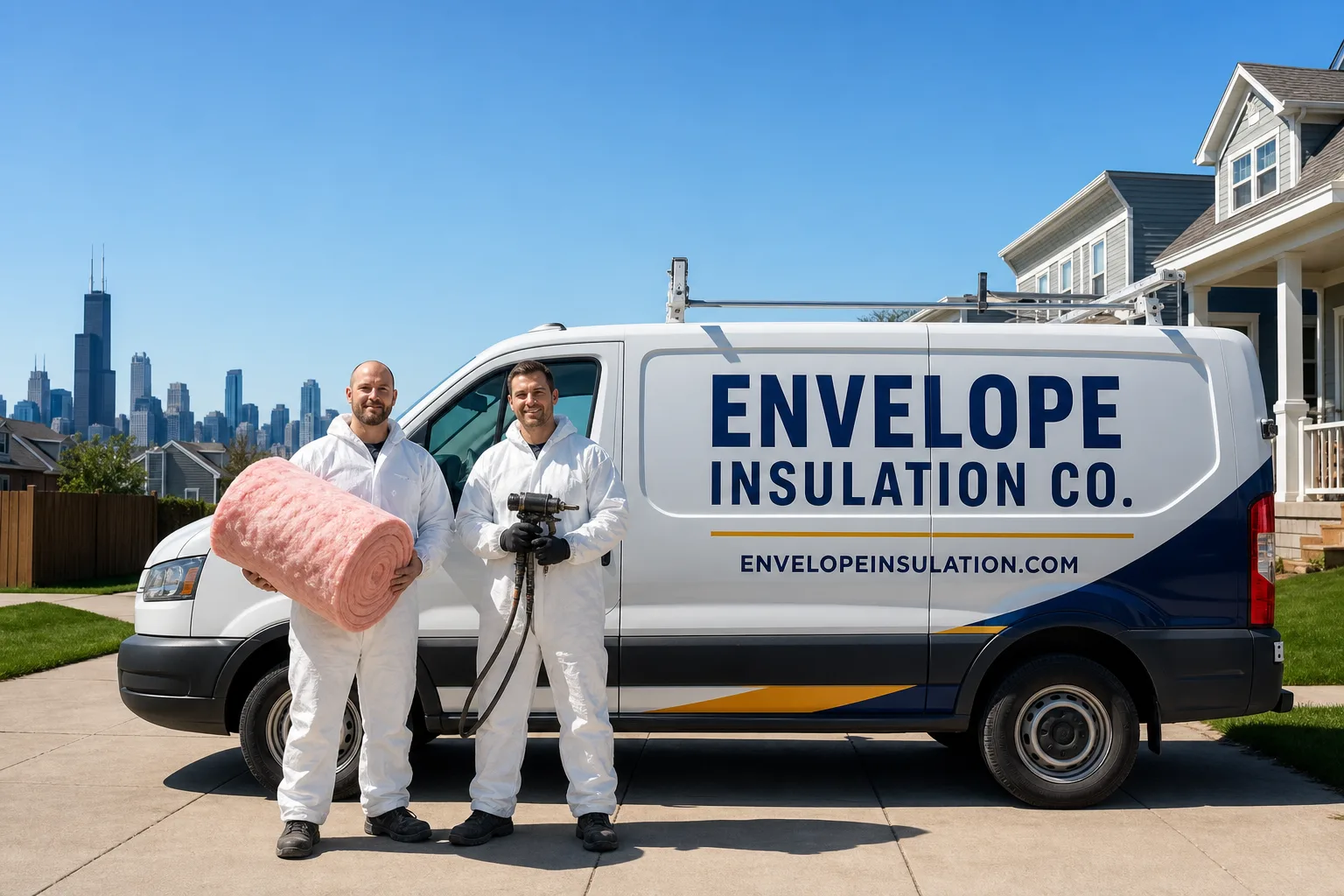
Trusted Wall Insulation for Chicago Homeowners
Wall Insulation - Chicago typically costs between $2.50 and $6.50 per square foot for drill-and-fill work, with most full exterior wall retrofits in a standard bungalow running $4,800 to $11,000. In a city where January lows average 18°F and August afternoons push 85°F, uninsulated wall cavities are the primary reason heating bills spike and second-floor rooms stay cold. Topside Attic Insulation has sealed and insulated more than 9,000 Chicago-area homes since 2016, and every one of those jobs started with a written price. If your walls are hollow, you’re paying to heat the alley. Call (218) 261-7714 and we’ll put a number in writing before anyone lifts a tool.
What Our Wall Insulation Service Includes
Injection Foam Wall Insulation
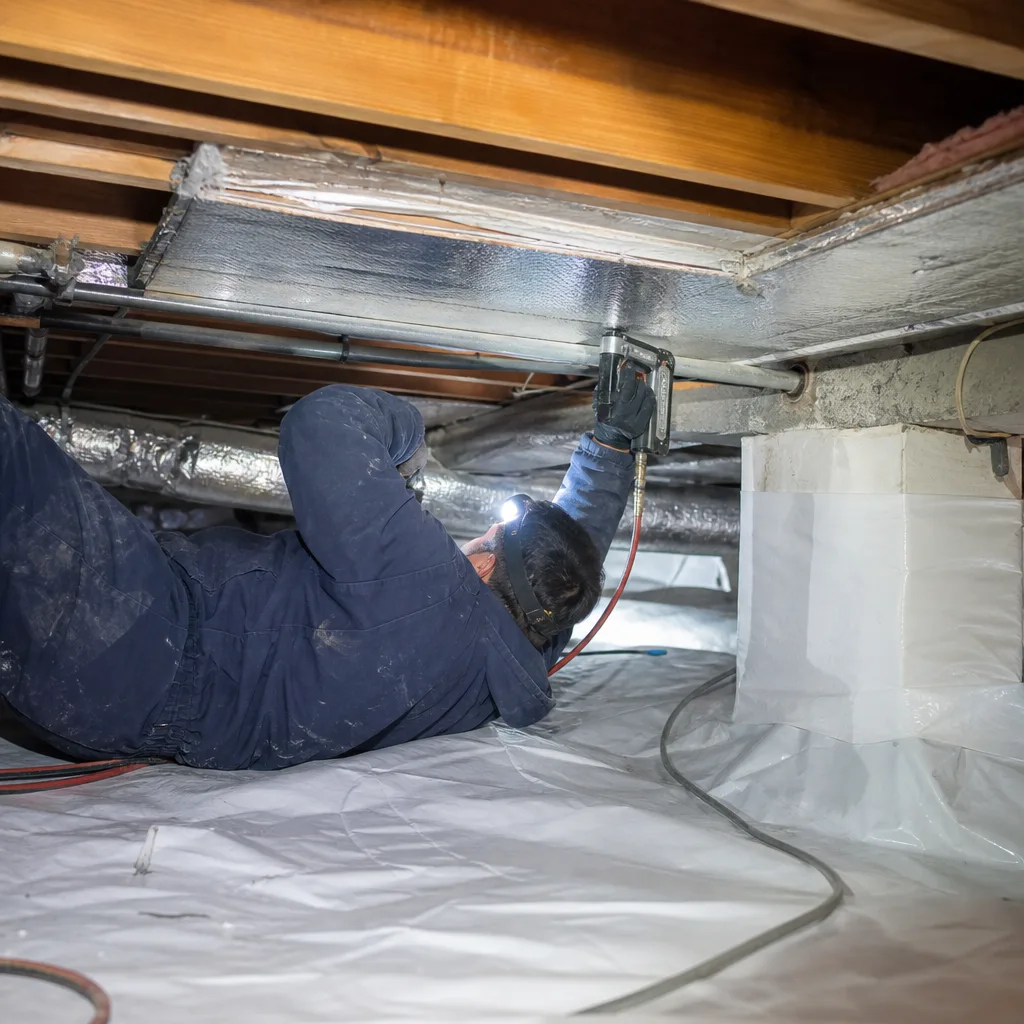
Injection foam is a slow-expanding resin that’s pumped into existing wall cavities through small holes drilled in the exterior siding or interior drywall. It’s the right call when walls are already finished and the homeowner doesn’t want to tear out plaster or sheetrock. We use injection foam when the cavity is irregular, contains old knob-and-tube wiring, or has settled insulation that left gaps. Our crews map each stud bay with an infrared camera before drilling, so the foam goes where the voids are, not where a guess says they might be.
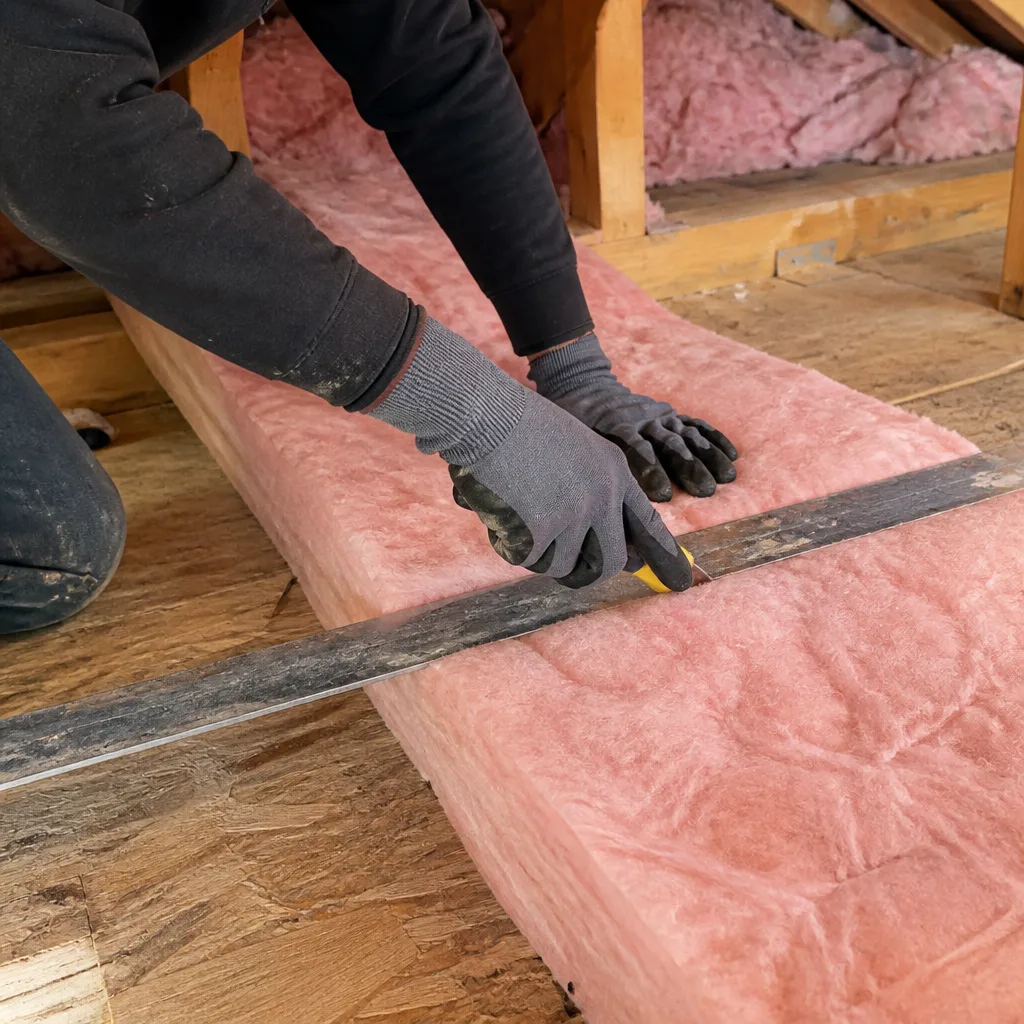
Drill & Fill Wall Insulation
Drill-and-fill means exactly what it sounds like: we drill access holes, blow dense-packed cellulose or fiberglass into each cavity, then patch the holes to match. It’s the standard approach for Chicago’s older frame houses where the walls were framed with 2x4s and never insulated. We run this by the book: one access hole per stud bay, a pressure gauge on the blower, and a core sample afterward to confirm density. You get a photo record of every patched hole and the density reading for each wall section.
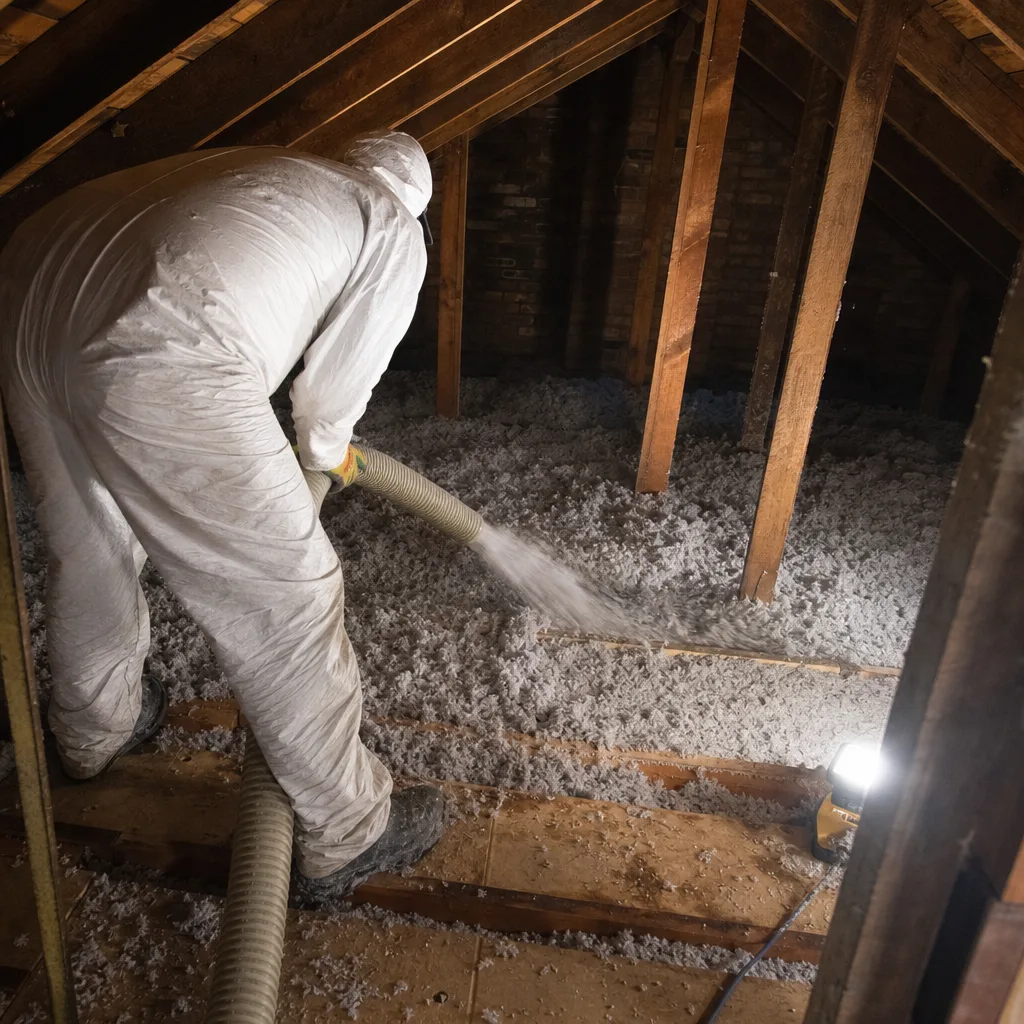
Exterior Wall Insulation
Exterior wall insulation applies when siding is already coming off for replacement, or when the homeowner wants to add a continuous thermal break outside the sheathing. It’s the only method that stops thermal bridging through the studs themselves, which account for up to 20% of a wall’s area. We install rigid foam board, typically Rockwool or Owens Corning products, then work with the siding contractor to keep the flashing detail correct. The blower-door number before and after tells you what the extra layer actually bought.
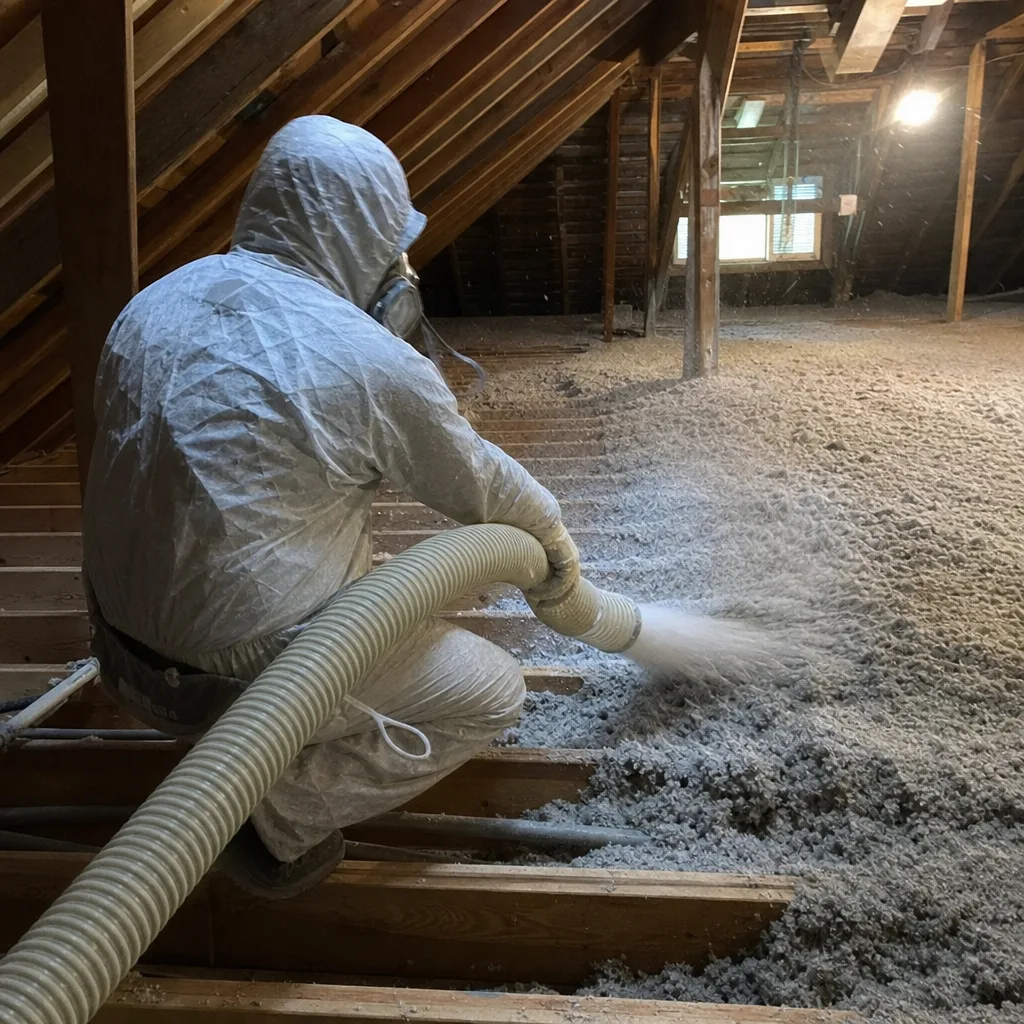
Interior Wall Soundproofing
Interior wall soundproofing is about stopping noise transfer between rooms, not temperature loss across the building envelope. Homeowners ask for this in divided two-flats, home offices, and bedrooms that share a wall with the living room. We use dense insulation batts or blown-in cellulose inside the cavity, often paired with resilient channel and extra drywall. We won’t sell you soundproofing as a thermal fix; that’s a different job with a different scope, and the written estimate will say so.
What happens when you call
- 1
A real person answersNo phone trees - you reach a local pro.
- 2
You get an upfront price rangeHonest numbers before anyone is dispatched.
- 3
A background-checked tech heads outLicensed & insured, dispatched right away.
- 4
You approve before work beginsNothing starts until you say go.
Brands We Service for Wall Insulation
We work with Owens Corning fiberglass and foam products regularly, and we know their installation specs well enough to catch when a previous contractor blew the material at half the required density. We stock their standard batt sizes on the truck, which means less waiting when a wall is open and the clock is running. For mineral wool applications, we install Rockwool, and we specify it when the priority is fire resistance or when the wall cavity has existing moisture concerns. Rockwool doesn’t wick water, which makes it the safer choice in stone and brick foundations where condensation is a fact of life.
We also use Johns Manville blown-in fiberglass for drill-and-fill work in walls where the cavity depth varies, and Knauf batts for interior partition soundproofing when the budget calls for proven performance without the premium of mineral wool. We’re not locked to one manufacturer, and we won’t steer you toward a product because a sales rep bought us lunch. The material choice comes from the wall’s condition and the building science, not from a brand loyalty program.
Signs You Need Wall Insulation Right Now
- Rooms that stay cold in winter despite a thermostat that says 72 - When the wall cavities are empty, the air near exterior walls can run 10 to 15 degrees colder than the center of the room. Your furnace is working; the walls just aren’t holding the heat. A quick thermal scan shows the cold bands where stud bays are uninsulated.
- Heating bills that jumped 30% or more year over year - Chicago gas prices have climbed steadily, but a bill that spikes while your usage habits haven’t changed usually points to heat loss through the building envelope. Uninsulated walls in a 2,000-square-foot house can account for $700 to $1,100 in wasted heating cost per season.
- Walls that feel cold to the touch in winter - Place your palm flat against an exterior wall on a cold day. If it feels noticeably colder than the air in the room, the wall is conducting heat outward. This is thermal bridging and conduction, not just draftiness, and it only stops when insulation breaks the path.
- Mold or mildew on the interior side of exterior walls in closets or behind furniture - Cold wall surfaces pull moisture out of warm indoor air, and that condensation feeds mold where you can’t see it until it’s bad. Insulating the cavity raises the interior wall surface temperature and removes the condensation point. Air sealing the drywall against the studs is part of the job, not an add-on.
- You hear your neighbors through a shared two-flat or townhouse party wall - Shared walls in Chicago’s brick two-flats and greystones are often just two layers of plaster and a hollow cavity. Sound travels through open air faster than through dense material. Filling that cavity with dense-packed insulation cuts mid-range and high-frequency noise by a measurable margin.
Our Wall Insulation Process - Step by Step
- 1
Walkthrough and scope, with a written price at the end - We start by walking the entire house with you, inside and out. We note wall depths, access points, existing insulation if any is visible, siding type, sheathing condition, and electrical or plumbing penetrations. Before we leave, you get a flat price and a written scope that lists every wall section we’ll address and the material we’ll use. That’s Haven Standard Clause 1: a written price before any work starts, always.
- 2
Baseline blower-door test and thermal scan - On applicable jobs, we run a blower-door test, which is a pressurization reading that shows in one number how much air your building envelope is losing. We also scan exterior walls with a thermal camera to map the actual cavities: which bays are empty, which have settled insulation, which have wiring we need to work around. You see the baseline number before we touch anything.
- 3
Air sealing first, always - This is the step most insulators skip. We seal top plates, electrical boxes, plumbing penetrations, and any gap where air moves between the wall cavity and the attic, basement, or outdoors. Insulation over an unsealed cavity is just a filter. We seal first, then insulate, in that order, every time.
- 4
Insulation installation, cavity by cavity - We drill access points, pack each cavity to the correct density, and check our work as we go. For injection foam, we meter the resin ratio. For blown-in, we check the pounds-per-square-foot against the cavity volume. No bay gets skipped. If we find an obstruction, we note it in the job log and work around it without cutting corners.
- 5
Final blower-door test and documentation - Before we leave, we run the blower-door test again and compare the number to the baseline. A typical Chicago bungalow can drop from 4,800 CFM50 to under 2,200 CFM50 after proper air sealing and wall insulation. You get the before-and-after numbers in writing, along with the Documented Photo Record of every wall section, every access point, and every patch. You’ll know what changed because you can see the measurement.
How Much Does Wall Insulation Cost in Chicago?
Most wall insulation projects in Chicago fall into a few clear bands. Drill-and-fill with dense-packed cellulose or fiberglass in a standard 2×4-framed bungalow runs $4,800 to $8,400 for all four exterior walls. Injection foam runs 20% to 35% higher, typically $6,200 to $11,200, because the material costs more and the installation is slower. Interior wall soundproofing for a single shared wall in a two-flat runs $1,800 to $3,600 depending on wall length and ceiling height. Exterior rigid foam over new sheathing is normally $9,500 to $18,000 because it’s tied to a siding replacement job and adds a thermal break every stud bay.
What moves the number: wall height (Chicago’s tall ceilings add square footage fast), siding type (brick veneer requires drilling through masonry, which adds labor), and whether the wall cavities are accessible from inside or only from outside. You avoid overpaying by getting a scope that names every wall section and every access point, not a lump-sum “insulate the house.” Our free estimate includes the written scope, the material spec, and the price. If you have a competing quote, bring it. We’ll read it with you and point out what it covers and what it skips.
Wall Insulation Near Chicago - Our Service Area
We run wall insulation work throughout Chicago and the inner-ring suburbs: Evanston, Oak Park, Cicero, Berwyn, Skokie, Des Plaines, Elmhurst, La Grange, and the northwest side neighborhoods like Portage Park, Irving Park, and Jefferson Park. Most jobs in the city limits get a crew on-site within three to five business days after the written estimate is approved. Same-week scheduling depends on wall access and whether we’re drilling from inside or outside. If you’re comparing options across cities, our home page explains how the same Haven Standard applies to every market we serve, including Wall Insulation in Houston and Wall Insulation in Dallas.
Serving Chicago, IL - Our Local Coverage Area
We’re based in the Chicago area and know this community well, including Wall Insulation in Skokie. Use the map below to see our service coverage - if you’re nearby, we can almost certainly help.
Frequently Asked Questions - Wall Insulation in Chicago
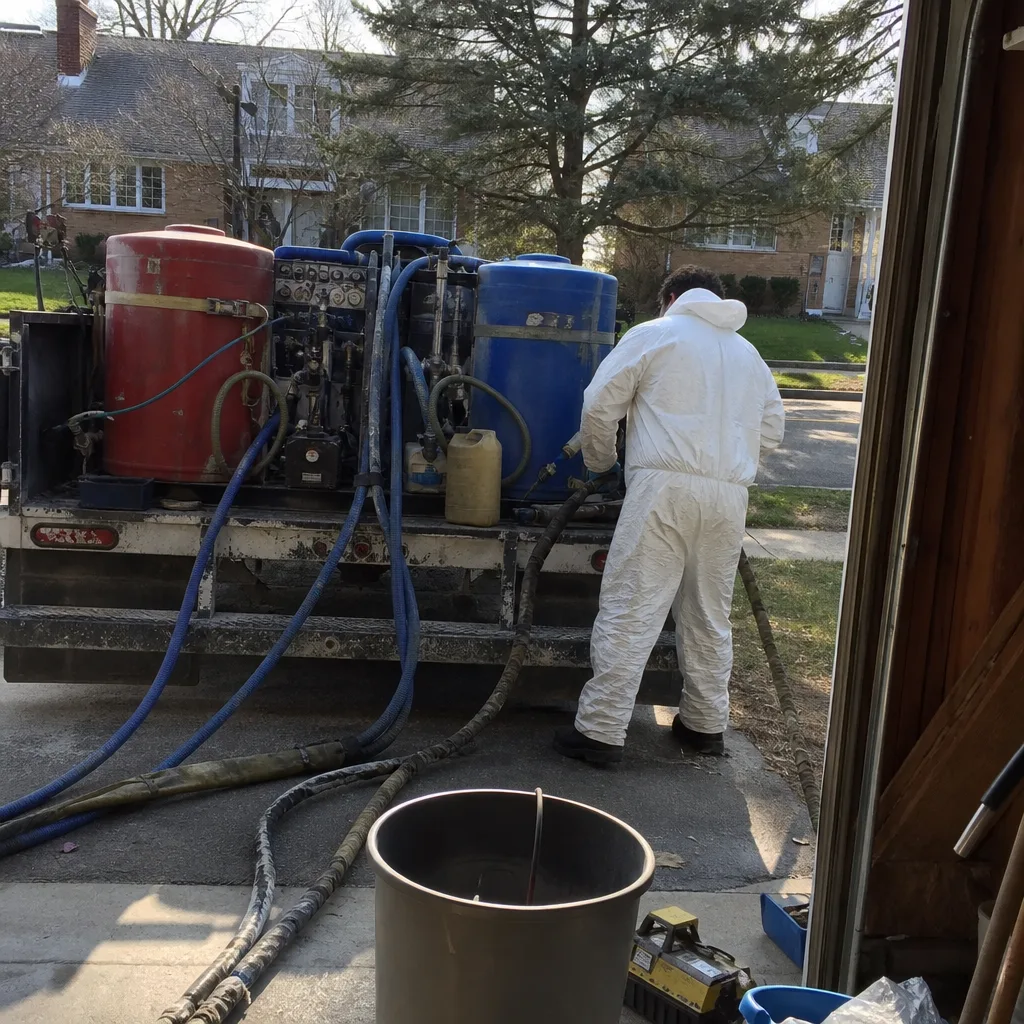
Wall insulation is any material installed inside exterior or interior wall cavities to slow heat transfer, block air movement, and reduce sound transmission. In Chicago, most wall insulation work is retrofit: the walls are already finished, and we access the cavities by drilling small holes and blowing or injecting insulation into each stud bay. The goal is a wall that holds heat in winter, blocks heat in summer, and stops air from leaking through the envelope.
A typical drill-and-fill job on a Chicago bungalow takes one to two days from first access hole to final patch. Injection foam takes about the same, though the curing time is faster. Exterior rigid foam tied to a siding replacement runs on the siding crew’s timeline. We’ll give you the working window in writing before we start, and you’ll get a text when the crew is on the way, per the Haven Standard.
Drill-and-fill wall insulation in Chicago runs roughly $4,800 to $8,400 for a full bungalow; injection foam runs $6,200 to $11,200. We also handle Wall Insulation in Oak Lawn. Soundproofing a single shared wall runs $1,800 to $3,600. The exact number depends on wall height, siding type, and access. You’ll have a flat price in writing before any work starts, not after. Call (218) 261-7714 for a free estimate with the scope and price on paper.
Yes, we install Owens Corning fiberglass and Rockwool mineral wool regularly, and we stock common batt sizes on the truck. We also work with Johns Manville blown-in fiberglass and Knauf batts. The material spec is written into your estimate, and we install to the manufacturer’s published density and coverage requirements. You won’t get a substitution without a revised written scope.
A live person answers calls 24/7, and we can often get a technician to a Chicago address the same day for urgent situations like water-damaged insulation, pest contamination in wall cavities, or a failed previous install that’s left a wall section entirely open. We also serve Indiana customers needing Wall Insulation in Hammond. Emergency response isn’t a markup line item. The price is still written before work starts. Call (218) 261-7714 and tell us what you’re seeing, and we’ll tell you what it will take to fix it.
Every wall insulation job carries the 365-Day Done Right Promise: if it’s not done right, we make it right. The specific material warranty from the manufacturer runs separately, and we give you the product data sheet and warranty registration before the job closes out. The scope, the warranty, and the photo record are all on paper, not promised over a handshake.
Move furniture away from interior walls where we’ll be working, and clear a path outside so we can set up the blower and hose. If we’re drilling from outside, know that siding and masonry work creates dust; we lay down ground protection and clean up our access points before we leave. You don’t need to be home for the entire job, but we’ll walk the final results with you when the work is done.
Schedule Your Wall Insulation Service in Chicago Today
Get a written price for your wall insulation work in Chicago before you commit to anything. We’ll walk the house, show you the plan, and put the flat price and scope on paper. No pressure, no voicemail loops, no estimate that changes after the crew shows up. Call (218) 261-7714 now for a free estimate, a free second opinion on any competing quote, and the documented blower-door results that show exactly what you paid for.
Written by Wes Okafor, Owner at Topside Attic Insulation, serving Chicago since 2016.