
Fast, Reliable Crawl Space Encapsulation & Vapor Barrier Across Atlanta
If your Atlanta home has a musty crawl space, sagging insulation, or floors that feel damp in summer, crawl space encapsulation with a heavy-duty vapor barrier is the fix, and here’s what it runs: most Atlanta encapsulation jobs land between $4,500 and $9,500 depending on square footage, access, and whether we’re also removing failed material. We book most Atlanta jobs within 5 to 10 business days, and emergency moisture calls can often be scheduled within 48 hours. Call (218) 261-7714 and we’ll put a written price in front of you before any work starts.
Why Topside Attic Insulation Is Atlanta’s Preferred Crawl Space Encapsulation & Vapor Barrier Company
Since 2016, we’ve sealed and insulated 9,000+ homes across metro Atlanta under The Haven Standard, which means one thing up front: a written scope, a written warranty, and a flat price before anyone lifts a tool. Every visit includes a Documented Photo Record, so you see exactly what your crawl space looked like before and after we were in it. We publish before-and-after blower-door numbers on applicable jobs – a single figure showing how much conditioned air your home was losing before sealing and after. Led by Wes Okafor, our Crawl Space Encapsulation & Vapor Barrier crew works intown bungalows and OTP production homes equally, and we do not blow insulation over an unsealed surface. Sealed first, then insulated. That order matters in Atlanta’s humidity. And if it’s not done right, the 365-Day Done Right Promise means we make it right.
Our Crawl Space Encapsulation & Vapor Barrier Services in Atlanta
Crawl Space Vapor Barrier
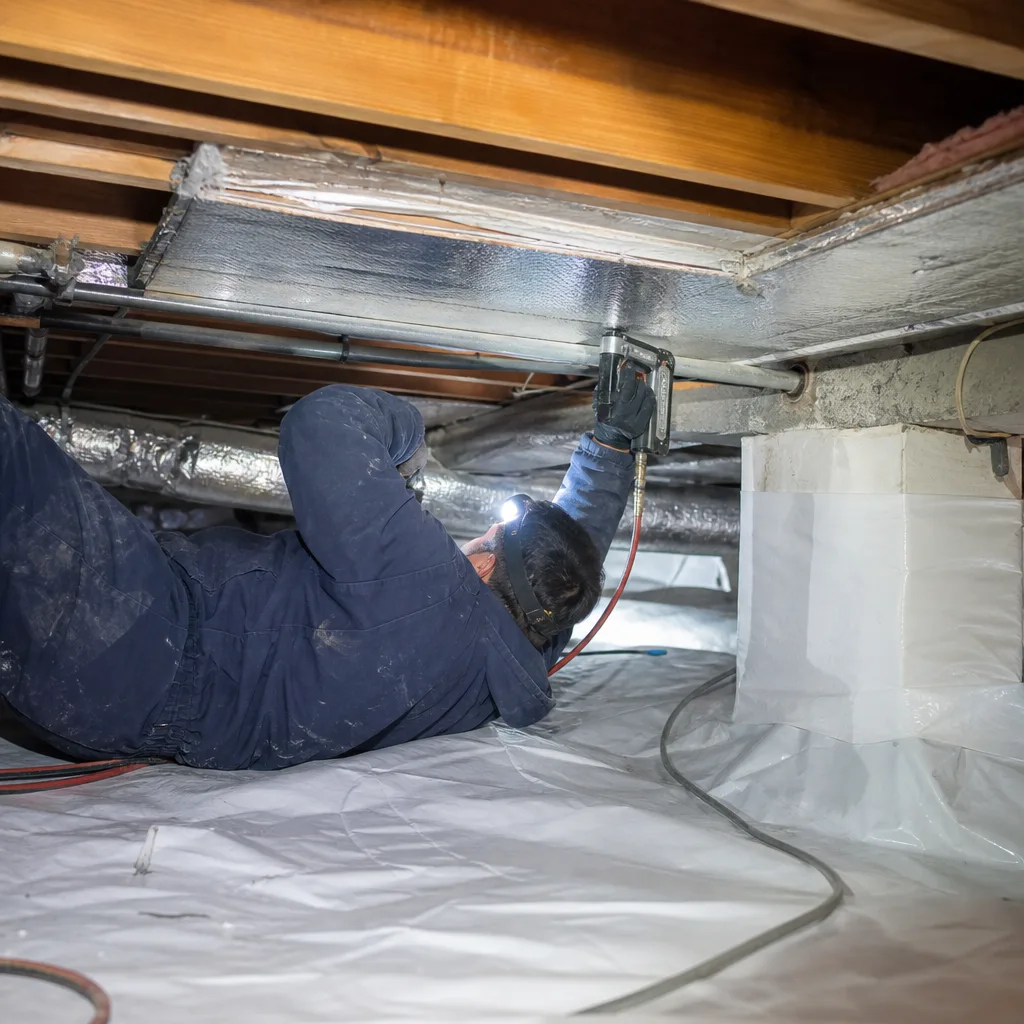
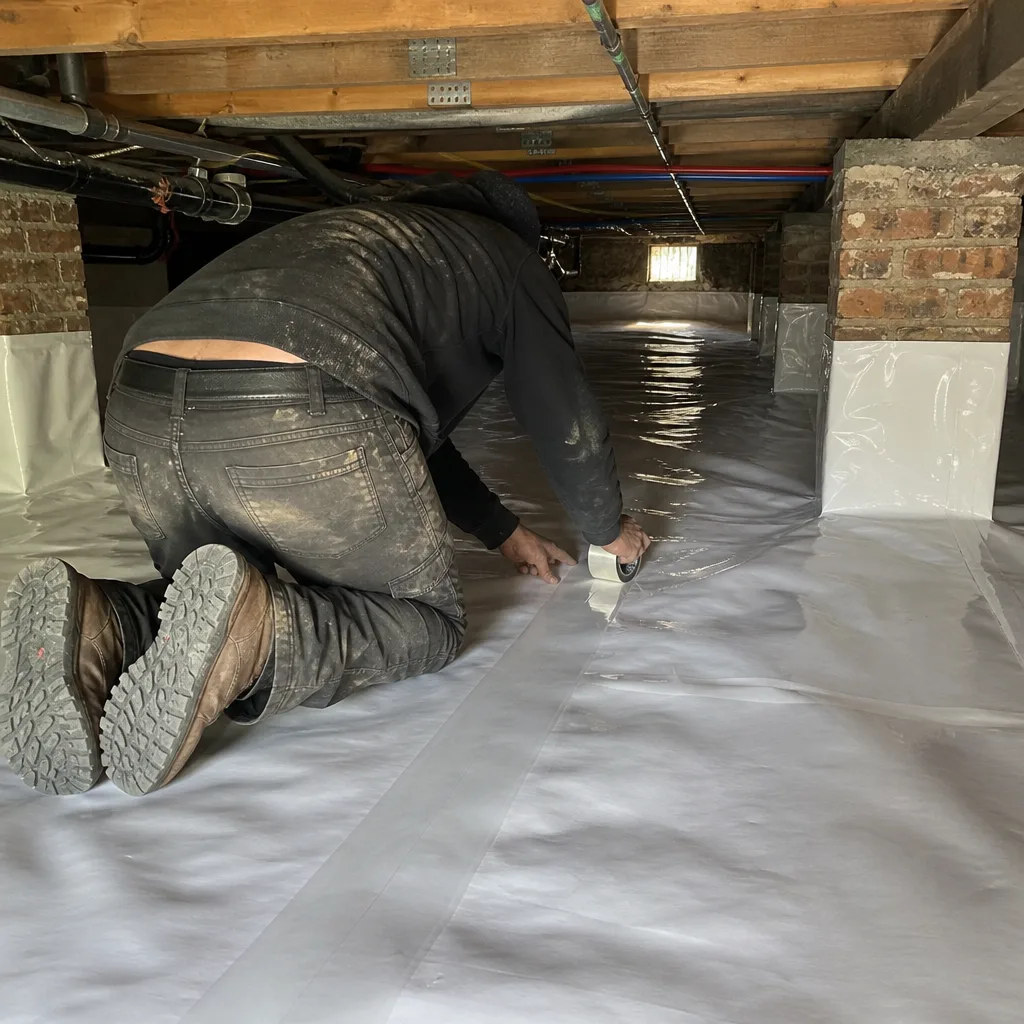
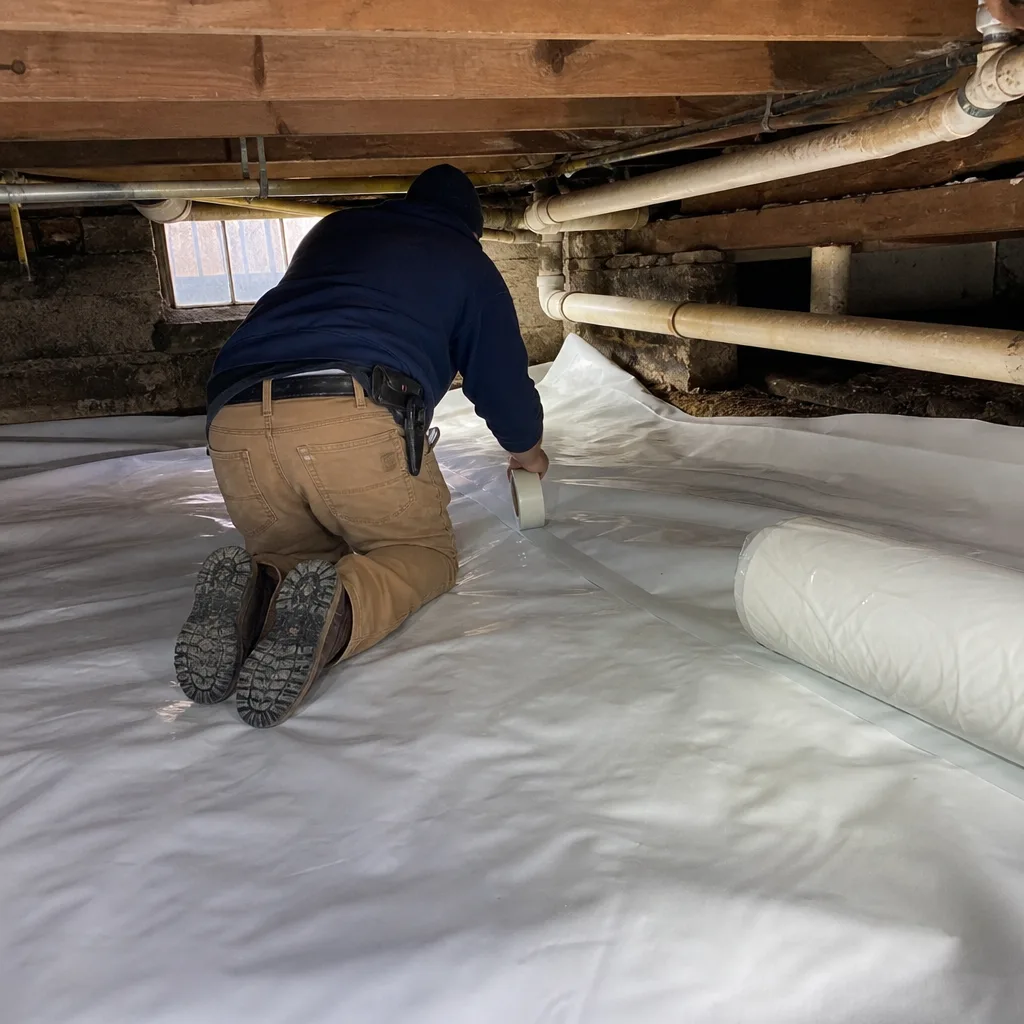
A vapor barrier in Atlanta has to fight two things at once: the moisture coming up from Piedmont clay and the moisture driving inward during our six-month cooling season. We install 12-mil reinforced poly with sealed seams, run it up the piers and foundation walls, and mechanically fasten where the structure allows. In the shallow crawl spaces of Grant Park and Kirkwood, where original masonry piers have settled and left uneven surfaces, we hand-cut around every support rather than forcing a bad fit.
Crawl Space Encapsulation
Encapsulation goes further than a barrier on the floor: we seal foundation vents, treat the rim joist area, and condition the space so it stops acting like a humidity reservoir under your house. In Atlanta’s pre-WWII bungalow belt, original brick foundation vents were never designed for our cool-season condensation cycle, and simply throwing plastic over the dirt without sealing them traps moisture against floor joists. We address drainage first, then encapsulate.
Crawl Space Insulation
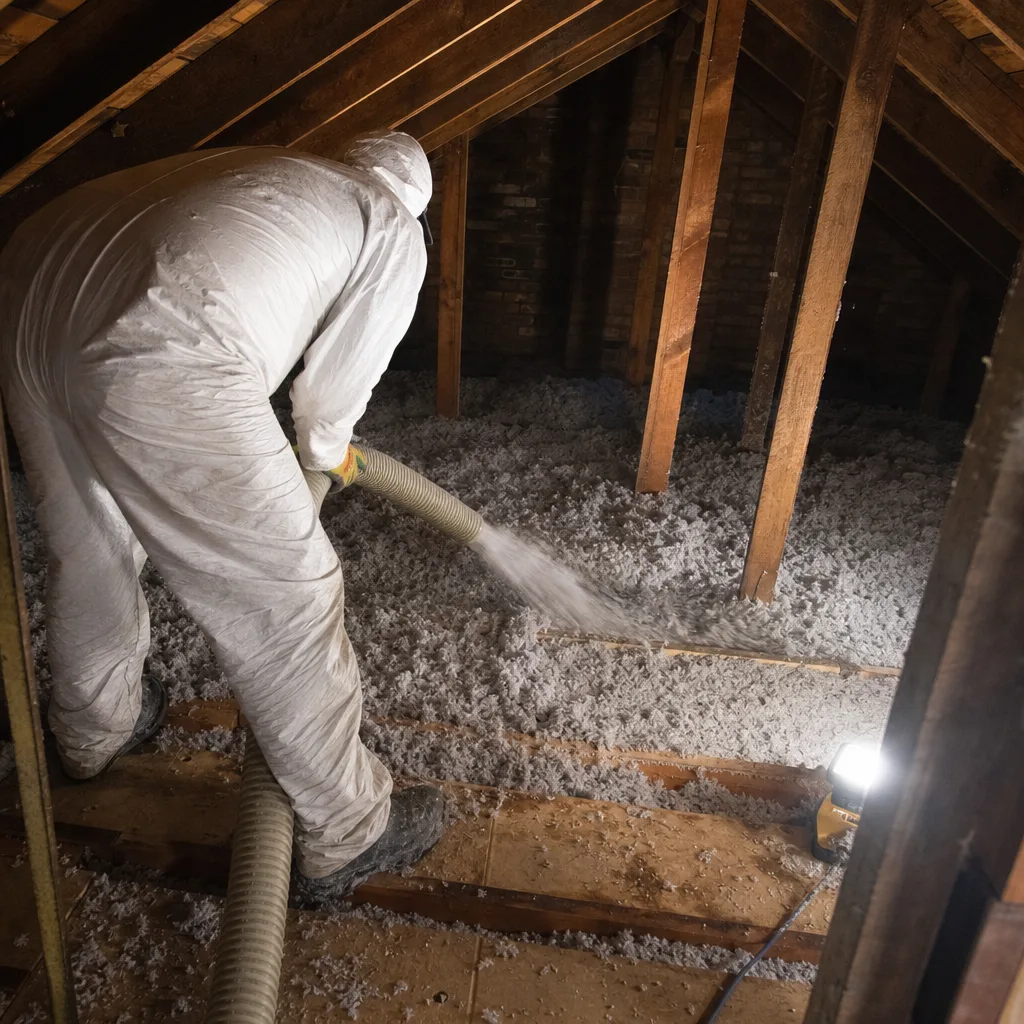
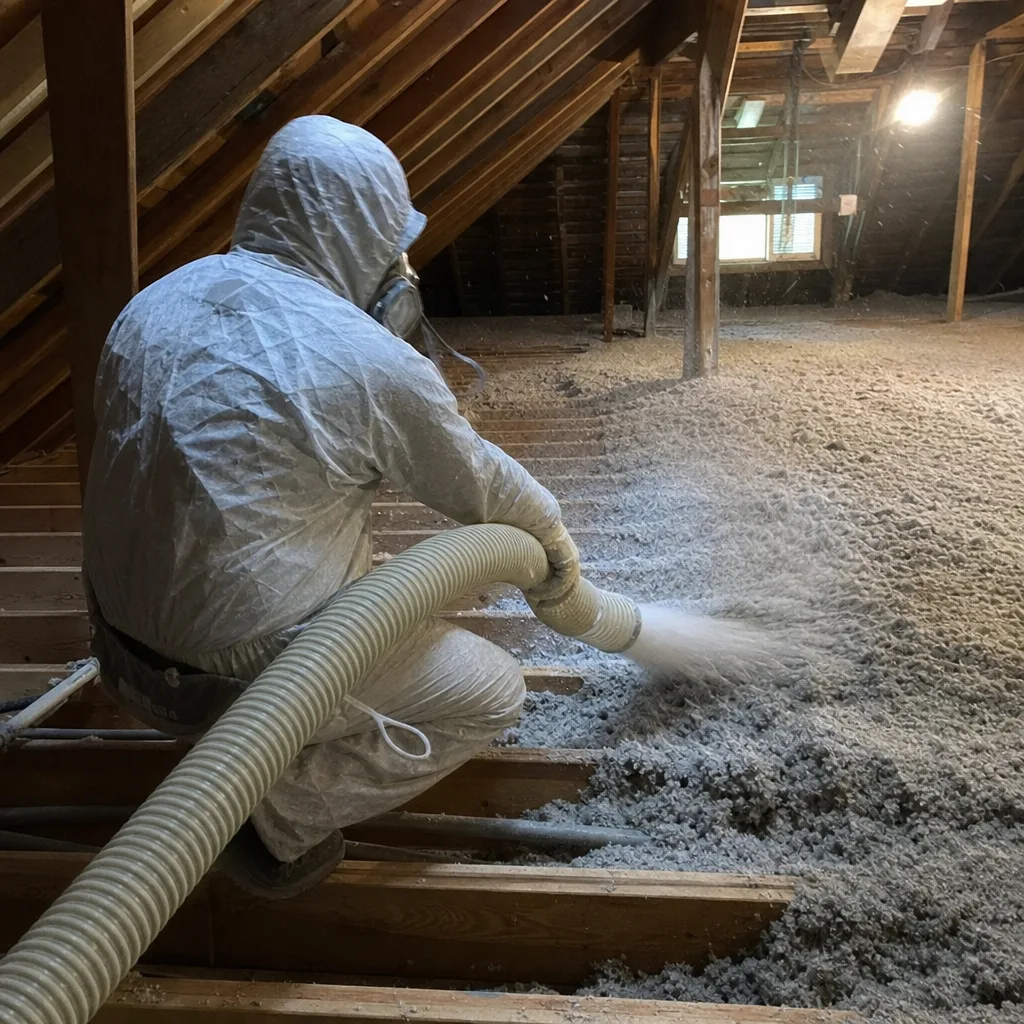
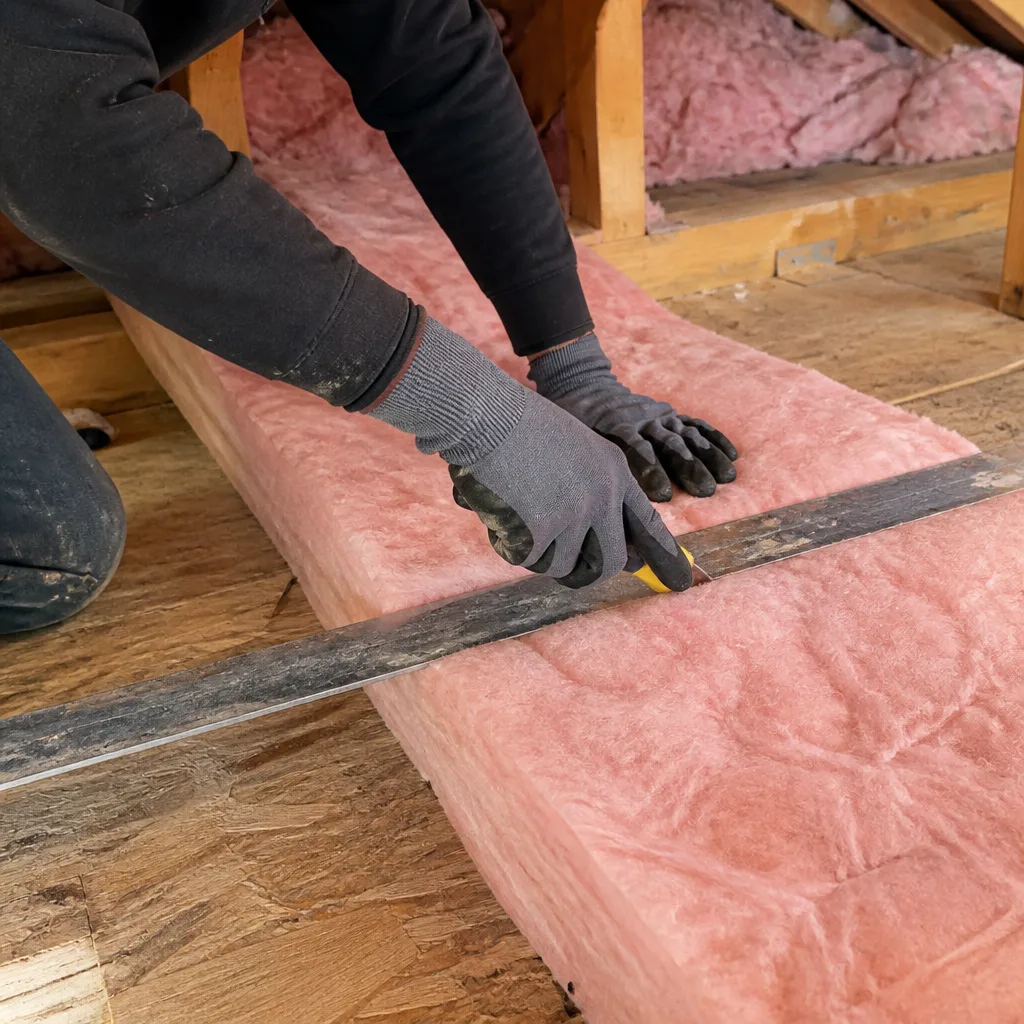
For older Atlanta homes built before 1940, we typically target R-19 at the crawl space walls and R-30 between floor joists where the space stays unconditioned, using fiberglass from Owens Corning or Johns Manville depending on the assembly. The problem in many intown crawl spaces is that old batts are saturated, compressed, or simply gone. We remove failed material, air-seal the joist bays, and re-insulate to a level the home’s framing can actually hold.
Crawl Space Moisture Control
Moisture control in Atlanta is less about a single product and more about a sequence: grade the low spots, get drainage moving away from the foundation, seal the vents, then install the barrier. In OTP subdivisions from Smyrna to Alpharetta, we frequently find that bonus-room knee walls and uninsulated floor decks create hot, humid air that migrates into adjoining crawl spaces and overwhelms even a decent vapor barrier. Fixing that air path is part of the moisture control job, not a separate upsell.
What happens when you call
- 1
A real person answersNo phone trees - you reach a local pro.
- 2
You get an upfront price rangeHonest numbers before anyone is dispatched.
- 3
A background-checked tech heads outLicensed & insured, dispatched right away.
- 4
You approve before work beginsNothing starts until you say go.
Trusted Brands We Service in Atlanta
We stock and install materials from Owens Corning, Johns Manville, and Rockwool, and we’re not locked into any single manufacturer. That means when you have a specific assembly in mind or want us to match what’s already in part of your Atlanta home, we can do it, including Reflectix in Atlanta. Our Atlanta crews carry common 12-mil barrier stock, fasteners, mastic, and foam board on the truck, so a typical encapsulation doesn’t wait on a supplier. If you bring us a written estimate from another contractor, we’ll read it with you – Free Second Opinion, no charge, and we’ll line it up against what your crawl space actually needs.
Common Crawl Space Encapsulation & Vapor Barrier Problems We See in Atlanta Homes
- Failed 4-mil or 6-mil poly dumped by flippers. We see this constantly in Grant Park, Virginia-Highland, and Candler Park: a thin sheet tossed over dirt with no seam sealing and no attachment to piers. It tears within a year, and the crawl space is wetter than before because the barrier traps moisture beneath it.
- Original brick vents that make condensation worse. In pre-WWII Atlanta bungalows, brick foundation vents pull humid summer air into a cool crawl space, where it condenses on joists and sills. Sealing them is correct, but only after grading and drainage are handled. Otherwise you’ve sealed moisture in, not out.
- Shallow, settled crawl spaces that can’t accept standard barrier attachment. Many intown Atlanta homes have 18-to-24-inch crawl spaces with piers that have shifted over a century. Mechanical fastening to the foundation wall is often impossible without hand-cutting around every masonry support. This is why template encapsulation bids fail here.
- Bonus-room air migration in OTP homes. In Cobb, Gwinnett, and Cherokee counties, the uninsulated knee walls and floor decks under bonus rooms pump hot, humid air into adjacent crawl spaces. A vapor barrier alone won’t fix it. The air path has to be sealed, then the crawl space gets encapsulated.
Pricing for Crawl Space Encapsulation & Vapor Barrier in Atlanta, GA
The table below reflects what we write on estimates across Atlanta, from intown bungalows to OTP production homes.
| Service | Typical Atlanta Range | Notes |
|---|---|---|
| Crawl space vapor barrier only (12-mil) | $1,800 – $3,500 | Includes floor barrier, seam sealing, pier wrapping; excludes vent sealing |
| Full encapsulation | $4,500 – $9,500 | Barrier, vent sealing, rim joist treatment, drainage correction if needed |
| Crawl space cleanout + barrier | $2,200 – $4,200 | Debris removal, failed material disposal, new barrier installation |
| Crawl space insulation (replace failed) | $1,400 – $3,800 | Remove + dispose old batts, air-seal, install R-19 to R-30 |
| Moisture control package | $3,000 – $7,000 | Grading, drainage correction, vent sealing, barrier |
The biggest cost drivers in Atlanta are access height, pier count, and whether failed material needs to be removed. A 2,000-square-foot crawl space with 24-inch clearance and clean dirt runs on the lower end. A 1920s Grant Park crawl space with 18-inch clearance, settled piers, and two layers of failed poly runs higher. Every quote is a flat price in writing before work starts, under Haven Standard Clause 1. Call (218) 261-7714 and we’ll measure, quote, and send you the written scope.
What We Found in a 1926 Grant Park Bungalow
This is the kind of job that shapes how we bid Crawl Space Encapsulation & Vapor Barrier in Atlanta. In a 1926 craftsman bungalow in Grant Park, our crew found the original 24-inch crawl space floor coated in decades of damp red clay, floor joists sweating under a 60% humidity load, and a failed 4-mil poly sheet that a previous flipper had tossed in without sealing a single seam. We removed the failed material, regraded the low spots, sealed the old brick foundation vents, and laid a 12-mil reinforced barrier up the piers, hand-cutting around every settled support. After a full dry-out, the homeowner’s first-floor humidity dropped into the low 50s and the musty smell coming through their ductwork disappeared. We left them with photos of every step and the final blower-door reading. That’s the documentation we hand over on every Atlanta job.
Why Intown and OTP Crawl Spaces Fail Differently in Atlanta
Atlanta’s insulation and encapsulation market is defined by two overlapping problem sets at unusual scale. The intown bungalow belt – Grant Park, Virginia-Highland, Candler Park, Kirkwood – has dense, high-clay Piedmont soils that heave and swell with moisture, and many crawl spaces from the 1910s through 1940s were dug only 18 to 24 inches deep with original masonry piers that have since settled. Encapsulation in these homes is a fight against both hydrostatic pressure and physically cramped, uneven access. Then there’s the vast OTP subdivision stock across Cobb, Gwinnett, and Cherokee counties, where 1990s and 2000s production builders installed minimum-code insulation, often just R-19 batts, and left bonus-room knee walls and floor decks uninsulated. Those rooms become humidity generators that stress adjoining crawl spaces. No neighboring metro combines this volume of pre-insulation-era intown housing with this scale of recently aging suburban builder-spec stock. A template quote from a national chain won’t account for either condition. Our crews see both every week.
We Also Serve Cities Near Atlanta
Our Atlanta crews handle encapsulation and vapor barrier work in the surrounding metro, including Atlanta itself, plus Smyrna, Marietta, Roswell, and Alpharetta. If you’re in one of those cities and your crawl space shows the same red clay dampness or bonus-room humidity migration we see across the metro, call (218) 261-7714 – we schedule across the entire area from our Atlanta office.
Serving Atlanta, GA - Our Local Coverage Area
We’re based in the Atlanta area and know this community well. Use the map below to see our service coverage - if you’re nearby, we can almost certainly help.
FAQs - Crawl Space Encapsulation & Vapor Barrier in Atlanta
Brick foundation vents in pre-WWII Atlanta bungalows pull humid outdoor air into the crawl space, where it condenses on cool joists and sills, so a floor-only vapor barrier can’t stop the moisture coming in through the vents. Encapsulation seals those vents, treats the rim joist, and conditions the space, which is what actually removes the moisture source. We see this in Grant Park, Virginia-Highland, and Candler Park constantly. If you’re not sure whether your crawl space needs the full treatment, call (218) 261-7714 – we’ll tell you straight, in writing.
Intown crawl spaces are often only 18 to 24 inches deep, with settled masonry piers and uneven red clay floors, so the barrier has to be hand-cut around every support and low spots need regrading before any poly goes down. OTP subdivision crawl spaces are typically deeper and more uniform, but they often have air-sealing problems at the rim joist and bonus-room floor decks that intown bungalows don’t have as frequently. Both need a different sequence of work, which is why we don’t use one template bid across Atlanta. Bring us a competing written estimate and we’ll read it against what your crawl space actually needs – free.
Uninsulated knee walls and floor decks in bonus rooms create a pocket of hot, humid air that presses into adjacent crawl spaces, and a standard vapor barrier often can’t keep up with that kind of moisture load. The fix is to air-seal the bonus room framing first, then encapsulate the crawl space. We’ve pulled back fiberglass in dozens of these homes and found the same pattern: a wet, sagging batt over a damp barrier, with the real source sitting 10 feet away in the bonus room. Call (218) 261-7714 for an exact scope on your house.
Yes. Atlanta sits on dense, high-clay Piedmont soil that moves with moisture, and if water is pooling or flowing toward the foundation, sealing the crawl space without correcting drainage traps that moisture against the floor joists and the new barrier. We regrade low spots, ensure downspouts and site grading direct water away, and only then seal vents and lay the barrier. This is standard practice on every Atlanta job, not an add-on we spring on you later.
For older Atlanta homes in IECC Climate Zone 3A, we target R-19 on crawl space walls when the space is being encapsulated and conditioned, and R-30 in the floor joist bays when the space stays unconditioned and vented. Most pre-1940 bungalows we open up have either no insulation or R-11 at best, often saturated and compressed. Call (218) 261-7714 and we’ll give you a written recommendation with a flat price.
Get a Written Price for Crawl Space Encapsulation in Atlanta
If your Atlanta crawl space is damp, musty, or eating insulation, don’t wait through another summer of humidity. Call (218) 261-7714 for a free estimate, and you’ll get a written scope, a written warranty, and a flat price before any work starts. That’s The Haven Standard, that’s how we’ve done all 9,000+ homes since 2016, and that’s what you’ll get on day one.
Written by Wes Okafor, Owner at Topside Attic Insulation, serving Atlanta under The Haven Standard since 2016.